
Blog
NO Accidental Disciples: Being a Disciple Where You Are
Let’s be real: nobody accidentally becomes a disciple of Jesus. You don’t just wake up one day thinking, “Oh, I’m full of the Spirit, love everybody, and have zero prejudices!” That’s not how discipleship works. Becoming a disciple is intentional—it’s a partnership. God is the Master Sculptor, shaping us, and we cooperate with Him through prayer, Scripture, community, and obedience.
Discipleship isn’t just about personal transformation. It’s about living out what we’ve been shaped to do. Matthew 5 reminds us that we are the salt of the earth and the light of the world. This isn’t just a cute metaphor—it’s a calling. Salt preserves, flavors, and prevents decay. Light exposes, guides, and transforms darkness. When we live as Jesus’ disciples, our lives impact the world around us.
That impact comes in two main ways: good works and sharing the Good News. God didn’t save us just to make us morally “nice” people. He saved us to reproduce His love and character in the world. That could mean helping someone through a tough season, feeding the hungry, mentoring a child, or advocating for the voiceless.
And yes, discipleship is also evangelism. Romans 10:14-15 reminds us: “How can they call on him to save them unless they believe in him? And how can they believe unless someone tells them?” Our words matter. And our actions matter. Both are witnesses to the Good News of Jesus. Every kind act, every conversation about Jesus, every prayer for someone who doesn’t know Him is a way we participate in God’s work in the world.
This isn’t about doing it all or saving the whole world. It’s about being faithful where God has placed you. It’s about seeing what God sees in people—the potential, the image of God, the sheep without a shepherd—and letting His love move through you.
Discipleship is active, intentional, and collaborative with God. It’s letting Him chip away at the parts of us that aren’t like Jesus, so that what’s left is fully His masterpiece. And when we do, we don’t just look like Jesus—we act like Him, bringing light, hope, and life wherever we go.
A Response for the Week:
Ask yourself: Where am I being called to shine? Who am I being called to serve? How can I share the hope I’ve received? There are no accidental disciples—only intentional ones, living as salt and light in a world that desperately needs both.
NO Accidental Disciples: What If Prayer Worked?
Prayer is never accidental. It’s not a spiritual suggestion. Jesus expects His followers to pray. It’s part of the rhythm of discipleship—just as (super) natural as walking with Him, listening, learning, and obeying.
Prayer is not something we do only when life gets messy or we’ve run out of options. It’s not a spiritual hobby. It’s a rhythm—a steady conversation that forms us over time. Jesus assumes His followers pray; it’s woven into the fabric of discipleship.
What if we really believed that prayer really does change things? That what we pray for really does get answered? Pause for a moment. To live with that conviction is to trust that the Creator of the universe—the One who holds all power, provision, and possibilities—actually hears us and moves in response to our prayers.
History has wrestled with this too. John Wesley said, “God does nothing but by prayer, and everything with it.” E.M. Bounds put it this way: “Prayer projects faith on God, and God on the world. Only God can move mountains, but faith and prayer moves God.” Alfred Lord Tennyson observed, “More things are wrought by prayer than this world dreams of.”
Prayer is active faith. It’s not a passive habit. It’s a declaration that God is not only aware but able—and that we trust Him enough to involve Him. Jesus modeled this perfectly: “Father, I thank you that you heard me. I know that you always hear me” (John 11:41–42, CSB). If we could take that as a core belief, how would it reshape our prayer lives? Our discipleship?
Discipleship isn’t accidental. And if we are serious about following Jesus, our prayer life cannot be haphazard or incidental. It must be intentional, regular, and rooted in the belief that God really does answer.
Practical Ways to Live This Out:
- Pray with expectation. Begin your time with God not as a check on your spiritual to-do list, but as an act of faith that He will respond.
- Record your prayers and answers. Writing down what you pray—and when God moves—strengthens faith and sharpens awareness of His work in your life.
- Pray publicly and privately. Share your prayers with trusted friends, but also cultivate moments alone with God, like Jesus described in Matthew 6:6.
- Expect patience. Sometimes God answers instantly, sometimes over time, and sometimes in ways we don’t anticipate. Faith doesn’t demand timing—it demands persistence.
Prayer is how heaven intersects with earth. It’s not optional. It’s how God shapes disciples.
A Response for the Week:Show up to pray this week—speak, listen, be consistent. And then let this question sink in: What if prayer really does change things? If it does, the life you’ve been comfortable with might be exactly the one God is calling you to leave behind. There are no accidental disciples—and there can be no accidental prayers.
NO Accidental Disciples: What Jesus Assumes
Prayer is one of those things most of us do—just not always on purpose. We pray when we’re stressed. When something breaks. When someone’s sick. When we’re out of options. And thank God, He meets us there. But prayer was never meant to be an emergency button we push when life gets hard. It’s a steady conversation that forms us over time.
What’s interesting about Jesus’ teaching on prayer in Matthew 6 is not what He commands, but what He assumes. He doesn’t say if you pray. He says, “When you pray…” (Matthew 6:5). His tone assumes prayer is already part of the life of a disciple. Not a spiritual extra. Just normal, everyday discipleship.
Hard truth: we make time for what we believe matters. If prayer is truly meeting with the living God—the Creator, the Provider, the One who loves us, sustains us, and holds all power and provision in His hands—then it won’t stay on the margins. Prayer doesn’t reveal our intentions; it reveals our priorities. It exposes what we believe and value most.
In Matthew 6, Jesus also reshapes how we approach prayer. He pulls prayer out of performance and pressure and brings it back to relationship. “Go into your room, close the door, and pray to your Father who is in secret” (Matthew 6:6). Prayer, according to Jesus, isn’t about being impressive. It’s about being present. It’s personal. It’s relational. It’s honest.
That’s where many of us get stuck. We want prayer to feel powerful, eloquent, and emotionally moving. When it doesn’t, we assume we’re doing it wrong. But Jesus doesn’t tell His disciples to pray longer, louder, or smarter. He invites them into consistency—into a regular time with the Father, into a conversation that shapes them slowly and faithfully over time.
So how do we move from haphazard, as-needed prayer to a consistent life of prayer?
First, choose a time and protect it. Consistency grows where intention lives. It doesn’t have to be long—but it does need to be regular. Pick a time that fits your actual life, not your ideal one.
Second, simplify what prayer looks like. Simple prayers prayed consistently will form us more than complex prayers prayed occasionally. Jesus gives us the Lord’s Prayer not as a script to rush through, but as a framework. Start with the Father. Turn your attention toward Him. Praise Him. Surrender your will to His. Ask for what you need. Confess. Receive grace. Pray for strength.
Third, practice listening—not just talking. Prayer is a conversation, not a monologue. After you speak to God, sit quietly for a moment. Read a short passage of Scripture. Pay attention to what surfaces—convictions, encouragements, reminders. God often speaks more quietly than we expect, but He is no less present.
And finally, release the pressure to feel something every time. Prayer isn’t measured by emotional intensity. Some days will feel rich and connected. Others will feel simple and ordinary. Both count. Formation happens in the showing up.
Jesus assumes His disciples pray because prayer is how relationships stay alive. It’s how we remain connected. Disciples don’t drift into a life of prayer. They choose it—intentionally, again and again, because there are no accidental disciples. A
Response for the Week:
Choose one specific time each day this week to pray—even five minutes. Speak honestly to God. Sit quietly with Him. Let prayer become less about urgency and more about presence. You don’t need perfect words. You just need to show up.
What Would Jesus Say?
Song Blog: Cover the Earth
“Let me be an instrument
to exalt and to extend
Jesus’ name, globally
as the waters cover the sea.”
The lyrics of Lakewood’s 2003 worship song, “Cover the Earth,” hit me like a punch in the face. How long has it been since I heard such an earnest, sacrificial request of God in a worship song?
So much of today’s worship music is focused on what God has done—or what He can do for my situation. Rarely is there even a mention of what God might do through us corporately. Scripture certainly models worship that celebrates God’s faithfulness and provision, and that is a valid and necessary form of praise. But how often does a song so boldly ask God to do something that would require our daily lives to change so radically?
“Let Me Speak What You Say”
The first line of verse two could be its own song: “Let me speak what You say.” How often do we pause and wonder whether what’s coming out of our mouths is what Jesus would have said in the same circumstance? What if the only things coming out of our mouths were the kinds of things Jesus would say?
Now, I know what you’re thinking. When a friend asks whether you want Starbucks or Dunkin, how do you answer that like Jesus? “Man does not live on coffee alone”? “Father, forgive them, for they do not know of a better coffee shop”? No—that’s not the point.
I mean where it counts.
When conversations turn serious. When emotions run high. When fear, frustration, or anger are driving the discussion more than love. When we feel justified in speaking harshly because the stakes feel high and we are “defending the truth”. Yet Jesus consistently moves in the opposite direction.
Love your enemies.
Pray for those who persecute you.
Blessed are the gentle.
He told us that words reveal the heart. That out of the overflow of the heart, the mouth speaks. That we will be held accountable not only for what we do, but for every careless word we say. He warned us that it is possible to honor God with our lips while our hearts are far from Him. That should sober us.
If we truly desire to “speak what You say,” then we must be willing to let Jesus shape not just our theology, but our tone. Not just our private beliefs, but our public speech—especially our public speech.
We cannot recognize the voice of Jesus if we rarely sit with His actual words—not filtered through personalities we admire, not reduced into slogans, but His words themselves. Slowly. Carefully. Honestly.
Take the Sermon on the Mount. Read it one sentence at a time. Sit with each one. Ask yourself—not defensively, but truthfully: Do I speak this way? Do the people I most admire speak this way?
“Let me speak what You say” is not a harmless lyric. It is a dangerous prayer.
If Jesus’ words feel foreign, uncomfortable, or impractical, it should set off alarm bells. Because the goal of following Christ was never just to believe correct things about Him, but to become like Him. The song says, “Let me be an instrument.” Instruments don’t choose the song. They don’t set the tempo. They don’t amplify their own voice. They submit to the hands of the one who plays them.
If we truly want Jesus’ name to cover the earth as the waters cover the sea, then our lives must look like His. Our words must sound like His. Our loves must look like His: sacrificial and humble. Next time you begin to open your mouth in a high-stakes conversation, the question is not, “Am I correct?” or “Does this make me feel good?”
The question is simpler—and harder:
Would Jesus say this?
Would Jesus do this?
Would Jesus recognize Himself in the fruit being produced?
Lord, teach us to love Your words enough to let them change the way we speak.
Closer in 2025
In 2025, Hope Church focused on drawing closer to God, and we saw that show up across every part of church life. It was a year of steady growth—people meeting Jesus in real ways, taking meaningful steps of faith, and growing deeper in their walk with Him.
Prayer remained central to the life of the church. Through 15 individual prayer room sessions, the launch of bi-weekly intercession prayer, and the formation of altar prayer teams, people encountered the Holy Spirit in personal and powerful ways. Prayer became woven into the rhythm of the church, with many impacted through altar ministry and prayer moments during gatherings.
Discipleship helped people grow closer to God through both intentional pathways and shared experiences. Two Bible study home groups met consistently throughout the year, creating space for Scripture, prayer, and authentic community. In the spring, the Following Jesus and Hearing from God classes helped people grow in spiritual formation, obedience, and confidence in hearing the voice of the Holy Spirit.
To celebrate the resurrection season, Hope Church hosted its annual Passover Seder with 78 participants and held in-home Maundy Thursday Gather & Remember dinners with almost 40 participants. Our Good Friday service created space for the church family to remember, reflect, and respond to the work of Christ together.
Worship played a significant role throughout the year, with 12 Pursuit Worship Nights drawing people into extended times of prayer and praise, and Christmas at Hope welcoming over 100 people to celebrate the birth of Jesus.
Hope Kids continued to be a place where faith was planted and nurtured. In 2025, there were 930 kids check-ins, with weekly volunteers faithfully serving and helping introduce 40+ kids to Jesus. Babies who once cried now eagerly attend, elementary kids were walked through the full story of the Bible, classrooms and structures were refreshed, and kids grew in confidence, joy, and community. Even more encouraging, graduates returned to serve, showing that Hope Kids is actively forming future leaders.
Student Ministry experienced a hopeful season of transition and growth. 2025 marked the first year under new leadership with a new Youth Director, bringing renewed vision, trust, and relational depth. Students built stronger community, experienced spiritual growth, and responded in faith, with 2 students baptized as a public declaration of their commitment to Jesus alongside their church family. Additionally, 11 students attended summer camp, where 2 students felt a call to pursue ministry in their future, marking an exciting step in spiritual discernment and leadership development.
Young Adults continued to grow in consistency and depth. With 20+ gatherings, verse-by-verse study through the book of Luke, conference participation, and intentional leadership development, young adults grew in faith and connection. 2 young adults were baptized, celebrating lives transformed and faith declared publicly.
Across the whole church, 8 baptisms were celebrated—2 kids, 2 students, 2 young adults, and 2 adults—each one a powerful moment of obedience, joy, and public declaration of faith in Jesus with their church family.
Outreach remained a vital expression of the gospel. With a new Outreach Director joining the team, Hope Church gave 360 pounds of food to local ministries, hosted 4 blood drives resulting in 157 donations, and continued to partner with and support local ministries, including The HOPE Center and Encompass Ministries. The church also faithfully supported missionaries serving in Honduras, Malawi, and Uganda, investing in the work God is doing both locally and globally. Partnerships such as Casa de Verdad continued to be encouraged and supported as God moved in those communities.
Social Media expanded its reach with the addition of a new Social Media Director, creating a more consistent Facebook presence, increasing Instagram engagement, and launching initiatives like Ministry Spotlight Mondays, helping share stories of what God is doing through Hope Church.
Volunteers made everything possible. In 2025, 2,203 volunteer positions were filled, supporting 602 calendar events and enabling 1,142 donations. Worship gatherings remained consistent across 52 Sunday services, including one special Church at the Lake Day. Every act of service, every hour given, every prayer offered—this was God at work through YOU. Each of you has been part of what God is doing in and through this church, and it is because of your faithfulness that we could see lives transformed, faith grow, and community thrive.
As we step into 2026 with the focus of More, we do so with gratitude, excitement, and expectation. God has already shown us what He can do when His people step up in obedience, and now He is calling Hope Church to help MORE people get closer to Him than ever before. Let’s trust Him, serve Him, and celebrate together as we move into this next season!
NO Accidental Disciples: It’s the Consistent Water that Shapes You
The Grand Canyon didn’t appear overnight. Centuries of persistent water and wind slowly carved away at the rock, revealing something vast, awe-inspiring, and beautiful. That’s the kind of shaping God does in our lives through consistent, intentional steps in our spiritual walk. Transformation rarely comes in a flash. More often, it’s the small, steady rhythms that quietly shape who we are.
Pastor David challenged us: “Without a consistent devotional life, you can’t really call yourself a disciple of Jesus.” Discipleship isn’t just agreeing with Jesus’ teachings; it’s apprenticing under Him. A disciple who doesn’t regularly sit with Jesus in Scripture and prayer isn’t rebellious—they’re simply distracted.
The real question is: how long can someone stay distracted and still call themselves a disciple? Eventually, distraction becomes a pattern, and patterns shape us more than intentions ever will. Like a river carving a canyon: it’s not about one splash, one flood, or one dramatic moment. It’s the steady, faithful presence over time that shapes the landscape—and the disciple.
Paul makes this clear when he tells Timothy, “Practice these things; be committed to them, so that your progress may be evident to all” (1 Timothy 4:15, CSB). Practice. Commit. Progress. None of it happens by accident. Consistency matters. Repetition matters. Presence matters.
Our world is full of spiritual sound bites—podcasts, reels, quotes, sermons on demand. They can encourage us in the moment, but they don’t form us. Formation happens through rhythm. Through remaining in God’s Word. Through letting it sink in and gradually shape us, like centuries of water revealing the depth and beauty of a canyon.
Jesus said it this way: “Remain in me, and I in you. Just as a branch is unable to produce fruit by itself unless it remains on the vine, neither can you unless you remain in me” (John 15:4, CSB). Remaining doesn’t mean perfection. It means persistence. Staying connected even when it’s dry. Even when it’s quiet. Even when nothing feels dramatic.
One of the most freeing reminders is that there’s no single “right” way to have a devotional life. Morning or evening. Structured or simple. One chapter or one verse. What matters isn’t the method—it’s the intention. Five focused minutes with God will form you more than an hour you never actually do.
And yes, there will be seasons where reading Scripture feels alive and refreshing—and seasons where it feels hard, boring, or painfully quiet. That doesn’t mean God has left. Often, it means He’s sustaining you with what He’s already poured into you. The Word stored in faithful seasons carries us through the heavy ones.
Discipleship is choosing, again and again, to place ourselves where God can shape us, because there are no accidental disciples.
A Response for the Week:
Pick one small, realistic rhythm you can maintain this week—five minutes a day with Scripture and prayer. Let it be like a steady river slowly carving a canyon: consistent, intentional, shaping your heart in ways that last. Ask the Holy Spirit to speak through God’s Word, then show up faithfully. Don’t aim for impressive. Aim for intentional. Formation happens there.
NO Accidental Disciples: New Wine Requires New Containers
Most of us love the idea of new things. New year. New habits. New prayers. New faith goals. We’re very into the new wine part. What we’re less excited about? New wineskins.
Jesus once said, “No one puts new wine into old wineskins” (Luke 5:37). Not because the wine is bad—but because the container can’t handle what’s coming. New wine expands. Old wineskins crack. And nobody wants wasted wine.
Here’s the uncomfortable truth: sometimes the biggest barrier to growth isn’t our sin—it’s our familiarity. The ways we’ve always thought. The spiritual rhythms we’ve outgrown. The “this worked once” faith that quietly resists transformation. We don’t mean to get stuck. We just get… comfortable.
Paul puts it this way: “Therefore, if anyone is in Christ, he is a new creation; the old has passed away, and see, the new has come!” (2 Corinthians 5:17, CSB)
New creation. Present tense. Ongoing reality. Which means discipleship isn’t about stacking more spiritual information onto an old framework—it’s about allowing God to reshape the framework itself.
That takes humility. The kind that says, “Lord, maybe I don’t have this as figured out as I thought.” The kind that admits mental agreement without heart transformation doesn’t actually change anyone. The kind that lets God say, “We’re going somewhere new—but you can’t bring that mindset with you.”
Peter’s story reminds us this is normal. Jesus didn’t wait until Peter had it all together. He called him in the middle of his mess. And instead of discarding him when he failed, Jesus kept shaping him—through obedience, correction, failure, restoration, and intentional following.
Discipleship is learning to live flexible enough for God to keep expanding us.
Peter later wrote: “Therefore, with your minds ready for action, be sober-minded, and set your hope completely on the grace to be brought to you at the revelation of Jesus Christ.” (1 Peter 1:13, CSB)
That phrase—minds ready for action—is intentional discipleship language. Growth doesn’t happen by accident. Neither does transformation. God supplies the grace, but we choose the posture.
So here’s the question this week isn’t “Do I want new wine?” It’s “Am I willing to become new wineskin?” Because God isn’t finished with you yet—and what He’s pouring out next is worth making room for.
A Response for the Week:
Set aside 10 intentional minutes this week—no multitasking, no scrolling. Ask God: “Is there a mindset, habit, or assumption You’re inviting me to release so I can grow?” Listen. Write it down. Pray over it. And choose one small, obedient step that creates space for what God wants to do next.
NO Accidental Disciples: Rough Marble Meets Intentional Masterpiece
Think about Michelangelo and David for a second. That masterpiece didn’t start with the perfect shape. It started as a big, rough block of marble. And here’s the fun part—he didn’t add anything to make it beautiful. Nope. Every single strike of the chisel was about taking something away. Every chunk he removed got him closer to the image he already saw in his mind.
That’s exactly how God works with us in discipleship. He’s not just sprinkling life lessons or spiritual confetti on top of us and calling it good. He’s actively removing the things that don’t belong in the masterpiece He’s creating. Sometimes that’s obvious stuff—anger, pride, fear. But sometimes it’s sneaky: habits, attitudes, relationships, or even “good” things we thought were part of who we are.
2 Corinthians 5:17 (CSB) says: “Therefore, if anyone is in Christ, the new creation has come: The old has gone, the new is here!”
Becoming a disciple isn’t passive—it’s active. Every choice to follow Jesus is like letting Him strike the marble in just the right spot. Sometimes it’s uncomfortable, even painful, and sometimes God removes pieces that feel familiar or useful—but it’s not punishment. It’s preparation, clearing away the extra stuff so the true image of Christ in you can shine through.
A Response for the Week:
Take 10 minutes this week—maybe with your coffee, maybe hiding from the chaos, maybe in your car—and ask God to show you what He’s chiseling away in your life. What’s that piece you thought belonged, but doesn’t actually belong in the masterpiece He’s creating? Surrender it, let Him do His work, and watch the masterpiece start to emerge.
Jesus for All: For All the People—Love in the Ordinary
The Angles said to them, “Fear not, for behold, I bring you good news of great joy that will be for all the people.” Luke 2:10, ESV
It’s easy to miss how ordinary the moment was.
When the angel announced the birth of Jesus, the Messiah wasn’t revealed to kings, scholars, or spiritual elites. Heaven didn’t interrupt a temple service or a theological debate. Instead, God showed up in a field—at night—to shepherds who were simply doing their jobs. Watching sheep. Working the night shift. Living their lives.
They weren’t praying for a sign. They weren’t fasting or waiting expectantly in holy anticipation. They were just… being faithful in the middle of normal life. And that’s where God chose to speak.
This matters.
Israel had been waiting for the Messiah for generations. The religious leaders knew the prophecies. The super-spiritual had their systems and expectations. Yet God bypassed all of that and entrusted the announcement of salvation to blue-collar sheep herders—the kind of people society often overlooks. Luke is quietly telling us something profound: the Christmas story is not reserved for the impressive. It’s for all the people.
And “all” really means all.
This is the heart of love—the theme of this final week of Advent. Love that moves toward people, not away from them. Love that does not require performance, polish, or perfection. Love that shows up right where people are.
On this Christmas Eve, many of us are still busy—finishing preparations, managing family dynamics, carrying unspoken worries, or simply trying to make it through the day. Life hasn’t paused just because Christmas arrived. And yet, that’s exactly where God meets us. Not once everything is quiet and holy, but while we’re watching our flocks—doing the thing, showing up, getting through the day.
Luke 2:10 reminds us that Jesus came for shepherds and scholars, the joyful and the weary, the confident and the unsure. He came for those who feel close to God and those who feel far away. He came for the person who feels forgotten, and for the one who looks like they have it all together but doesn’t. You are not outside the “all.”
This is love: God seeing humanity—messy, broken, distracted—and choosing to come anyway. Emmanuel, God with us. Not God waiting for us to get it right, but God stepping into our ordinary lives with extraordinary grace.
Tonight, as we celebrate Christmas, remember this: the good news of Jesus wasn’t announced in a palace. It was announced in a field. And that means there is no place you can be—physically, spiritually, or emotionally—where God’s love cannot reach you.
A Response for the Week:
As you move through Christmas Eve and Christmas Day, pause for a moment in the middle of whatever you’re doing. Whisper a simple prayer:
“Jesus, thank You for coming for all—thank You for coming for me.”
Then ask the Holy Spirit to help you see others the way God does: with compassion, dignity, and love. This is how the Christmas story continues—through us.
Jesus for All: Great Joy—Needing Space
The Angles said to them, “Fear not, for behold, I bring you good news of great joy that will be for all the people.” Luke 2:10, ESV
The angel doesn’t promise mild contentment or fleeting cheer. He announces great joy. The kind of joy that can survive a dark night, an uncertain future, or a life that feels wildly out of control. The kind of joy that doesn’t disappear when circumstances shift—because it was never built on them in the first place.
Our culture is deeply committed to happiness. Happiness says, If things go my way, I’ll be okay. It’s driven by comfort, pleasure, success, and control. When life cooperates, happiness shows up. When it doesn’t, happiness quietly exits the room. And if we’re honest, most of us have been trained to believe the lie that if we just manage our lives better—work harder, buy smarter, scroll less (or maybe more?)—we can secure happiness. But it’s exhausting. And it’s not working.
Joy, Scripture tells us, is something entirely different.
Biblical joy is not circumstantial; it’s anchored. Hebrews reminds us that Jesus Christ is “the same yesterday, today, and forever” (Hebrews 13:8), which means Christian joy is rooted in Someone who does not change. Joy flows from the steady confidence that God is in control, Christ is on the throne, and the story is not finished—even when the middle chapters feel messy.
This is why the angel’s announcement matters so much. Good news of great joy declares that history has shifted. God has come near. The long-awaited King has arrived. And because Jesus has come, joy is no longer something we chase—it’s something we receive. Not because life is easy, but because God is faithful.
And yet, joy needs space. Margin. Room to breathe.
Our overstimulated, overbooked, comparison-driven lives leave very little room for deep joy to take root. When every spare moment is filled, and every quiet space is swallowed by noise, joy is crowded out—leaving only surface-level happiness behind. Scripture consistently connects joy with stillness, trust, and presence: “He leads me beside quiet waters… He restores my soul” (Psalm 23:2–3). Joy grows where trust is practiced and where God is given our unhurried attention.
The Christmas story reminds us that this joy is not reserved for a select few. Shepherds heard the announcement first—ordinary people, living ordinary lives. From the very beginning, God made it clear: Jesus is for all. And so is great joy.
A Response for the Week:
This week, intentionally create a small pocket of margin. Turn off the noise. Sit with the Lord. Ask yourself: What is my joy anchored to right now?Then practice gratitude—name a few truths about God that bring you joy, regardless of circumstances. Let that list become your prayer.
Great joy doesn’t come from having life under control. It comes from trusting the One who is. And because Jesus has come, that joy is available to all, even now.
Jesus for All: Good News—Here and Now
The Angles said to them, “Fear not, for behold, I bring you good news of great joy that will be for all the people.” Luke 2:10, ESV
If Week 1 began with “Fear not,” Week 2 picks up with heaven’s next breath: good news. Not average news. Not seasonal news. Not “your package finally arrived” news. This is the kind of news that changes everything—then and now.
When the angel spoke to the shepherds, the world was heavy with waiting. Israel longed for rescue. Rome ruled with intimidation. People were tired, afraid, and unsure of what God was up to. In other words… not that different from us. And right into that mess, God announced something better than anyone expected: salvation.
But salvation in Scripture is never just about being rescued from something—it’s about being rescued for something. The word itself means healing, wholeness, deliverance, restoration. Salvation is God stepping into our broken places and making them new. Salvation is God refusing to leave us as He found us.
This is why the angel’s news is actually good news:
Through Jesus, heaven opened the door for us to become a new creation (2 Corinthians 5:17).
Through Jesus, God removes our heart of stone and gives us a new heart and new spirit (Ezekiel 36:26).
Through Jesus, we are not only forgiven—we are filled with the Holy Spirit (Acts 2:38).
And through Jesus, we are empowered to live the abundant life He promised—life that starts now (John 10:10).
In the Christmas story, the manger is more than a sweet moment with shepherds and glowing angels. It is the beginning of the new covenant—God’s declaration that He is with us, for us, and, through the Spirit, in us. Jesus did not come just to secure our spot in eternity; He came to transform our lives here on earth. To heal the wounded places. To free what has been bound. To breathe life into the parts of us we thought were gone forever.
And this good news? It’s not exclusive. It’s not gated. It’s not for the spiritually elite or the emotionally tidy. From day one, God made it clear: Jesus is for All. Shepherds. Outsiders. Rule-followers. Rule-breakers. Anyone hungry for hope. Anyone longing for something real. Anyone who needs a Savior who doesn’t just stay “up there” but steps right into the dirt with us.
A Response for the Week:
Set aside a quiet moment today and ask:
“Jesus, where do You want to bring Your good news into my life right now?”
Listen for His whisper. Invite His healing, His freedom, and His abundant life into one specific place.
This week, carry this truth with you: Because Jesus has come, good news is already breaking into your story—right here, right now.
Jesus for All: Fear Not—The First Word of Christmas
The Angles said to them, “Fear not, for behold, I bring you good news of great joy that will be for all the people.” Luke 2:10, ESV
Advent always seems to sneak up on us—right between the leftover pumpkin pie and the first frantic Walmart run (or late-night Amazon scroll) of the season. But here we are again, entering these four weeks of waiting, wondering, and preparing our hearts for Jesus. And as we step into this season, we start with the words heaven chose to break 400 years of silence: “Fear not.”
Of all the things the angel could have said to a group of exhausted, overlooked shepherds, God led with courage. Before the announcement, before the joy, before the promise—He spoke directly to their fear. It’s almost as if God knew the weight they carried… and the weight we still carry.
Fear is a quiet companion for many of us during the holidays. Fear of not having enough. Fear of being too much. Fear of the unknown. Fear of the “what ifs.” Fear that maybe this year won’t feel as magical as the last… or that it never really has. Even the bravest hearts can still feel a little shaky when the lights come on and the world tells us to be merry on command.
But the first word of Christmas is God’s gentle interruption: Fear not. Not because everything suddenly makes sense. Not because your circumstances instantly change. Not because you have to muster up some kind of super-spiritual cheer. But because Jesus has come near.
The God who spoke galaxies into existence stepped into our fragile world as a newborn—small, vulnerable, wrapped in ordinary cloth. He entered the story at the bottom of the ladder, in the fields and stables and margins, so no one could ever say, “He didn’t come for someone like me.” From the very beginning, the message has been unmistakable: Jesus is for all. Shepherds. Kings. Young. Old. The overwhelmed, the joyful, the skeptical, the grieving, the hopeful. Every single one of us.
So as we begin Advent, maybe fear doesn’t disappear in a moment. But it loses its authority when we remember who is with us. We don’t walk into this season alone. We walk with Immanuel—God with us. God for us. God who sees us.
A Response for the Week:
Set aside five quiet minutes today. Ask the Holy Spirit to reveal one fear you’ve been holding. Picture laying it down before Jesus, the way the shepherds laid their worries at His manger. Then pray: “Lord, help me receive Your hope. Teach my heart to rest in the promise that You are near and that Your hope is coming into the world.”
And as you go through the week, whisper those first words of Christmas over your own soul whenever anxiety tries to rise: “Fear not.” Jesus has come—and He came for you.
Saturday: The Silence
“But we were hoping that he was the one who was about to redeem Israel.”— Luke 24:21, CSB
It’s Saturday. The cross has already happened. The tomb is sealed. Jesus is dead.
And the silence is deafening.
The disciples are scattered. Confused. Afraid. Grieving. This isn’t how the story was supposed to end. They gave up everything to follow Him. They saw the miracles. They believed He was the One. But now? Nothing but silence.
We know what they didn’t—that Sunday is coming. But they didn’t have that assurance yet. All they had was the silence… and the choice to trust in what Jesus had already said.
Drawing #Closer to God in the Silence
Silent Saturday invites us into the tension of waiting—of not knowing what’s next. It mirrors those seasons in our lives when God feels quiet, prayers seem unanswered, and hope feels just out of reach.
And yet—God is not absent in the silence. He is working in the waiting. Even in the tomb, He was preparing for resurrection.
If you feel stuck in a “Saturday season,” you’re not alone. But don’t mistake silence for absence. God is still writing the story. And His promises are still true.
A Saturday Practice: Waiting with Hope
- Pause – Sit in quiet. No music. No noise. Just stillness.
- Reflect – Think about a time when God seemed silent, but later you saw His hand.
- Read – Luke 23:50–56. Notice the grief… and the hope behind the scenes.
- Pray – “God, even when You’re silent, help me trust that You are near. I believe You’re still working, even when I can’t see it.”
Today, as we draw #Closer to God, let’s trust Him with the silent spaces. He is never finished when it feels like the end—and Sunday is only a Son-rise away.
Celebrate the Resurrection with Hope Church! Find more information about Holy Week and Easter events here.
Friday: Finished Means Finished
“It is finished.” — John 19:30, CSB
Good Friday. The day that changed everything.
In the quiet of the morning, Jesus, the Son of God, was condemned to death by crucifixion. He carried His cross through the streets of Jerusalem, bearing the weight of the world’s sin. And when He was nailed to the cross, something profound happened. The perfect, sinless Savior gave His life, not because He had to, but because He chose to (John 10:18).
As He hung there, suspended between heaven and earth, He said the words that would forever echo through eternity: “It is finished.” The debt of sin was paid. The way to reconciliation with God was opened. The victory over death was secured.
But in that moment, it looked like defeat. The disciples were devastated. The world was in darkness. Yet, in the mystery of the cross, God was at work, transforming death into life, sacrifice into redemption, and pain into eternal hope.
Drawing #Closer to God Through the Finished Work of the Cross
Good Friday invites us to stop and reflect on what Jesus did for us. The cross is the greatest act of love—love willing to endure betrayal, brutality, and the weight of sin for the sake of others. And it’s a love that calls us to respond. To live differently. To let go of what once defined us.
When Jesus said, “It is finished,” He wasn’t just declaring the end of His suffering. He was proclaiming the completion of His mission—our redemption, our reconciliation with God, and the beginning of new life.
But it’s more than a spiritual transaction. It’s a total transformation.
It is finished means your past doesn’t have the final word. Your shame, your guilt, your failures—they died with Him on that cross. Your destructive habits, hidden addictions, and false identities—He carried them too. Everything that once separated you from God—finished.
Jesus paid the highest price so we could walk in the fullness of freedom. Not to live small, diminished lives. Not to limp through life defined by what we’ve done or what’s been done to us. But to live like children of the King—healed, whole, and empowered by His Spirit.
So don’t short-change the work of the cross—embrace it.
Don’t settle for less than the life Jesus died to give you. It does not glorify our King to live defeated when He declared, “It is finished.”
As we reflect on the cross, let’s ask ourselves:
- What does it mean for me that Jesus said, “It is finished”?
- What have I been carrying that Jesus already paid for?
- How can I fully embrace the freedom, healing, and identity He died to give me?
A Friday Practice: Contemplate the Cross
Take a few moments to reflect on the significance of Good Friday. Don’t rush. Let the weight of Jesus’ sacrifice settle in your heart.
- Pause – Find a quiet place and sit in stillness. Reflect on the cross and what Jesus did for you.
- Remember – Read John 19:17-30. Let the depth of His sacrifice overwhelm you.
- Respond – Pray: “Jesus, thank You for the cross. Thank You for the love that led You to lay down Your life for me. Help me live in light of Your sacrifice.”
So today, as we draw #Closer to God, let’s not just remember the cross—let’s respond to it. Lay down what’s finished. Pick up what’s been won. And live like someone who’s been set free by the blood of the King.
Celebrate the Resurrection with Hope Church! Find more information about Holy Week and Easter events here.
Thursday: Remembering the Master
“By this everyone will know that you are my disciples, if you love one another.” — John 13:35, CSB
It’s Thursday of Holy Week.
The cross is just hours away. But before the nails, before the trial, before the garden…we find Jesus gathered at a table with His disciples. Not with crowds or miracles or teaching in the temple. But with a meal. With intimacy. With love.
This is the night Jesus takes the bread and breaks it. “This is my body, given for you.”
He lifts the cup. “This is my blood, poured out for the forgiveness of sins.”
And then, He does something unexpected. He kneels. He washes feet. He looks each of them in the eye—even Judas—and says, “Love one another. Just as I have loved you.”
That’s what Maundy Thursday is all about. The word Maundy comes from the Latin mandatum—meaning commandment. A new commandment: Love one another.
This kind of love isn’t just emotion. It’s action. It’s service. It’s sacrifice. It’s the kind of love that gets low to wash dirty feet. It’s the kind of love that holds nothing back—even life itself. It’s how we remember Him. And it’s how the world will know we belong to Him.
Drawing #Closer to God Through Worship & Communion
Today, we remember. Not just what Jesus did—but why He did it. Out of love. For us. And we remember who we’re called to be—people marked by that same kind of love.
If you’re able, take communion today.
- You can share it with family, friends, or fellow believers.
- Or take it quietly, just you and the Lord.
- You don’t need perfect elements. Crackers or sliced bread and juice work just fine.
What matters is the heart behind it—a moment to pause, to worship, and to remember. As you take the bread, remember His body—broken for your healing, both physical and emotional. As you take the cup, remember His blood—poured out for the forgiveness of your sins.
And let this be more than a ritual. Let it be a recommitment to the command: To love like Jesus. To serve like Jesus. To remember Jesus.
A Thursday Practice: Worship & Communion
- Pause – Create a quiet space. Light a candle. Play worship music.
- Reflect – Read John 13 or Luke 22. Let the story settle in your soul.
- Receive – Take communion slowly. Let every bite and sip remind you of His love.
- Respond – Ask: “Who is God calling me to love and serve like Jesus today?”
“…Do this in remembrance of me.” — Luke 22:19, CSB
Let’s draw #Closer to God by remembering the One who knelt to serve us—and by loving others the way He first loved us.
Celebrate the Resurrection with Hope Church! Find more information about Holy Week and Easter events here.
Wednesday: The Silent Betrayal
“Then one of the Twelve, the man called Judas Iscariot, went to the chief priests and said, ‘What are you willing to give me if I hand him over to you?’ So they weighed out thirty pieces of silver for him. And from that time he started looking for a good opportunity to betray him.” — Matthew 26:14–16, CSB
It’s Wednesday of Holy Week.
We’re only a few days away from the cross, but something dark is already in motion.
Behind the scenes, Judas has made a decision—a quiet, chilling betrayal. He’s followed Jesus for years. Heard every sermon. Seen the miracles. Sat around the same table. And yet… somewhere along the way, his heart grew cold.
We don’t know his reasoning. Maybe he was disappointed. Maybe disillusioned. Maybe just distracted by something that seemed more valuable.
Thirty pieces of silver. That’s what he traded Jesus for.
It’s easy to read and think, I’d never do that. But before we dismiss Judas too quickly, maybe we need to pause and take a closer look at ourselves. Because betrayal rarely begins with a single act. It usually starts with compromise—a little drift here, a little silence there. It’s the slow fade: choosing control over trust, hiding struggles instead of confessing them, worshiping Jesus outwardly while drifting inwardly.
Drawing #Closer to God Through Self-Examination
This Wednesday is sometimes called Spy Wednesday—a reference to Judas’s secret plan to betray Jesus. But it’s not just about what he did in the shadows. It invites us to reflect honestly—not with shame or guilt, but with a quiet willingness to bring what’s hidden into the light.
Where are you being tested right now?
What are you wrestling with beneath the surface?
- Is there a part of your life where you’re struggling to trust Jesus?
- Have you been drifting spiritually—maybe going through the motions but feeling distant inside?
- Is there something you’re hiding, hoping no one notices?
The truth is, we all have “spy moments”—secret compromises, quiet doubts, or hidden struggles that we try to manage on our own. But Jesus doesn’t push away doubters or strugglers. He invites us to come clean—to confess, to return, and to let Him meet us in our mess.
A Wednesday Practice: Come Clean
Take a few minutes today to get alone with God. No filters. No pretending. Just honesty.
- Pause – Sit in stillness and ask the Spirit to search your heart.
- Pray – “Jesus, show me where I’ve been hiding, drifting, or tempted to betray trust in You.”
- Confess – If something comes to mind, don’t brush it off. Bring it to Him. He’s already paid for it.
- Receive – His grace is not just for the “big” sins. It’s for everything. Let Him remind you that you’re still His.
“Search me, God, and know my heart; test me and know my concerns. See if there is any offensive way in me; lead me in the everlasting way.” — Psalm 139:23–24, CSB
Let’s draw #Closer to God by being real with Him today. Because honesty is where healing begins—and as Sunday will prove, even betrayal doesn’t get the final word.
Celebrate the Resurrection with Hope Church! Find more information about Holy Week and Easter events here.
Tuesday: The Fig Tree—Faith that Bears Fruit
“Early in the morning, as he was returning to the city, he was hungry. Seeing a lone fig tree by the road, he went up to it and found nothing on it except leaves. He said to it, ‘May no fruit ever come from you again!’ At once the fig tree withered.” — Matthew 21:18–19, CSB
It’s Tuesday of Holy Week, and Jesus is on His way to Jerusalem. As He walks, He sees a fig tree by the road, full of leaves but without fruit—a perfect metaphor for the spiritual condition He’s about to confront.
In that moment, He curses the tree—not because He’s hungry, but because the tree was all show and no substance. It wasn’t producing what it was meant to. It had the appearance of life but was barren on the inside.
This moment isn’t just about a tree—it’s a warning about how we live. Jesus wants our faith to be real and active, not just something we show on the outside. When our faith is all leaves and no fruit, we miss the point of why we follow Him.
Drawing #Closer to God Through Faith
To “abide” means to remain closely connected with Jesus. It’s not just about going through religious motions or trying to do good things for the sake of it. Abiding is about staying in constant relationship with Him—taking time to hear from Him, being rooted in His love, and allowing Him to change us from the inside out. Abiding means:
- Spending time with Him—prayer, worship, reading Scripture, or simply sitting in His presence.
- Listening to Him—paying attention to what He says in His Word and in the quiet of your heart.
- Trusting Him—believing He can shape and grow us into the people He made us to be.
Jesus says, “I am the vine; you are the branches. The one who remains in me and I in him produces much fruit, because you can do nothing without me.” (John 15:5, CSB)
A Tuesday Practice: Abide and Bear Fruit
Take a moment to reflect on your connection with Jesus. Are you truly staying close to Him? Or have you been more focused on appearances, without actually abiding in Him? What fruit is your life bearing? Is your faith evident in your relationships, actions, and words? Or have you just been going through the motions—leaves without fruit?
Here’s how to start bearing the fruit that Jesus desires:
- Abide. Take time today to simply be with Jesus.
- Ask. Pray: “Lord, what is in my life that needs to bear more fruit for You?”
- Act. If something comes to mind—whether it’s a relationship, an attitude, or a habit—respond by inviting Jesus into it. Trust Him to help you change.
Don’t settle for leaves without fruit. True life comes from being rooted in Jesus. Let today be a fresh opportunity to abide and allow Him to grow the fruit that only He can produce in you.
Celebrate the Resurrection with Hope Church! Find more information about Holy Week and Easter events here.
Monday: Turning Over Tables—and Our Hearts
“Jesus went into the temple and threw out all those buying and selling. He overturned the tables of the money changers and the chairs of those selling doves. He said to them, ‘It is written, my house will be called a house of prayer, but you are making it a den of thieves!'” — Matthew 21:12–13, CSB
It’s Monday, the day after Palm Sunday. The crowd’s cheers are still echoing, and Jesus heads straight for the temple—the place that should’ve been most aligned with God’s heart. But instead of finding prayer and worship, He finds corruption. People are taking advantage of others—a marketplace where there should be ministry.
So Jesus flips tables.
It’s one of those moments that disrupts the way we sometimes picture Jesus—gentle and soft-spoken. But this is righteous anger. This is justice and love colliding. He isn’t just clearing space; he’s calling people back to the heart of worship.
Drawing #Closer to God Through Confession
Let’s be honest: sometimes our hearts look a little like that temple. Distracted. Cluttered. Even compromised. We let good things become ultimate things. We trade prayer for productivity. We lose sight of why we’re here in the first place.
Jesus still flips tables today—not in buildings, but in us.
That might sound harsh, but it’s actually grace. Because He loves us too much to leave us in our mess. His cleansing is always an invitation, not just a confrontation.
A Monday Practice: Clean House
Today, let the Holy Spirit search your heart for a few moments. Not to shame you, but to free you. Ask Him to lovingly show you anything that’s gotten in the way of drawing Closer to God. Here’s a simple way to do that:
- Be still. Find a few quiet minutes with no distractions.
- Ask honestly. Pray: “Lord, what in me needs to be overturned?”
- Listen. If a sin, habit, or attitude comes to mind—don’t hide it. Handle it. Just name it before God.
- Confess. Tell Him what’s true. And then receive the grace He’s already ready to give.
“If we confess our sins, he is faithful and righteous to forgive us our sins and to cleanse us from all unrighteousness.” — 1 John 1:9, CSB
You were made to be a place of prayer too—a living temple where God’s presence dwells. The temple was meant to be a space where people could connect with God. So is your heart. The temple had to be cleared before it could be filled again. Same with us. So let Him in. Let Him flip whatever needs flipping. Let Jesus clear out the clutter—and let that clearing make space for something better: closer connection with Him. Because what He wants most… is you.
Celebrate the Resurrection with Hope Church! Find more information about Holy Week and Easter events here.
Palm Sunday: The Arrival of the King
"The next day, when the large crowd that had come to the festival heard that Jesus was coming to Jerusalem, they took palm branches and went out to meet him. They kept shouting: 'Hosanna! Blessed is he who comes in the name of the Lord — the King of Israel!'" — John 12:12–13, CSB
Can you imagine the energy in the streets that day? Crowds waving palm branches, shouting Hosanna! like their long-awaited King had finally come to claim His throne. Because, in a way, He had. Just not the kind of throne they expected.
Palm Sunday marks Jesus’ entrance into Jerusalem—and the beginning of His final week before the cross. The people expected a military leader to overthrow Rome. But Jesus arrived on a humble donkey, not a warhorse. He came not to invade kingdoms, but hearts. He came not to conquer with force, but to lay down His life in love.
And yet…they shouted “Save us!” (which is what Hosanna means), not realizing how He would save them—through suffering, surrender, and sacrifice.
Drawing #Closer to God Through Surrender
One of the prayers we’ve talked about recently as a church is the prayer of surrender. And Palm Sunday is a powerful invitation to pray that kind of prayer.
Jesus knew what was waiting for Him in Jerusalem—rejection, betrayal, crucifixion. But He went anyway. Willingly. With love.
That kind of courage and humility invites us to ask:
- What part of my life am I holding back from Jesus?
- What expectations do I need to lay down at His feet?
The crowd celebrated Jesus as long as He matched their hopes. But when He didn’t meet their expectations, many turned away. We do this too, don’t we? When God doesn’t work the way we want, it’s tempting to question His plan.
A Palm Sunday Practice: Lay Down Your Branches
Take a few quiet minutes today and imagine yourself in the crowd, holding a palm branch. Picture Jesus approaching—not just as the Savior of the world, but as your Savior.
Now ask yourself:
- What “branches” (hopes, plans, fears, control, expectations) do I need to lay down?
- How can I trust Him more fully this week?
Then pray a simple prayer of surrender. It can be just a few honest lines, something like:
Jesus, I welcome You as King in my life—not just when it’s easy, but even when I don’t understand. I lay down my expectations and choose to trust You. Lead me closer to You this week. Amen.
Let’s draw #Closer to God by walking with Jesus into this Holy Week. He’s not just the King who came—He’s the King who saves.
Closer: Don’t Just Watch
“Now Moses took a tent and pitched it outside the camp, far off from the camp, and he called it the tent of meeting. Anyone who wanted to consult the Lord would go to the tent of meeting that was outside the camp. Whenever Moses went out to the tent, all the people would stand up, each at the door of his tent, and they would watch Moses until he entered the tent. When Moses entered the tent, the pillar of cloud would come down and remain at the entrance to the tent, and the Lord would speak with Moses. As all the people saw the pillar of cloud remaining at the entrance to the tent, all the people would stand and worship, each at the door of his tent. The Lord would speak with Moses face to face, just as a man speaks with his friend. Then Moses would return to the camp, but his assistant, the young man Joshua son of Nun, would not leave the inside of the tent.” — Exodus 33:7-11 (CSB)
The tent of meeting, as described in Exodus 33:7-11, was a place where anyone could meet with God—but the Bible specifically mentions only a few people actually going there. While anyone had access to that holy space, only some took that step forward.
The Bible says that Moses spoke with God face-to-face as one would a friend (Exodus 33:11). Moses’ unique, close relationship with God shows that the tent was more than just a physical structure—it was a space where true, intimate connection with God took place. Anyone who sought God was welcome to come to the tent of meeting, yet the Bible only specifically records that Moses went while others stood by and watched.
This brings me to a personal confession: I’ve found myself watching others grow closer to God, walking in great power, anointing, and true intimacy with Him. I’ve seen others step into places of deep relationship with God, wishing for what they had but not willing to make the effort to go into the tent myself. Whether it was laziness, distraction, or fear, I remained idle when it came to meeting God where He was waiting for me.
But change requires change. If we want to be closer to God in 2025, we must move closer to God. We must step out of the crowd and into the presence of the One who invites us. Joshua, Moses’ assistant, shows us what this looks like. Joshua didn’t just watch; he stepped in and stayed. He decided to pursue God, not merely follow Moses’ example.
Just as Joshua chose intimacy with God, we have the same choice before us. We can remain onlookers, wishing for something deeper, or we can move into God’s presence and cultivate a personal relationship with Him. The invitation stands—God waits for us to draw #Closer.
Action Challenge: Commit to stepping closer to God. If you’ve been watching from the outside, now is the time to enter the tent. A practical way to take this step is by coming to Pursuit Worship Night this Friday at 7 p.m. It’s not just a time to observe but to engage, worship, and meet with God. Change begins with the choice to draw near. Don’t just wish for more of God—take that step toward Him and experience His presence like never before.
Closer: Practicing God’s Presence
What if you could experience God’s presence not just in moments of prayer or worship, but in the mundane tasks of everyday life? Would your relationship with God grow deeper if you recognized His nearness in the simplest routines?
This year at Hope Church, we’re focusing on one word: Closer. What does it mean to draw closer to God in every part of our lives? Brother Lawrence, a 17th-century monk, offers an example of how we can pursue this. Like most of us, his life wasn’t marked by public platforms or extraordinary achievements, but by an unwavering commitment to being aware of God’s presence in everything — even while scrubbing pots and peeling potatoes.
Brother Lawrence’s journey to knowing God didn’t start with a heart close to Him. Born in France, he struggled with feelings of guilt and shame, believing he wasn’t good enough for God’s love. For years, he lived with a sense of distance from God, unsure how to draw near. His turning point came in a harsh winter, he noticed a barren tree, and the image sparked a revelation: just as the tree would bloom again, God’s grace could revive his soul. This moment awakened his desire to know God personally — not as a distant judge, but as a loving Father.
Following this, Brother Lawrence joined a monastery and served in the kitchen, where he experienced God’s presence in every task. What’s remarkable about Brother Lawrence isn’t that he stumbled into God’s presence by accident. He chose it. In the chaos of the kitchen, surrounded by noise and demands, he made a daily decision to intentionally fix his thoughts on God. He understood that closeness with God doesn’t just happen — it requires discipline and deliberate action.
In today’s fast-paced world, filled with endless distractions, the idea of experiencing God in the middle of our busy lives might seem impossible. We rush from one task to the next, and spiritual connection often feels like something we’ll “get to later.” But Brother Lawrence’s life reminds us that closeness with God doesn’t require a perfect schedule or uninterrupted hours of prayer. It requires a heart set on finding God in the time we do have — and intentionally meeting Him there.
Practicing God’s Presence
Brother Lawrence realized we don’t need special moments to draw close to God. He practiced turning his thoughts to God in everything, whether in devoted times of praying or cooking. His approach was simple: speaking to God as a friend, in every task.
Brother Lawrence wrote: “The time of business does not with me differ from the time of prayer; and in the noise and clatter of my kitchen, while several persons are at the same time calling for different things, I possess God in as great tranquility as if I were upon my knees.”
It’s important to remember that practicing God’s presence in the everyday is not meant to replace devoted time in prayer, Scripture, or communal worship. It’s a way to stay connected to God in between those moments — to carry His presence with you throughout the day. But what happens on those days when you miss your quiet time? Or when life gets overwhelming, and routines are disrupted? God is still nearby.
Brother Lawrence’s practice shows us that we can still draw near to God even in life’s busiest moments — not as a replacement for devoted time, but as a lifeline that keeps us connected until we can return to those moments of deep, set-apart worship.
Think of it this way:
- If you miss a day of reading your Bible, don’t miss two.
- If your prayer time gets cut short, invite God into your next task.
- And when life feels chaotic, whisper a simple prayer: “God, I know You’re here.”
The key is intentionality — making space for both structured devotion and everyday connection. Because closeness with God requires action and discipline, but it’s sustained by grace.
How to Draw #Closer in 2025
Brother Lawrence’s story challenges us to shift how we think about God’s presence. He’s not only present during church services or Bible studies — He’s with us in the small, everyday tasks of life.
Here are three ways we can apply his lessons to grow #Closer to God this year:
- Invite God into your everyday tasks.
Whether you’re folding laundry, answering emails, or driving to work, turn those moments into conversations with God. Speak to Him about what’s on your heart, and listen for His voice in the ordinary. - Seek God in the ordinary.
Don’t wait for a “spiritual moment” to encounter God. He’s present in the mundane. Ask yourself: How can I turn everyday tasks into acts of worship? - Commit to simple, consistent prayers.
Brother Lawrence’s relationship with God wasn’t built on long, formal prayers. Instead, he spoke to God throughout the day in simple, heartfelt conversations. Start small. Acknowledge God’s presence as you go about your day.
Epiphany: A Closer Revelation
The word “Epiphany” means “manifestation” or “revelation.” In the Christian calendar, Epiphany marks the culmination of Christmastide and celebrates the revelation of Jesus as the Savior—not just for Israel, but for the whole world. Traditionally observed on January 6, it commemorates the visit of the Magi, who followed the star that brought them closer to the King of kings.
The Magi’s journey reminds us that drawing closer to Jesus requires more than just noticing His Great Light—it demands action. They didn’t settle for observing the star from a distance; they took steps of faith, changed their direction, and intentionally sought Him out. In Matthew 2:11 (CSB), we read, “Entering the house, they saw the child with Mary, his mother, and falling to their knees, they worshiped him.” Their response wasn’t passive. It was active—worshiping in humility and offering costly gifts that acknowledged Jesus’ kingship, divinity, and ultimate sacrifice.
Change requires change. Drawing #Closer to God in 2025 will take intentionality and discipline. It means stepping out of your comfort zone, reorienting your priorities, and taking practical steps to encounter Him in deeper ways. Discipline is simply remembering what you want. If you desire a deeper relationship with Jesus, it will require you to actively pursue Him and align your life with that desire.
The Magi didn’t find Jesus by accident—they were driven by a longing to see the Savior. Their journey was deliberate. They followed the star, adjusting their course along the way because they knew what they were seeking. In Matthew 2:2 (CSB), they declared, “We saw his star at its rising and have come to worship him.” Their focus on the end goal kept them moving forward.
Transformation doesn’t happen by standing still. Discipline keeps us moving toward what we truly desire: more of Jesus.
At Hope Church, we want to help you take action:
- Join a small group on Tuesdays or Thursdays (with more to come).
- Come to Pursuit Worship Night on January 17.
- Start the Bible Recap Plan on the YouVersion App.
- Volunteer with Hope Kids (julie@HopeChurchATL.com) or Converge Student Ministry (christian@HopeChurchATL.com).
- Attend the Honduras trip interest meeting on January 12.
- Serve on Sunday mornings: greeting (ken@HopeChurchATL.com), breakfast (hello@HopeChurchATL.com), or tech teams (jessica@HopeChurchATL.com).
- Schedule time in a Prayer Room to hear from God.
- Participate in Men’s or Women’s events, coming soon!
The revelation of Christ’s #GreatLight calls us to draw #Closer and closer to God, we find everything we need.
Spreading the Light
We can see throughout the Bible how God uses the contrast of light and darkness to tell us about Himself and what is good or evil. It starts in Genesis when God speaks light into existence. His light lives within all believers of our Lord Christ Jesus. The prologue in John is a precise summary of God’s story, but let us focus on one part in particular:
“In him was life, and that life was the light of men. That light shines in the darkness, and yet the darkness did not overcome it.” (John 1:4-5, CSB)
As Christians, we carry this same light in us when we accept Jesus as our Lord and Savior. It is our specific responsibility to shine that light in dark places. Jesus gives us His light to share in the great commission:
“All authority has been given to me in heaven and on earth. Go, therefore, and make disciples of all nations, baptizing them in the name of the Father and of the Son and of the Holy Spirit, teaching them to observe everything I have commanded you.” (Matthew 28:18-20, CSB)
God is telling us directly that He is the light inside men, and we are to share His light with others. My first question is, “Am I worthy to do this?” (That answer is yes, by the way, for us all).
My second question is, “How do I do that?” God is so gracious that He gives us story after story of using completely imperfect and unqualified people to do His work for His good purposes. By doing so, we give Him glory and make Him known to the world around us. In short, we are talking about ministry and evangelism. These are action words, and they evoke a myriad of thoughts and feelings around them. These words can also elicit hesitation at times if we are honest about it.
I have found myself in a family of missionaries who have traveled to faraway places to share the Light with others. I never asked for this, but it is where God led my footsteps. The Gospel is spread, people are healed, and disciples are made. The impact is real and tangible. Hearing songs of praise ring out in a different language brought me to tears. These songs of joyful praise crying up to Heaven were so beautiful that the birds went silent to listen. Obedient people who choose to go to the nations, donate goods, help with funding, and partner in prayer together spread His Light. Spiritually oppressed people are set free. This is His plan.
Mission trips are a highly visible and structured form of ministry and evangelism. The most needed, however, are much more subtle and have no rigid structure. This is called daily Christian life. My parents and grandparents taught me about responsibility in ways I can truly appreciate now. My grandfather would take me to visit friends and neighbors, often with a mission in mind of cutting down a dead tree, fixing a fence, or some other chore that needed to be done. My grandmother seemed to always have encouraging words for everyone she met and was the kindest woman I’ve ever known.
My father was much more in the background of my life but was a rock and strong shelter. He got up every morning to go to work and provide for our family. And my mother was a stranger to none. She genuinely cared about the people in our community, always served others, and was truly the salt of the earth that seasoned the life of everyone she touched. These are all things that may seem minor or insignificant in the day-to-day flurry of living life, but it all mattered to Him. They each loved God and loved their neighbors, just as Jesus commanded us to do.
I ask you to think about how you may be spreading the Light to those around you. Do you see everyone you meet as God’s unique masterpiece? Offer to pray for people you encounter who need healing or encouragement. Take time out of your day to reach out to a coworker, friend, or family member to foster a deeper connection. Give your time to a worthy cause in a selfless manner. Worship while you work. Be kind, but also walk in the authority God gives you in truth. Look for every opportunity to praise Him to others. Take care of your family; it is our first mission and ministry.
As we begin a new year, these are good challenges to consider. The time for action is now, as the new year brings a fresh opportunity to live out the light of Christ in tangible ways. As I’ve gone through the years of my life, I have learned that other people notice what you do and how you carry yourself. They notice the words you use, the things you do (or don’t do), how you treat others, and especially what you put on your social media. I encourage you to meditate on the Word, day and night, and attend regular meetings with fellow brothers and sisters in Christ. Join a small group or Bible study as we are accountable to each other to hold to the simple standard of loving God and loving our neighbors. If you cannot find one, start one. This is an action item in ministry, evangelism, and spreading the Light.
On a final note, Jesus sums up His vision for us in a beautiful metaphor:
“You are the light of the world. A city situated on a hill cannot be hidden. No one lights a lamp and puts it under a basket, but rather on a lampstand, and it gives light for all who are in the house. In the same way, let your light shine before others, so that they may see your good works and give glory to your Father in heaven.” (Matthew 5:14-16, CSB)
The time is now. Go forth and spread the Light in order to push back darkness!
Be the Light in the New Year
Two thousand and twenty-four years ago, a brilliant star shone above Bethlehem in the darkness of a long night. It was a sign of the fulfillment of God’s very first promise to man—to crush the head of the serpent—and the greatest evidence of His longsuffering faithfulness. It garnered the attention of a king and lowly shepherds alike. It brought a choir of angels to sing our Messiah’s praises and, more importantly, it brought salvation and redemption to sinful man. It brought light to our spiritual darkness and woes. The star of Bethlehem and the angels announced that God had come in the form of an infant—a spotless lamb that would be sacrificed for our sins. Thousands of years later, we have come to a greater understanding of the revelation of Jesus Christ.
As we begin a new year, we should take a moment to reflect on what this means for our lives. We, as a church body, celebrate God’s promises to us. Like the woman at the well, we shout with uncontained joy at the knowledge of our salvation and the complete realization of God’s steadfast love.
As Jesus says in the Gospel of Matthew 5:14-16, CSB: “You are the light of the world. A town built on a hill cannot be hidden. Neither do people light a lamp and put it under a bowl. Instead, they put it on its stand, and it gives light to everyone in the house. In the same way, let your light shine before others, that they may see your good deeds and glorify your Father in heaven.”
But we must ask, “What does it mean to be the light of the world?” If we are to be a light, we cannot have our own darkness dampen the light of Jesus Christ. To that end, we must follow God’s command and have mastery over ourselves. We cannot be slaves to sin. We must be disciplined to keep ourselves far from sin.
As Jesus says in Matthew 5:29-30, CSB: “If your right eye causes you to stumble, gouge it out and throw it away. It is better for you to lose one part of your body than for your whole body to be thrown into hell. And if your right hand causes you to stumble, cut it off and throw it away. It is better for you to lose one part of your body than for your whole body to go into hell.” We must rid ourselves of all the stumbling blocks that are placed before us. It is one thing to say that you should keep yourselves from temptation, but let’s not forget that temptation is rather tempting. We must always be on guard to see those things which draw us away from God.
We are all unique beings with our own cross to bear. Reflect on yourself. What draws you to sin, as it will not be the same as others? Does politics drive you to hate your fellow man? Discuss it no longer, as we must love each other. Does drinking lead you to say and do that which you would never do sober? Abstain from drink and guard your tongue from an ill word. Does television lead you to indolence? Turn it off and do the work of the Kingdom. Does the giving of gifts lead you to seek man’s recognition of your good? Take your name off the gifts you give, for you are storing much greater gifts in Heaven.
The path is wide to sin, but the gate to salvation is narrow. The world’s diverse pleasures cannot coexist in us with the pleasure of our King. As Jesus says in Luke 9:23, CSB: “Whoever wants to be my disciple must deny themselves, take up their cross daily, and follow me.” To make God’s light more brilliant in yourself, read your Bible and meditate on it daily, pray without ceasing, ask God for forgiveness of your sins—both those you are aware of and unaware of, and ask the Holy Spirit for guidance in all that you do, and, most importantly, love all, including your enemies, as Christ loves us.
Remember Jesus’s words in Luke 6:32, CSB: “If you love those who love you, what credit is that to you? Even sinners love those who love them.”
Once we have purged ourselves of darkness, Jesus’s light can shine more brightly in us. We can shine our light before others unimpeded by our own faults. I beg your forgiveness, dear reader, as I have not yet answered the question, “What does it mean to be the light of the world?” To be the light of the world, we must follow the perfect example of Jesus Christ.
As Pastor David has said on many occasions, “More of you, God, and less of me.” In the next few days, as we step into the new year, we should do the following: give without expectation or reservation, as God has given His Son as a ransom for us; love without provocation, as Jesus loved us; show yourself as an example of Christ, and unashamedly praise God to all without fear, like Daniel.
Our American society has become a milieu of secularism, which is no more evident than in this “Holiday” season, and remembrance of our Lord’s birth has become secondary to the disconnected traditions of “X-mas.” But take heart, dear reader, like people fumbling in a dark room, Americans are searching for the light and meaning in the season. God commands you: Be that light in that dark room. The greatest gift you can ever give someone is the revelation of Jesus Christ. Shout out the joyous good news an infant brought us two thousand and twenty-four years ago.
Happy New Year and goodwill towards all men! God bless you, and may God’s glory reign throughout the Earth!
Signed Faithfully and Humbly,
John C. Quinlan
Conquering Light: Stand Firm in Christ’s Victory
God is light. We hear this all the time as part of our normal “Christian-ese.” Even people who aren’t believers say things during others’ hard times, such as “sending you love and light” and “sending light your way.” But there is one true source of all light. What IS this light and how powerful is it?
God is the light to our world and our spirits. He is LIVING breathing that is self-powered so that no darkness can overcome it. Darkness has no place to go in the presence of this light. As humans who have yet to experience heaven, we cannot fully comprehend God’s light, as we are limited by our earthly understanding, but it is a light that conquers all sin and darkness.
When we think of light, we may think of the burning star that lights our planet daily (the Sun), or a lightbulb where the light is conducted through electricity. You may even think of a fire or a candle. God’s light is so powerful that it exists all on its own as a living light. It conquers all evil and darkness because God’s light emits from His own power, His own goodness, and His own holiness. God Himself is the light.
Revelation 21:23-24, CSB says a day is coming where: “The city does not need the moon or the sun to shine on it, because the glory of God illuminates it, and its lamp is the Lamb. The nations will walk by its light, and the kings of the earth will bring their glory into it.” It is so powerful that it has conquered the works of Satan and the evil that wreaks havoc on earth, as we have been shown by Jesus when He walked the earth.
There are several powerful examples of how Jesus conquered darkness throughout the Bible. John 1:1-5, CSB tells us that in the beginning was the Word and the Word was LIGHT. And Genesis 1:2-4, CSB tells us: “Now the earth was formless and empty, darkness covered the surface of the watery depths, and the Spirit of God was hovering over the surface of the waters. Then God said, ‘Let there be light,’ and there was light. God saw that the light was good, and God separated the light from the darkness.”
God’s Word alone was the light and provided the light. On day one of earth’s conception, God separated light from darkness, and since then, these two concepts cannot co-exist. Where light is, darkness may not prevail.
The most poignant example, of course, is Jesus’ death and His miracle resurrection. This is the defining event of our Christian faith. After Jesus was brutally mocked and murdered and left to die, darkness covered the land for three hours… in the middle of the day!
I can imagine people slowly and solemnly sauntering away from the scene of the crosses. Maybe they were sad that this beautiful age of Jesus walking with them was over. There would be no more healing, no more teachings, and no more miracles. (Or so they thought!) Maybe they began wondering if He truly was the Son of God.
But then, three days later, to everyone’s surprise, Jesus rose from death. He rose from the darkest and most permanent state a human body can experience—the death of the body. He took on ALL sin. ALL darkness. ALL hopelessness. And then made a mockery of death in His resurrection.
We are all invited to participate in this power through the Holy Spirit. John 12:31-33, CSB, says, Jesus’ death and resurrection defeated the powers of darkness that controlled the world. We are all invited to live in the light of Jesus. Jesus’ light is not only a physical shining light but our spiritual light, our guiding light when we feel darkness all around us. He is our hope for a future and the overcoming of our sins.
How can we show this eternal light to others? How can we be this light for others through the authority given to us by Christ? We do not need to worry because this is not in our power but through Him alone!
Conquering Light: A Mission Beyond Our Salvation
While we often view Jesus’ primary mission on Earth as securing our salvation, His work went far beyond simply redeeming humanity. His time on the cross and His ministry before it revealed a much greater purpose. He came not only to bear the penalty for sin but also to confront and destroy the very essence of darkness and sin itself, addressing its roots in both the spiritual and earthly realms.
“The one who practices sin is of the devil, because the devil has been sinning from the beginning. For this purpose, the Son of God was revealed: to destroy the works of the devil.” 1 John 3:8, CSB
To understand the scope of His full mission, we must first consider the origins of darkness. Scripture identifies sin as a rebellion that began not on Earth but in Heaven.
“Then war broke out in heaven: Michael and his angels fought against the dragon, and the dragon and his angels fought back. But the dragon was not strong enough to prevail, so there was no longer any place left in heaven for him and his angels. So that huge dragon—the ancient serpent, the one called the devil and Satan, who deceives the whole world—was thrown down to the earth, and his angels along with him.” Revelation 12:7-9, NET
Sin and all its effects had to be eradicated without destroying humanity. This is similar to modern cancer treatment, where the goal is to eliminate the cancer and its harmful impact while preserving as much of the patient’s healthy body as possible. In the same way, darkness and sin were pervasive forces that had to be confronted, and the rebellious heavenly influences had to be dealt with and removed.
“Therefore, since the children share in flesh and blood, he likewise shared in their humanity, so that through death he could destroy the one who holds the power of death (that is, the devil), and set free those who were held in slavery all their lives by their fear of death. For surely his concern is not for angels, but he is concerned for Abraham’s descendants.” Hebrews 2:14-16, NET
“And the angels who did not keep their positions of authority but abandoned their proper dwelling—these He has kept in darkness, bound with everlasting chains for judgment on the great Day.” Jude 1:6, NIV
“For if God did not spare the angels who sinned, but threw them into hell and locked them up in chains in utter darkness, to be kept until the judgment…” 2 Peter 2:4, NET
Through His death, Jesus achieved a decisive victory over the spiritual forces of evil. As Paul writes:
“Having disarmed the powers and authorities, He made a public spectacle of them, triumphing over them by the cross.” Colossians 2:15, NIV
This triumph assures believers that evil’s grip is broken and that the power of light will always overcome darkness (John 1:5). The victory on the cross over all types and forms of evil was complete and total.
“When you were dead in your sins and in the uncircumcision of your flesh, God made you alive with Christ. He forgave us all our sins, having canceled the charge of our legal indebtedness, which stood against us and condemned us; He has taken it away, nailing it to the cross. And having disarmed the powers and authorities, He made a public spectacle of them, triumphing over them by the cross.” Colossians 2:13-15, NIV
“Since the children have flesh and blood, He too shared in their humanity so that by His death He might break the power of him who holds the power of death—that is, the devil—and free those who all their lives were held in slavery by their fear of death.” Hebrews 2:14-15, NIV
“He exerted when He raised Christ from the dead and seated Him at His right hand in the heavenly realms, far above all rule and authority, power and dominion, and every name that is invoked, not only in the present age but also in the one to come. And God placed all things under His feet and appointed Him to be head over everything for the church.” Ephesians 1:20-22, NIV
The dark powers were completely caught off guard by what God was doing on the Cross. If they had known, they would not have crucified Him.
“Now we do speak wisdom among the mature, but not a wisdom of this age or of the rulers of this age, who are perishing. Instead, we speak the wisdom of God, hidden in a mystery, that God determined before the ages for our glory. None of the rulers of this age understood it. If they had known it, they would not have crucified the Lord of glory.” 1 Corinthians 2:6-8, NET
And now all humanity has the opportunity to walk free of the power of evil through the work of the Cross.
“For I am convinced that neither death nor life, neither angels nor demons, neither the present nor the future, nor any powers, neither height nor depth, nor anything else in all creation, will be able to separate us from the love of God that is in Christ Jesus our Lord.” Romans 8:38-39, NIV
“Then Jesus came to them and said, ‘All authority in heaven and on earth has been given to Me.’” Matthew 28:18, NIV
“Therefore God exalted Him to the highest place and gave Him the name that is above every name, that at the name of Jesus every knee should bow, in heaven and on earth and under the earth, and every tongue acknowledge that Jesus Christ is Lord, to the glory of God the Father.” Philippians 2:9-11, NIV
These passages affirm that Jesus’ work on the cross not only secured our salvation but also displayed His victory over sin, death, and the spiritual forces of evil. His triumph allows believers to live in freedom, fully confident in His ultimate authority over all powers. Through the cross, He opened the door for all of humanity and creation itself to walk in His light and truth. We each must choose to walk through that door, and one day, all of creation will follow.
Christ is the ultimate victor—CHRISTUS VICTOR!
Redeeming Light: Who I Am Is Found In Whose I Am
In the world, there shines a light—the redeeming light of Jesus Christ. When we come to Jesus, we are invited to step out of the shadows of sin into the brilliant, transformative light that only He can provide. This light is the key to a new identity—one grounded in righteousness, freedom, and grace. The Bible speaks of Jesus as the true light, the One who came to pierce the darkness of sin and offer us salvation.
Jesus’ birth is the fulfillment of God’s plan to restore humanity’s broken identity through His life, death, and resurrection (Galatians 4:4-5). Advent reminds us that our identity is not rooted in our flaws or failures but in God’s redemptive love. Advent is a time to reflect on this familial relationship and live into our identity as part of God’s family.
I remember, as a small child, a heavy emphasis was placed on wealth, my appearance, and how well I kept my room. I could do nothing to please my mother. She found faults and flaws in everything. I did not know what a compliment was or how to give or receive one. I also longed to hear the words “I love you” and desperately wanted affection—a hug or pat on my head, someone to hold my hand, anything just to know I was wanted and loved. I was told that children are to be seen and not heard.
By the time I reached adulthood, my identity was found in my physical appearance, material possessions, perfectionism, performance, and overachievement. This couldn’t have been farther from the truth. When I finally emerged from the darkness, it was like a massive transformation—so unbelievable that I was afraid someone would think I was playing cards with a handful of jokers.
I knew that I knew—when I felt that massive weight lifted from me—that I was a new creation. I knew without a doubt I was not the same person, nor would I ever be that old person again. The enemy still tries to get his foot in the door of my identity, but he’s got the wrong person. I know who I am in Christ. I know my God-given identity. I know what God feels about me, what He says about me, the promises He gave to me, and the inheritance I will receive from Him. It can be found in scripture. Please don’t let the enemy rob you of your identity. Memorize the acronym below and say it until you believe it.
In Christ, I am made new, defined by God’s love, empowered by the Holy Spirit, and a new creation in Christ, transformed by the renewing of my mind. Inheritor of God’s promises while tethered to God’s grace, I am God’s masterpiece. I.D.E.N.T.I.T.Y.
- In Christ, I am made new (2 Corinthians 5:17)
- Defined by God’s love (Romans 8:39)
- Empowered by the Holy Spirit (Acts 1:8)
- New creation in Christ (2 Corinthians 5:17)
- Transformed by the renewing of my mind (Romans 12:2)
- Inheritor of God’s promises (Romans 8:17)
- Tethered to God’s grace (Ephesians 2:8)
- You are God’s masterpiece (Ephesians 2:10)
We are image-bearers with our identity in God as we are made in His likeness. God sees you as someone He deeply and unconditionally loves. His love is not based on your performance but on His unchanging nature.
Through Christ’s sacrifice, God sees you as righteous—holy and blameless in His sight. God sees you as an overcomer, empowered by His Spirit to walk in victory over sin, fear, and the enemy. In Christ, God sees you as loved, chosen, forgiven, righteous, His child, a new creation, valuable, and victorious. This identity is secure and unchanging, anchored in His grace and faithfulness.
Advent is a profound season that draws us deeper into understanding our God-given identity through the story of Jesus’ birth and its implications for our lives today.
Understanding your identity in Christ—how God sees you—is foundational to living a life of faith, freedom, and purpose. The Bible reveals that God sees you through the lens of Christ’s work, not your shortcomings.
When Jesus redeems us, He doesn’t just forgive our sins; He gives us a new identity. As believers, we are called to live out this new identity every day. Galatians 5:1, NIV, declares, “It is for freedom that Christ has set us free. Stand firm, then, and do not let yourselves be burdened again by a yoke of slavery.” This new identity is a profound shift. 2 Corinthians 5:17, CSB, reminds us, “Therefore, if anyone is in Christ, the new creation has come: The old has gone, the new is here!” Our old life, marked by sin and death, has been replaced with a life of righteousness and freedom.
Remember, you are a new creation, redeemed by the blood of Jesus. Live in the freedom He has provided, and let His light shine brightly in your life. John 12:46, NIV, assures us, “I have come into the world as a light so that no one who believes in me should stay in darkness.” Step out of the darkness, walk in His light, and live as the redeemed child of God that you are.
Jesus – Our Redeeming Light
Where to start? Probably best to start at the beginning…
“In the beginning was the Word, and the Word was with God, and the Word was God. He was with God in the beginning. Through him all things were made; without him nothing was made that has been made. In him was life, and that life was the light of all mankind. The light shines in the darkness, and the darkness has not overcome it.” John 1:1-5, NIV
He came with purpose—for a purpose. To save us. To redeem us. To become for us the Redeeming Light. So how can we, in this precious Advent season, remember, rejoice in, and share all that He has done for us? Perhaps by reflecting on where we, each one, individually began:
“Indeed, I was guilty when I was born; I was sinful when my mother conceived me.” Psalm 51:5, CSB
“For all have sinned and fall short of the glory of God.” Romans 3:23, CSB
How do those scriptures hit your heart? Are you inclined, as am I, to affirm the following in light of them?
“For it was you who created my inward parts; you knit me together in my mother’s womb. I will praise you because I have been remarkably and wondrously made. Your works are wondrous, and I know this very well.” Psalm 139:13-14, CSB
God knew His redemptive purposes, for your life and mine, from the very beginning! And He both had and has a plan!
“But God proves his own love for us in that while we were still sinners, Christ died for us.” Romans 5:8, CSB
Hey, wait a minute, aren’t we talking about Jesus’ birth? The nativity? What’s this about His death? He came with purpose—for a purpose.
“He says, ‘It is not enough for you to be my servant, raising up the tribes of Jacob and restoring the protected ones of Israel. I will also make you a light for the nations, to be my salvation to the ends of the earth.’” Isaiah 49:6, CSB
“The next day John saw Jesus coming toward him and said, ‘Look, the Lamb of God, who takes away the sin of the world!’” John 1:29, NIV
“Jesus answered, ‘I am the way and the truth and the life. No one comes to the Father except through me’.” John 14:6, NIV
“He was in the world, and though the world was made through him, the world did not recognize him. He came to that which was his own, but his own did not receive him. Yet to all who did receive him, to those who believed in his name, he gave the right to become children of God.” John 1:10-12, NIV
“See what great love the Father has lavished on us, that we should be called children of God! And that is what we are!” 1 John 3:1a, NIV
The Redeeming Light shines upon us! How then shall we live? As beloved children of our Heavenly Father, co-heirs with Jesus, who laid down His life for us, that we might live in, and share, His Redeeming Light!
Perhaps you’d like to pray along with me, using His Word, His living and redemptive Word, as a guide:
Oh Lord, our gracious and compassionate Lord, You spoke through Your beloved disciple, “In the beginning was the Word, and the Word was with God, and the Word was God” (John 1:1). You were with God in the beginning. And in Your compassion, and by Your grace, You created my inmost being; You knit me together in my mother’s womb. I praise You because I am fearfully and wonderfully made; Your works are wonderful, I know that full well (Psalm 139:13-14). You sought me when I was a sinner, and You revealed to me that You laid down Your life for me. Greater love has no one than this: to lay down one’s life for one’s friends (John 15:13). And that is what You call me—Friend.
When I received You as my Savior by grace through faith (Ephesians 2:9), I realized that You are Who You say You are and that You will do what You say You will do (John 14:20). I became a child of Yours (John 1:12, 1 John 3:1a), born with purpose for a purpose, to live out the redemption story You have for my life!
Thank You for Your indwelling Holy Spirit (John 14:16-17). Help me walk by the Spirit (Galatians 5:16), as His fruit flourishes in and through my life (Galatians 5:22-23). I know that Your Holy Spirit will guide me into all truth, help me to obey You, and empower me to do Your work (John 16:7, 13; Acts 1:8; Galatians 5:16). Whatever I do, whether in word or deed, help me do it all in the name of the Lord Jesus, giving thanks to and praise to You (Colossians 3:17). In Jesus Name, Amen.
How grateful I am that Jesus is the Redeeming Light in my life, and in the lives of all who call Him Savior and Lord. His was not an easy life—born amidst controversy and chaos, but He lived and died surrendered to His Father’s will and is now interceding for us at His Father’s right hand.
Redeeming Light: Preparing for Jesus
I am sitting at my desk writing this short essay for the Hope Church Advent series. So, I have been thinking about my very limited experience with Advent.
As a child, I attended a small Southern Baptist church. It was a long time ago. As far as I remember, Advent was not mentioned in my home church.
Some years later, in my late thirties, with a wife and four kids, we were living in Vermont, working a job, and trying to start a church.
In the town where I lived, each December, I remember hearing about Advent and Advent calendars. I was interested but did not pursue it. That was long ago also. This holiday season at Hope Church, I am taking a closer look at Advent.
I probably do not need to say this, but the season of Advent is a period of preparation for the celebration of Jesus’ birth—that is Christmas. It is also a time of looking ahead to anticipate the second coming of Jesus.
So, how do I prepare for the celebration of Jesus’ birth? I like to think about what life might have been like in the towns and villages of Israel. People were living their lives, raising families, and making a living. Most people were not aware that the Messiah had been born in Bethlehem.
The shepherds came to see the baby; they were excited, but within a few days, things were back to normal. People who lived in other cities probably did not know or understand what had happened. Many years passed as Jesus grew up at home with Mary and Joseph, helping care for His siblings and working in Joseph’s carpentry shop. At approximately age 30, His public ministry began.
Jesus said in John 8:12 (NLT): “I am the light of the world. If you follow me, you won’t have to walk in darkness, because you will have the light that leads to life.”
Jesus is the source of all spiritual light in the world. In the same way the moon reflects the sun’s light, I am to reflect the light of Jesus in my life. (The moon has no light of its own; it only reflects the sun.) In a world of darkness, Jesus is our light.
How do I anticipate His second coming? The first step is to have a relationship with Jesus. When I trust and believe Jesus by faith, the Father gives me His righteousness. Righteousness is a big churchy word that means I am in right standing with God, and my sins are forgiven.
“If we confess our sins, He is faithful and just to forgive us our sins and to cleanse us from all unrighteousness.” 1 John 1:9, NKJV
“For by grace you have been saved through faith, and that not of yourselves; it is the gift of God, not of works, lest anyone should boast.” Ephesians 2:8-9, NKJV
“…that if you confess with your mouth the Lord Jesus and believe in your heart that God has raised Him from the dead, you will be saved. For with the heart one believes unto righteousness, and with the mouth confession is made unto salvation.” Romans 10:9-10, NKJV
“For whoever calls on the name of the Lord shall be saved.” Romans 10:13, NKJV
Celebrating Advent is not required for Christians. The Bible does not mention it. But Advent is a good reminder during this hectic season to slow down and remember what this season is all about.
The first Advent (appearance) was the birth of Jesus 2,000 years ago, which was prophesied by Isaiah around 700 years before Jesus was born.
“For unto us a Child is born, Unto us a Son is given; And the government will be upon His shoulder. And His name will be called Wonderful, Counselor, Mighty God, Everlasting Father, Prince of Peace. Of the increase of His government and peace There will be no end, Upon the throne of David and over His kingdom, To order it and establish it with judgment and justice From that time forward, even forever. The zeal of the Lord of hosts will perform this.” Isaiah 9:6-7, NKJV
What can we do every day while we look for the second coming?
- Remember that you are a reflection of the light of Jesus to this world.
- Love and encourage one another.
- Live as if today were the day.
- Keep on doing the work He left us to do.
Go sit on the deck or someplace quiet and think about the goodness of God. Think about what He has done for you.
“Surely goodness and mercy shall follow me all the days of my life; And I will dwell in the house of the Lord Forever.” Psalm 23:6, NKJV
The holiday season can get pretty frantic. It is easy to get overwhelmed. With all the gifts, giving, trees, lights, parties, shopping, and many other distractions, it is easy to let Jesus drop into the background. It will take an effort on your part to keep Jesus at the front of the line.
Read the nativity stories in Matthew chapters 1 and 2 and Luke chapter 2. Think about the plan of God to send His Son Jesus into the world, to be born as a child, live a sinless life, die a cruel death on a cross, and be raised from the dead to save us from our sins.
“For God so loved the world that He gave His only begotten Son, that whoever believes in Him should not perish but have everlasting life.” John 3:16, NKJV
Think about this Advent season.
- Celebrate the birth of Jesus and all the joy that comes with it.
- Look forward to that day when Jesus comes back and we spend eternity with Him.
- Read your Bible. It is God’s Word on how to live.
If you have questions, ask someone. Lots of help is available. Share Jesus with someone. That would be the best gift ever.
Revealing Light: Freedom From Expectations
I’ve been in counseling for the past three months. At the beginning of 2024, the Lord prompted me to take that step. I went to one session, was fully open and honest with my counselor, but then I got scared and didn’t return. I’ve had deep-rooted patterns in my life that I’ve tried—and failed—to break for years. So, I decided to give counseling another shot.
Through our sessions, I began to uncover something about myself: I really struggle with expectations. When I feel like I’ve let someone down or failed to meet their expectations, I shut down. I tend to get caught up in my head, and I choose to listen to the voices telling me lies, because “it is the truth” and I am being “honest with myself.” This pattern has been with me for years, and I’ve been trying to break it, but I find myself stuck.
One session, my counselor said something that stopped me in my tracks: “Rachel, you still believe the law applies to your life.” She asked me to think about areas in my life where I felt the most pressure to meet expectations. I listed my career, relationships, and my spiritual life. She wrote these down and asked me to rate how well I thought I was doing in each area on a scale of 1 to 10. To be honest, my ratings were embarrassingly low.
She then drew a bar chart to visualize my answers. The height of each bar represented how accepted I felt, and the empty space above each bar showed how unaccepted, insecure, and unworthy I felt. She said, “You don’t feel secure in these areas because you’re living according to a list of expectations. You’ve been holding yourself to these standards, thinking that meeting them will earn you approval from others—and even from God.”
In that moment, I realized something powerful: I was living under a law of my own making. I had imposed a set of rules on myself, thinking that if I met those expectations, I’d find approval and acceptance. Just like the Israelites in the Old Testament, I was living under a system that wasn’t meant to bring freedom but set me up for failure.
The Old Testament law was essentially a list of demanding rules that no one could fully follow. It wasn’t designed to give life but to point out humanity’s need for a savior. The law highlighted our imperfections and need for grace.
And then, Jesus enters the picture.
He doesn’t come to add more rules to follow. Instead, He offers something revolutionary: healing for the sick, freedom for the oppressed, comfort for the brokenhearted. He offers grace, acceptance, and forgiveness. In Luke 4:18-19 (NLT), we see why Jesus came:
“The Spirit of the Lord is upon me,
for he has anointed me to bring good news to the poor.
He has sent me to proclaim that captives will be released,
that the blind will see,
that the oppressed will be set free,
and that the time of the Lord’s favor has come.”
Jesus’ message is not about meeting more expectations; it’s about freedom. Freedom from the weight of the law and the pressure to perform. It’s about knowing that acceptance, security, and love aren’t earned by our actions but are freely given by grace. Jesus came to set us free from the endless loop of striving and falling short. We are accepted, not because of what we do, but because of who He is and what He has already done for us.
As I reflected more, I realized I had misconceptions about God. I easily believed Jesus accepted me, but I struggled to believe God did too. It felt easier to relate to Jesus’ kindness than to imagine the Father’s unconditional love. My counselor pointed me to John 6:38 (CSB), where Jesus says, “For I have come down from heaven, not to do my own will, but the will of him who sent me.” If Jesus is following God’s will, then what is God’s will? It’s to bring good news, proclaim freedom, heal the brokenhearted, and set the oppressed free. God’s heart has always been to heal, restore, and offer hope. The entire story of the Bible is about God’s work in healing and restoring humanity. His will is to bring peace, love, and freedom.
So, what does this mean for expectations, The Law, and me?
It means I must let go of the self-imposed expectations that lead to shame, condemnation, and fear. Instead, I need to embrace God’s way of living—one that brings healing, restoration, and freedom. Self-imposed expectations, in my experience, only breed anxiety and shame. But God’s way brings peace and security. His heart for His children is to be fully known and fully loved, and this is the foundation of His kingdom. When we submit to His way of living, we are promised abundant life.
God’s kingdom isn’t about striving to meet a list of impossible standards. It’s about living in the freedom and grace He offers. His heart is not to burden us with endless rules but to bring us into a relationship where we are accepted and loved for who we are, not because of what we do. Moving away from self-imposed expectations and embracing God’s way of living is where true freedom lies. God’s heart for us is to be free from the weight of expectation and to live fully in His love, trusting that His grace is enough. This truth, once fully embraced, sets us free.
As you celebrate this Christmas season, reflect on the idea that your Father is waiting to exchange your list of expectations with His way—one that brings love, peace, and joy. Take a moment to write down your own list of expectations. Ask yourself, “Are these burdens I’ve placed on myself, or are they aligned with God’s grace?” Pray for the courage to release them into His hands and walk in His freedom.
Revealing Light: Like Father, Like Son
Famines, earthquakes, wars, and rumors of war—how could God allow such things?
“My brother, a totally innocent man, was brutally murdered at the age of twenty. I could never worship a god who would allow that to happen, if that god exists at all. You say your god is a loving god. Look around. I see the total opposite. I will not worship any god like that.”
These words were fired at a pastor friend of ours who was trying to lead a young man into a relationship with Jesus. His response, full of compassion and bold truth, was both brilliant and inspired.
“I don’t blame you for feeling like you do. What happened to your brother is horrible and tragic. But let me ask you this: You know what would be even worse? Your brother is in heaven and can’t wait for the day you and he are reunited. But you won’t be there because you’re mad at a god you have misjudged.”
How can we know what God is really like? Jesus said, “The one who has seen Me has seen the Father. I am in the Father, and the Father is in Me.” John 14:9, CSB
A study of the character of Jesus could fill more pages than there are books on earth. We know Him to be kind, merciful, loving, patient, forgiving, sacrificial, compassionate, humble, truthful, and peaceful. Not to mention all-knowing and all-powerful. He even has a sense of humor! Best of all, He calls us to be His friend.
So, what is Jesus like? Let’s examine just one instance for some insight.
In Matthew chapter 8, Jesus has spent a long day ministering to the people. He gets in a boat despite the severe weather coming. He calms the storm (!) and crosses the sea to a Gentile region, where He casts a legion of demons out of a desperate, dangerous man. We have read this passage many times. Ho-hum.
But notice: Jesus poured Himself out. When we hear of the sacrifice of Christ, we think immediately about His torturous death. But He sacrificed Himself daily for us. Did He demand veneration or even reciprocity? No.
Did the demonic man ask to be delivered? Not that we know of. Jesus took the initiative, making an arduous journey to save someone considered an outsider—the most despicable man in the region. And when He is asked to leave, He complies.
Remember, Jesus said, “The Son can do nothing by Himself; He can do only what He sees the Father doing, because whatever the Father does the Son also does.” John 5:19, CSB
So, in this passage alone, we learn the Father loves us when we are unlovable. He seeks us out and ministers to our needs. And He does so in miraculous ways. He doesn’t force Himself on us but respects our wishes.
There are two ways of looking at the world:
- We can (mis)judge God by what we see and evaluate Him based on our interpretation of earthly events. Sadly, this is what most of us do.
- Or we can interpret worldly events knowing that God is sovereign and that He works all things for my good and the good of those who love Him. We can have faith in the God who has revealed Himself to us through Jesus and trust Him in all things at all times.
This season, take some time to get to know God better. Pause. Open His Word. Soak, linger, meditate in a single passage. Ask Him to show you what He longs for you to know about Him. He is waiting for you and yearns for time with you more than you yearn for time with Him.
The eternity He promises us is far beyond our grasp, but we know it will be glorious! The main reason we can celebrate our salvation is because we will get to be with Him. Forever.
The alternative is unthinkable. Think about it. Is there someone you will see this Christmas that needs to know God for who He really is, and not the vindictive, judgmental, arbitrary god they hear about? Wouldn’t it be tragic if someone you love won’t be in heaven because they are mad? Or simply ill-informed? Another perspective, a paradigm shift lovingly presented—could be the greatest gift of all.
This Christmas, as we celebrate the Great Light, consider offering the greatest gift to someone else: the truth about the Father who loves them deeply—introduce them to Jesus.
Fulfilling Light: The True Light of Christmas
Well, it’s that time of year once again! The beauty of the Christmas holiday, where parents and children hustle to and froe, setting up decorations while purchasing presents for parties and gift exchanges. Gorgeous light displays characterize and colorize the festive atmosphere. Yet, despite all the LIGHTS, LIGHTS EVERYWHERE, something deeper is missing. These decorative lights may stimulate our senses, but they fail to enlighten our hearts and souls. There is, however, a true Light, eternal in nature, which brings eternal life, hope, deliverance, and ultimate fulfillment. That true Light is Jesus the Messiah, our Lord and King!
Jesus made many eternal and rock-solid claims concerning His identity and purpose. Two out of the numerous audaciously righteous claims are found in Matthew 5:17 and John 8:12. In the former text in Matthew’s gospel, the Lord declares, “Do not think that I came to abolish the Law or the Prophets; I did not come to abolish but to FULFILL” Matthew 5:17 (CSB). This statement is pivotal because it shows that Jesus is the culmination of God’s promises, not the rejection of them. The latter text shows Jesus declaring Himself as the Light of the world, causing all who follow Him to not live in darkness. This is a bold claim, one that demands our attention—Jesus is not just a part of our story; He is the Light that leads us out of darkness.
If we further investigate, we will find these realities highlighted in key Messianic prophecies found in the Old Testament. One of these texts is Isaiah 9:1-2 (CSB):
‘But there will be no more gloom for her who was in anguish; in earlier times He treated the land of Zebulun and the land of Naphtali with contempt, but later on He shall make it glorious, by the way of the sea, on the other side of Jordan, Galilee of the Gentiles. The people who walk in darkness will see a great light; those who live in a dark land, The Light will shine on them.’
Interestingly enough, this same prophetic text is quoted in Matthew 4:14-16. In fact, everywhere throughout the gospels, whenever Old Testament Scriptures are cited, the writers show how Jesus fulfilled that specific prophecy.
One may ask, “What does all this mean and what relevance does it have for me?” It’s very simple. It means everything: EVERYTHING Jesus claimed concerning Himself is true. HE IS THE LIGHT BRINGING ETERNAL LIFE TO OUR SOULS, and He is the fulfillment of EVERY promise meticulously laid out in all Scripture! PRAISE GOD AND BLESSED BE THE NAME OF JESUS! We can surrender our lives and beings to Him and His Lordship. We can totally trust in His faithfulness and devotion to us as His beloved people, the children of the Living God.
As we enter the Christmas season, may the LORD remind us that He was zealously faithful to His first advent, paying the ultimate price for our sins. He is equally zealous for His second advent, fully establishing our redemption and His kingdom. Grow closer in your union and devotion to Jesus in your everyday life. This will cause you to be a radiant light for Christ in a dark world desperately searching for life and meaning. The world needs to see the real Jesus, the One who passionately loves them and VIOLENTLY keeps His covenant promises to His people.
So, this Advent, let’s reflect on the true Light that has come. Take a moment to pause, breathe, and let the Light of Christ illuminate your heart anew. Happy Advent and welcome, Lord Jesus! AMEN!
Fulfilling Light: Making His Story Your Own
The story of Jesus isn’t a surprising twist in history—it’s the story of history. From the very beginning, God’s plan was always Jesus. Far from being an afterthought or a sequel to the Old Testament, Jesus is the fulfillment of it. Everything in Scripture, from the Law to the Prophets, pointed forward to the coming of the Messiah (Anointed One), the Great Light who would rescue us from darkness.
“The people walking in darkness have seen a great light; a light has dawned on those living in the land of darkness” (Isaiah 9:2, CSB).
When Jesus declared, “Don’t think that I came to abolish the Law or the Prophets. I did not come to abolish but to fulfill.” (Matthew 5:17, CSB), He wasn’t claiming to replace God’s promises—He was completing them. The law revealed humanity’s need for salvation; the sacrifices foreshadowed a perfect, once-and-for-all offering; and the prophets proclaimed the hope of a Savior. Every detail points to Christ as the central character of the story.
The entire narrative of history pivots on the Great Light of Jesus. If you’ve ever felt like parts of your life are overshadowed by darkness—whether it’s fear, doubt, sin, or even purposelessness—it’s time to reorient your story around His.
If all of history is written to reflect the glory of Christ, then our lives should reflect Him too. We were created to live in His light, yet so often we cling to darkness. Sometimes we treat Jesus like an add-on to our lives instead of the center. But the truth is, if Jesus fulfills the story of history, then He’s also the One who can bring completion and light to your story.
During this time of Advent, as we prepare to celebrate Christmas, consider where your life might still be missing the light of Christ. What areas are overshadowed by brokenness, fear, or sin? Jesus invites us to let His story become ours—to let Him write His light into every chapter of our lives.
Here’s how to start:
- Surrender the pen. Stop trying to write your story alone. Trust that Jesus knows how to complete it better than you ever could.
- Step into the light. Don’t hide the dark corners of your life. Bring them to Jesus and let His truth and love shine in those places.
- Reflect the Light. If history is all about Jesus, then our lives should make Him known. Live in a way that reflects His goodness, grace, and truth to others.
The story of Jesus is the story of hope, redemption, and the promise that darkness doesn’t win. Let’s make His story ours, because when we live in His light, we become part of His fulfillment—part of His eternal story.
Action Step: Take time this week to read Isaiah 9:1-7 and Matthew 5:14-16. Ask God to show you areas of your life that need His light. Then pray for the courage to surrender those areas to Him.
Walking in the Spirit and not in the Flesh
Do we often have a more carnal way of thinking or a Spirit way of thinking?
We know we are called to live in the Spirit and not in the flesh, but what does that actually mean, and do we actually do it?
There is therefore now no condemnation to those who are in Christ Jesus, who do not walk according to the flesh, but according to the Spirit. – Romans 8:1
Yes! Such a hopeful verse! There is no condemnation for those who are in CHRIST JESUS! But brothers and sisters, are we truly walking like Jesus lives on the inside of us? Or are we still in bondage to this flesh that we fight?
Romans goes on…
“For those who live according to the flesh set their minds on the things of the flesh, but those who live according to the Spirit, the things of the Spirit. For to be carnally minded is death, but to be spiritually minded is life and peace. Because the carnal mind is enmity against God; for it is not subject to the law of God, nor indeed can be. So then, those who are in the flesh cannot please God. But you are not in the flesh but in the Spirit, if indeed the Spirit of God dwells in you. Now if anyone does not have the Spirit of Christ, he is not His. And if Christ is in you, the body is dead because of sin, but the Spirit is life because of righteousness. But if the Spirit of Him who raised Jesus from the dead dwells in you, He who raised Christ from the dead will also give life to your mortal bodies [d]through His Spirit who dwells in you.” Romans 8:5-11
To live in the Spirit is LIFE and PEACE! But so often we settle for less… So how can we break out of the flesh cycle?
First, we have to define what the flesh actually is!
So what are the deeds of the flesh?
- Sinful passions – “For when we were in the flesh, the sinful passions which were aroused by the law were at work in our members to bear fruit to death.” Romans 7:5
- All of these things (yikes): “Now the works of the flesh are evident, which are: [d]adultery, [e]fornication, uncleanness, lewdness, idolatry, sorcery, hatred, contentions, jealousies, outbursts of wrath, selfish ambitions, dissensions, heresies, envy, [f]murders, drunkenness, revelries, and the like; of which I tell you beforehand, just as I also told you in time past, that those who practice such things will not inherit the kingdom of God.”
Galatians 5:19-21 - The OPPOSITE of the fruits of the Spirit as Galations 5 points out.
- Being Carnally Minded – Letting our mind wander into worry, fear, anxiety, etc… Not focused on the Kingdom but more focused on our own needs and desires.
- SELFISHNESS – a yielding to demonic powers. “Who is wise and understanding among you? Let him show by good conduct that his works are done in the meekness of wisdom. But if you have bitter envy and [a]self-seeking in your hearts, do not boast and lie against the truth. This wisdom does not descend from above, but is earthly, sensual, demonic. For where envy and self-seeking exist, confusion and every evil thing are there. But the wisdom that is from above is first pure, then peaceable, gentle, willing to yield, full of mercy and good fruits, without partiality and without hypocrisy. 18 Now the fruit of righteousness is sown in peace by those who make peace.” James 3:13-18
So I don’t know about you, but I have a lot of “flesh stuff” to work on… Because I fall into multiple categories of giving into my flesh over my Spirit in these areas… But there is hope when we have Jesus! And spoiler alert – he didn’t leave us alone to fight our flesh.
Why is it important to keep our flesh in check?
- The Spirit and the flesh are at war. If we want to win the war, our Spirit MUST be louder than our flesh and we must “put to death, the deeds of the flesh.”
“I say then: Walk in the Spirit, and you shall not fulfill the lust of the flesh. For the flesh lusts against the Spirit, and the Spirit against the flesh; and these are contrary to one another, so that you do not do the things that you wish. But if you are led by the Spirit, you are not under the law.” Galatians 5:16-18 - It cleanses us so we can be more like Jesus: “Therefore, having these promises, beloved, let us cleanse ourselves from all filthiness of the flesh and spirit, perfecting holiness in the fear of God.” 1 Corinthians 7:1
- To better LOVE others: “For you, brethren, have been called to liberty; only do not use liberty as an opportunity for the flesh, but through love serve one another.” Galatians 5:13
- To be effective Ambassadors of the Gospel of Jesus Christ. “And do this, knowing the time, that now it is high time to awake out of sleep; for now our salvation is nearer than when we first believed. The night is far spent, the day is at hand. Therefore let us cast off the works of darkness, and let us put on the armor of light. Let us walk [c]properly, as in the day, not in revelry and drunkenness, not in lewdness and lust, not in strife and envy. But put on the Lord Jesus Christ, and make no provision for the flesh, to fulfill its lusts.” Romans 13:11-14
- People will not want to follow your life if your life looks like it’s falling apart.
- People will not want to follow your life if you have no joy and live in a constant state of negativity, anxiousness and worry.
- This world will have trouble, and YOU will have trouble… but how do you react in the face of trouble? How is your attitude? Your outlook? Your hope? How do you think people view you when you are walking through a troubling situation?
Let’s think about a few scenarios of different people you may encounter…
*** I work with Becky – She is pretty nice and keeps a Bible on her desk. She doesn’t flaunt it, but I can see it there behind a stack of messy papers. Becky is nice enough and she works hard, but she is constantly worried about something. She seems so anxious all the time. Whether it’s her cat Pebbles, the news, her kid in NYC, her financial situation, etc. it just never ends. Most of the time when we talk, it’s about her problems. She will bring cookies into work, which are delicious (even though she denies it). And I do appreciate that she takes her time to do that, I just wish she would stop being so negative. It always seems worse case scenario with her… My conversations with Becky are limited, because she and her problems can be exhausting.
***I’m friends with my neighbor Jim. Jim’s a family guy and keeps his yard nice and tidy. Jim has a VERY nice truck. He has a tradition of washing it on Saturday and squeaking it out of the driveway early Sunday morning to go to church. He is quick to greet you with a smile and talk to you about your day, but he is also quick to show off his newest purchases or talk about all his savvy business dealings. If I have a story, he probably has a better one. Been there, done that… but better. I enjoy my conversations with Jim, andI know he has my back, but after conversations with Jim I usually walk away frustrated or feeling like I am lesser. I just can’t keep up with him, and he makes that pretty obvious.
*** Jerry is the life of the party, but Jerry is also the guy that you are going to have to drive home… He says, “Jesus loves everyone” so that’s cool, I guess. And I guess I should just love him where he is at, but Jerry seems to really take advantage of me as a friend. here’s the thing – Jerry cannot keep a job to save his life, besides the job of professional couch surfer. I was happy to help when he needed a place to stay, but Jerry was the biggest slob I have ever met. He rarely showered, probably because he didn’t really have anywhere to go, but did dress nice for church on Sundays. Jerry would often leave his dishes in the sink and his clothes all over the floor. He would complain about his job situation but also refuse to work jobs that were in his words, “below his pay grade.” Eventually I had to kick Jerry out of the house. He said I was being “unloving,” but he just became too difficult to live with.
***Can we relate with some of the behaviors in these stories with our own habits? Would people want to follow our example if we exhibited these behaviors in our own lives?***
It is NOT enough to read the word, we must do what it says. We must WALK in the spirit and put to death the deeds of the flesh. There is no place for it in the Kingdom. We cannot properly love people if we are mainly operating in our flesh.
- “Anyone who listens to the word but does not do what it says is like someone who looks at his face in a mirror and, after looking at himself, goes away and immediately forgets what he looks like.” James 1:23-24
So how do we win the fight?
- Submit to God, Resist the enemy
Many times the enemy will tempt us to give into our fleshly desires. But in James it says, “Submit to God, resist the devil and he will flee from you.” We must do some RESISTING. We must CHOOSE to obey Jesus and thus walk in the LIFE and PEACE that he gives. Denying our flesh will not be easy, but we must “take up our cross” and follow Jesus. But you can be assured that when we submit ourselves to God – HE will fight the battle and we can stop striving in our own strength.
- Stop Fighting Flesh with Flesh.
Often times we try to fight the flesh with well… more flesh! If we try to “get motivated” for our own pride or out of guilt or compulsion, then we are fighting in our own human strength. Then we get frustrated because our human (or fleshly) efforts accomplish nothing. We can ONLY overcome the flesh by the Spirit. We must invite the Spirit of God into our daily routines and habits. WALKing in the Spirit is about keeping in step with the Spirit… asking for patience in a difficult situation, praying for faith in the midst of fear… stopping to think and pray before we speak those harsh words, etc… Step by step trying to do His will above our own desires.
John 6:36 says, “The Spirit alone gives life, Human effort accomplishes NOTHING…”
Our flesh IS WEAK! We must PRAY to stay strong in the Spirit.
Jesus knows that the Spirit is willing but our flesh is weak…
“For I know that in me (that is, in my flesh) nothing good dwells; for to will is present with me, but how to perform what is good I do not find.” Romans 7:18
Look, we are all going to fail! Even Jesus says our flesh is weak, and He provides grace for us (praise the Lord). But that grace should be a motivator to staying the course and fighting the good fight.
- Get used to being uncomfortable – YOUR comfort is NOT the goal
In our fast paced world, we often forget that Jesus is the source of our LIFE and PEACE find ourselves searching and yearning for other comforts to ease stress. This can come in many forms.
- Food
- Social media
- Binging TV shows
- Staying hidden away from people
- Sexual pleasures
- Venting or gossiping to friends
- Substance abuse
- Shopping / Overspending, etc.
YOUR COMFORT IS NOT THE GOAL. Jesus said “take up your cross and follow me.” Putting any of these things before God become idolatry. Proverbs warns against those who love pleasure.
Those who love pleasure become poor; those who love wine and luxury will never be rich. Proverbs 21:17
We must recognize that aiming for pleasure is a trap that will only lead to harm.
The good news is – that Jesus really DOES want to comfort and restore us, but that restoration comes through HIM, and HIM alone.
Then Jesus said, “Come to me, all of you who are weary and carry heavy burdens, and I will give you rest. Take my yoke upon you. Let me teach you, because I am humble and gentle at heart, and you will find rest for your souls. For my yoke is easy to bear, and the burden I give you is light.” Matthew 11:28-30
And since we know Jesus likes to turn tables, let’s remember that Jesus also turned the tables on what ACTUALLY brings us life… It sounds contradictory, but TRUE LIFE comes through our sacrifice to Jesus. Jesus brought life through HIS sacrifice and he says that our sacrifices will actually bring us LIFE as well.
Matthew 10:39 says, “If you cling to your life, you will lose it; but if you give up your life for me, you will find it.”
So the question is… what do we need to sacrifice on the altar to Jesus?
Church… we have work to do… as I write this I realize I have MUCH work to do… But can we shift our mindset? We cannot do this “work” in our own efforts. What an utter waste of time and frustration. We must rely on the Spirit of God and HIS help for every area of our lives. Does it require our obedience to what He is asking us to do? Yes. Does it require effort on our part to resist temptation? Yes. Will we have to make some tough choices? You bet. But let’s invite the Holy Spirit to help us. He truly does LIVE on the inside of us as our helper and comforter.
And the evidence of the Spirit in our lives will be the fruit of our lives. You (and others) will be able to see… more love, joy, peace, patience, kindness, goodness, faithfulness, gentleness and self-control (Galatians 5:22-26).
Aren’t you exhausted? Overwhelmed? Are you ready to stop trying to do this all in your own strength?
Prayer: Holy Spirit, fill me with your power to WILL and to DO your good pleasure. YOU live on the inside of me. Help me walk in that freedom that you give. Lead me out of any temptation from the enemy or my own flesh. I have the Spirit and mind of Christ on the inside of me.
Survey:
- What is something chaotic in my life that needs to be put in order? _________________________________________________________________________
- What have I spent more time worrying about than praying about? _________________________________________________________________________
- What do I do that is excessive or compulsive? _________________________________________________________________________
- Am I holding onto unforgiveness and/or do I need to reconcile with someone? _________________________________________________________________________
- On a scale of 1 to 10 (1 being the worst and 10 being the best) how would I evaluate the health of the words that I speak? ______
- What Scriptures or Promises from God can I hold onto to strengthen my faith?
(Put them on the back)
- What rolls around in my head most often that makes me anxious or worried?
_________________________________________________________________________
- Has God told me to do something that I’m not doing? _________________________________________________________________________
- Do I need to let go of something I have been holding onto? _________________________________________________________________________
- What (or who) do I often run to in order to comfort myself? _______________________________
- What is ONE thing I could do to improve my relationship with God? _________________________________________________________________________
I commit to prayerfully put these things before the Lord and allow Him to lead me in these areas. I know human effort accomplishes nothing, so I commit my ways before the Lord and allow him to help me as I seek Him about these things.
- This month I will prioritize: __________________________________________
- This month I will give up or limit: _____________________________________
- I will spend 10 minutes a day: _______________________________________
*When I fail, I know that the Lord has grace, and I will get back up and try again the next day. I will not let one failure discourage me, for the Lord is with me, and I am more than a conqueror through Christ Jesus. Even though I will stumble, I run as one who is running for the prize.
Walking in wisdom
“Look, I have taught you statutes and ordinances as the LORD my God has commanded me, so that you may follow them in the land you are entering to possess. Carefully follow them, for this will show your wisdom and understanding in the eyes of the peoples. When they hear about all these statutes, they will say, ‘This great nation is indeed a wise and understanding people.'” – Deuteronomy 4:5-6 (CSB)
In Deuteronomy 4:5-6, Moses addresses the Israelites, reminding them of the importance of following God’s commandments as they enter the Promised Land. This passage underscores a profound truth: our adherence to God’s statutes isn’t just about obedience—it’s a testament and witness to God’s wisdom and way of doing things to the world.
Walking in wisdom according to God’s Word illuminates our path and influences those around us. When we live according to God’s ways, we are a beacon of His hope and glory. Remember, Jesus said, “You are the light of the world” (Matthew 5:14). People notice when we act with integrity, compassion, and humility. They see the difference when we make decisions rooted in Godly wisdom rather than worldly knowledge.
This call to live wisely is not confined to ancient Israel; it is a mandate for us today. Our communities, workplaces, and homes are the lands we are entering to possess. In these spaces, we have the opportunity to showcase the transformative power of God. Each act of kindness, every moment of integrity, and our commitment to justice and mercy is our testimony of the Good News of Jesus in our lives.
As we conclude our sermon series, “Illuminating the Way of Jesus,” let’s remember that evangelism is sharing the Gospel—and the Gospel is YOUR personal good news of how Jesus has transformed your life.
Here are some practical ways to live out Godly wisdom and share the Gospel:
- Show Kindness and Compassion: Extend a helping hand to those in need. Acts of kindness reflect God’s love and open doors for sharing your faith.
- Live with Integrity: Be honest and trustworthy in all your dealings. Your consistent integrity speaks volumes about the transformative power of Jesus in your life.
- Seek Peace and Reconciliation: Be a peacemaker in conflicts, striving to bring about understanding and harmony. This demonstrates the peace of Christ that surpasses all understanding.
- Practice Humility: Put others before yourself and serve them with humility. This mirrors the servant heart of Jesus.
- Share Your Testimony: Be open about how Jesus has changed your life. Your personal story of transformation can inspire others to seek Him.
- Engage in Community Service: Get involved in local community projects. This not only meets practical needs but also provides opportunities to share the love of Christ.
- Pray for Others: Offer to pray for people in their times of need. This shows your faith in God’s power and your concern for their well-being.
Let’s commit to following God’s commands with diligence and love. May our lives reflect His wisdom, prompting others to see and say, “This great nation is indeed a wise and understanding people.”
Have you missed any of our Illuminating the Way of Jesus series? Watch here…
Go and make disciples
“Go, therefore, and make disciples of all nations, baptizing them in the name of the Father and of the Son and of the Holy Spirit, teaching them to observe everything I have commanded you…” Matthew 28:18, CSB”
Today, there are around 3.2 billion people in the world who have yet to hear the gospel. This staggering number underscores the immense need for Christian outreach, especially in regions known as the 10/40 Window. Coined by missionary strategist Luis Bush, the term refers to an area spanning from 10 to 40 degrees north latitude, covering North Africa, the Middle East, and Asia. It’s home to two-thirds of the global population, including 90% of the world’s poorest, facing significant socioeconomic challenges and limited access to Christian resources.
While less than 1% of these unreached people reside in the Americas, it’s crucial for Christians to consider ventures into the 10/40 Window and beyond. This isn’t to diminish efforts elsewhere but to emphasize the critical need to spread the message of Jesus where it’s needed most. As Pastor David highlighted, we are called to be a light to the entire world—our neighbors, colleagues, and those in far-reaching corners still waiting to hear the good news. God can utilize each of us, regardless of our skills, talents, or backgrounds, to fulfill His plan of reaching everyone with His love and grace.
Let us heed the call today to step out in faith, whether in our local communities or across oceans, and share the hope and love of Christ with those who have yet to hear. Alongside our actions, let’s commit to fervent prayer for the hearts and minds of those who have not yet encountered Jesus. Let’s also lift up in prayer those who have already been called to serve in challenging areas like the 10/40 Window and across the globe. May God strengthen them, protect them, and provide for their needs as they boldly proclaim His name. Finally, let’s pray for God to reveal our own part in His mission, whether through prayer, support, or going ourselves, that we may obediently follow His leading and contribute to His kingdom work.
Together, through prayer and action, we can make a profound impact and bring light to the darkest corners of the earth.
Walk in the power of the Holy Spirit
This Sunday, Pastor David concluded the Holy Spirit series we have explored over the past nine weeks. The story of the New Testament church is the story of the Holy Spirit’s power and presence, indwelling and empowering God’s people for Christ-exalting ministry.
During this series, Pastor David has discussed several topics related to the person and work of the Holy Spirit, including walking in the Spirit, the baptism of the Holy Spirit, the fruit of the Holy Spirit, and the gifts of the Spirit. If you missed any of the Holy Spirit series, be sure to catch up here…
But this past Sunday, we were challenged to remember that the overall purpose of the Spirit is to empower God’s people to live the life of Christ in our world today. When we declare: “The Greater One lives within us,” we come into agreement with the reality that it is no longer we who live but Christ who lives within us through the indwelling of the Spirit. “And if the Spirit of him who raised Jesus from the dead lives in you, then he who raised Christ from the dead will also bring your mortal bodies to life through his Spirit who lives in you” (Romans 8:11, CSB). Truly, we have a lion within us.
As people of God, we must know who we are and the incredible power we have through the Spirit within us. As A.W. Tozer said, “The Spirit-filled life is not a special, deluxe edition of Christianity. It is part and parcel of the total plan of God for His people.”
Sunday’s service ended with Pastor David leading us in making declarations over ourselves. These declarations can be found HERE. We encourage you to save this page and declare these truths over yourself daily. It is time for the children of God, who have been sealed by the Holy Spirit, to stand on His Word and receive our inheritance—the promise of the Father, the mighty and powerful life of God through the Spirit. As Ephesians 3:20 reminds us, “Now to him who is able to do above and beyond all that we ask or think according to the power that works in us” (CSB).
May you walk this week in the power and presence of the Holy Spirit, knowing you are empowered to live a life that reflects Christ in every way.
Gifts of the Spirit
In 1 Corinthians 12, Paul speaks on “spiritual things” or, as most Bible translations have it, “spiritual gifts.” He doesn’t want the Jesus community in Corinth to be unaware of them, but instead, he wants them to know that these gifts are available, useful, and serve a kingdom purpose. The spiritual things—wisdom, knowledge, faith, healing, miracles, prophecy, discerning of spirits, tongues, and interpretation of tongues—are manifestations of the Spirit. In other words, they are ways in which the Spirit of God makes His presence known. Each gift is a tangible expression of God’s presence among His people, serving to edify, encourage, and comfort the church.
The gifts of wisdom and knowledge allow believers to understand and apply insight and truths only revealed through supernatural means. Faith empowers us to trust God for the impossible. Healing and miracles demonstrate God’s power to restore and intervene in the natural order. The gift of prophecy, which Paul emphasizes as most desirable, provides messages that strengthen, encourage, and comfort the church directly from the heart of God. Discerning of spirits enables believers to distinguish between spiritual forces in operation, both demonic and angelic. The gifts of tongues and interpretation of tongues facilitate communication with God and the edification of the church when interpreted.
Paul urges believers to eagerly desire these gifts, especially prophecy. In 1 Corinthians 14:1, he writes, “Pursue love and desire spiritual gifts, and especially that you may prophesy” (CSB). Prophecy is highlighted because it directly builds up the church, offering guidance, correction, and hope. It brings God’s perspective into situations, revealing His heart and plans.
In a world of uncertainty and challenges, the prophetic brings the listener God’s clarity and direction. When a prophetic word is shared, it reminds the church that God is actively involved in their lives, speaking into their circumstances. This gift reminds us of God’s immediate presence and care.
However, the pursuit of these gifts should always be rooted in love and the desire to serve others. They are not for personal gain or to boast about, but for the benefit of the entire body of Christ. As we eagerly seek these gifts, let us do so with a heart that longs to see God’s will accomplished and His people strengthened, always remembering that love and service are the true markers of a believer.
“Christians do not realize that we are supernatural men. Born of God, children of the Most High, filled with the Holy Spirit, we have been lifted into the realm of the supernatural, and we walk by the Spirit of God.” John G. Lake
The gifts of the Spirit are not merely for personal edification but for demonstrating God’s dominion and power in the world. When we operate in the gifts, we manifest and make known God’s kingdom here on earth. This is why they are to be desired.
Time to check-in. What is your desire level for the gifts? Are you someone who once had great passion and zeal for spiritual things in your life but lately finds that the fire has grown cold? Maybe you’ve never had the gifts stirred in your life; you’re open but have yet to experience them. Perhaps you’ve shied away from them, seeing or hearing things that caused more questions and confusion than encouragement. Or you could find yourself somewhere in between.
Wherever you are, as a follower of Jesus, we cannot deny that God’s Word calls us to lean in. To not be unaware and to eagerly desire spiritual gifts. Take some time to be honest about where you are. Ask the Holy Spirit to move your heart towards His presence and manifestation in your life. Ask God for the boldness to seek His manifestation through these gifts so that you can know Him personally and make His presence known to those around you.
Miss any of the Holy Spirit series? Catch up here…
What is the purpose of the power of the Spirit?
This Sunday, in our Holy Spirit series, Pastor David delivered a powerful message on the transformative power of the Holy Spirit. This power is readily available to all followers of Jesus. Before ascending to heaven, Jesus left His disciples with a profound promise: “You will receive power when the Holy Spirit has come on you, and you will be my witnesses in Jerusalem, in all Judea and Samaria, and to the ends of the earth” (Acts 1:8, CSB). This promise was not just a mere statement but a life-altering reality that was fulfilled only days later at the festival of Pentecost, when His disciples, about 120 of them, experienced the release of power in their lives through the baptism of the Holy Spirit.
This initial release of power was only the beginning. Since that day at Pentecost, disciples of Jesus have continued to receive His power through the Holy Spirit. Throughout the accounts in Acts, followers of Jesus experienced an outpouring of power that enabled them to perform great works, endure severe trials, and bring thousands to faith in Jesus.
This power allows believers to witness miracles, face incredible hardships, combat the forces of darkness, and experience personal transformative work in their lives. Throughout history, there have been numerous examples of this power at work.
The apostles performed many miracles in the early church, such as Peter healing the lame man at the temple gate (Acts 3:1-10). During the Reformation, Martin Luther stood firm against immense opposition, fueled by the strength of the Holy Spirit.
In the 20th century, missionaries like Corrie ten Boom and Brother Andrew exhibited extraordinary courage and faith, smuggling Bibles into dangerous territories and witnessing miraculous deliverances. Modern revivals, such as those led by Billy Graham and the outpourings at places like Azusa Street, have shown the Spirit’s power in bringing countless people to faith and sparking widespread spiritual renewal.
Just as our church building receives its power from an outside source, that same power is channeled for different purposes to accomplish various tasks. The power source is the same, from running the lights to providing heating and cooling to powering the sound systems, but its applications vary.
Just as our church building receives its power from an outside source, that same power is channeled for different purposes to accomplish various tasks. Similarly, the power we receive from God is not a generic force but a personalized gift serving different purposes. The four categories of power presented on Sunday: Supernatural Power, Spiritual Power, Inner Power, and Transformative Power are not just theoretical concepts but practical tools that can manifest in every believer’s life at some point. Some may experience them more frequently than others. Still, all will be necessary at one time or another, depending on our unique circumstances and needs.
- Supernatural Power to perform miracles, signs, and wonders (including healing).
- Spiritual Power, partnered with authority in Christ, to combat darkness and evil and to preach the Gospel.
- Inner Power and Strength to face challenges and difficult situations.
- Transformative Power to conform to the image of Christ and grow as His disciples.
What area do you need to see the Spirit’s power in your life today? Spend prayer, seeking the Spirit to fill you with His power for these areas. Be honest with your need for God’s power in your life. Activate your faith to trust God to send you the power you need and then receive it.
Miss any of the Holy Spirit series? Catch up here…
The Fruit of the Holy Spirit
In our lives, God desires to cultivate an abundance of the fruit of the Spirit, which embodies His way of life and the essence of His Kingdom. This fruit – love, joy, peace, patience, kindness, goodness, faithfulness, gentleness, and self-control – are not simply character traits but rather illuminate a life surrendered to the Spirit’s guidance.
While the spectacular displays of power gifts, miracles, signs, and wonders can captivate us, they are not the ultimate goal. They testify to the supernatural realm and the presence of God among us, but they are not the essence of our faith. The deeper truth lies in God’s ultimate desire for His children to bear fruit that reflects His nature and brings life to those around them.
Imagine a sponge submerged in water. When squeezed, it releases what it has absorbed. Similarly, when life’s circumstances apply pressure, what spills out of us reflects what we’ve allowed to permeate our hearts. If it’s the fruit of the Spirit – love overflowing, joy unshakeable, peace that surpasses understanding – then it speaks of a life deeply rooted in God. But if bitterness, anger, or impatience seep out, it’s a call to examine the contents of our hearts.
Consider a fancy car with a persistent check engine light. The warning doesn’t diminish its value but prompts a closer look under the hood. Likewise, when ungodly traits surface under pressure, it’s not a time for shame or guilt but an invitation to introspection. What needs repairing? What areas need pruning?
Living a life that bears the fruit of the Spirit requires intentionality and surrender. It’s a continuous process of aligning our will with allowing His Spirit to cultivate and nurture godly fruit within us. Just as a gardener tends to his plants with care, God tends to our souls, patiently fostering the growth of fruit that brings Him glory and blesses those around us.
The beauty of the fruit of the Spirit lies not only in its presence but also in its transformative power. As we bear this fruit, we become channels of God’s love and agents of His grace in a world parched for authenticity and kindness. Our lives testify to the life-giving work of the Spirit within us.
So, let us strive not merely for fleeting displays of power but for the enduring fruit that sustains and nourishes. Let us embrace the squeezing of life’s circumstances as opportunities for growth and refinement. And let us fix our eyes on Jesus, the Author and Perfecter of our faith, who empowers us to live lives that bear abundant fruit, bringing glory to God and blessing to all we encounter.
Miss any of the Holy Spirit series? Catch up here…
How to listen to the Holy Spirit
In the bustling rhythm of our daily lives, amidst the cacophony of voices clamoring for our attention, there exists a gentle whisper – the voice of the Holy Spirit. In John 14 and 16, Jesus assures us that the Spirit was sent to guide and lead us through direct communication. Simply put, He speaks, He declares, and He beckons us to listen.
In the heart of our faith resides the undeniable truth: the Holy Spirit is not a distant, abstract concept but a constant, guiding person in our lives. By sending the Holy Spirit, Jesus ensured that Immanuel – God with Us – remains a tangible reality for all believers.
The Holy Spirit’s role is irreplaceable, His companionship and gifts are essential in a world where truth seems to shift with each passing trend. Amidst this flux, God’s voice remains steadfast. The very Spirit that raised Christ from the dead resides within each believer, communicating primarily through an inner witness, subtle promptings, and the timeless truths in Scripture.
Yet, do we pause to listen? Do we attune our hearts to His whisper amidst the clamor of the world? Today, I encourage you, my fellow believers, to lean in and listen intently. Pay heed to the nudges, the internal witness that stirs within you. For in the quiet moments of prayer and reflection, in the stillness of our souls, His voice breaks through.
Let us cultivate a daily practice of listening for His voice, moment by moment, hour by hour, day by day. As we open our hearts to His leading, may we also respond in obedience. For His guidance is not to be ignored but embraced, His leading not to be resisted but followed. He is so worthy to be followed.
As you journey through this week, I challenge you to seek opportunities to hear from the Holy Spirit. Pause in the midst of the chaos and listen. Be intentional about tuning your ears to His voice. And when He speaks, step out in faith, knowing that He who leads you is faithful.
Asking practical questions is a great way to start growing in your ability to hear God’s voice and be led by the Spirit. Here are a few you can try:
- Holy Spirit, what do you want to teach me about yourself today?
- What steps can I take to grow closer to you and my relationship with Jesus?
- Is there anyone in my life who needs encouragement or support right now?
- Who should I pray for?
- Is there anyone in my life that I need to forgive?
- What areas of my life need healing, restoration, or transformation?
- What areas of my life am I compromising my identity in You?
- What areas of my life need surrender (love, joy, peace, patience, kindness, goodness, faithfulness, gentleness, self-control)?
- Are there opportunities for service or acts of kindness that You are calling me to today?
- What promises from Your Word do You want me to hold onto and claim in my current circumstances?
Did you miss this week’s message on How to be Led by the Spirit? Watch here…
Living in the Spirit
Continuing in the Holy Spirit series, this past Sunday, Pastor David compared living in the natural vs. the Spirit to the 1999 film The Matrix. Both have a common thread—the journey from illusion to truth. In the film, humans are enslaved by a simulated reality, mirroring how many live entrapped by the fleeting desires and superficiality of the world, unaware of deeper eternal realities.
Living in the Spirit is not a passive state, but an active choice. It’s akin to Neo’s awakening in The Matrix, where he consciously decides to unplug from the false reality and embrace the Truth. Similarly, as Christians, we are called to make a choice. Will we continue to be ensnared by the illusions of the world, or will we surrender to the transformative power of the Spirit?
Romans 8:6 (CSB) speaks to this choice, stating, “The mindset of the flesh is death, but the mindset of the Spirit is life and peace.” Here, the contrast between the flesh and the Spirit echoes Neo’s choice between the comfortable illusion of the matrix and the true life of reality.
Yet many are captured by the busyness and distractions of life or their fleshly desires, keeping them bound to the natural rather than embracing the spiritual. These distractions blind us to the deeper realities of God.
To truly live in the Spirit, we must first recognize our identity as new creations in Christ. This realization should propel us to seek and embrace the comfort and guidance that comes from walking in the Spirit. It’s not a passive shift, but an intentional one that requires us to take deliberate steps towards spiritual growth and intimacy with God.
So how do we break free? One crucial aspect is engaging with Scripture not merely as a religious duty but as a means of encountering the Creator of the Universe. Reading and processing Scripture allows the Holy Spirit to speak and transform hearts. It’s about allowing the Word of God to penetrate deep within, leading to genuine change.
Prayer plays a vital role in this process. It’s not about presenting God with a to-do list but about engaging in meaningful conversation, sharing your thoughts, and inviting God to reveal His. Cultivating a relationship with God through prayer fosters intimacy and trust, opening the door for His transformative work.
Fellowship with God is essential. Worshiping Him not only expresses gratitude and adoration but also deepens our dependence on His constant presence. By actively leaning into God’s presence and acknowledging His sovereignty, believers align their hearts with His will, quieting the noise of lies berating us from an ever-attacking enemy.
Meditation on God and His truth is another powerful practice. It involves intentionally quieting the noise of life to focus on the realities of God. This includes reflecting on His promises, pondering His character, and allowing His truth to permeate every aspect of life.
Breaking free from the matrix of the world, its ways, and its distractions demands one’s complete self. It transcends mere compartmentalization, encompassing every aspect of our being and life. It entails actively engaging with Scripture, prayer, fellowship, worship, and meditation, allowing these practices to renew hearts and minds. By prioritizing intimacy with God and aligning with His Truth, believers discover the freedom and abundant life in living in the Spirit.
Did you miss this past Sunday’s message? Watch here…
Jesus – The Greatest Gift
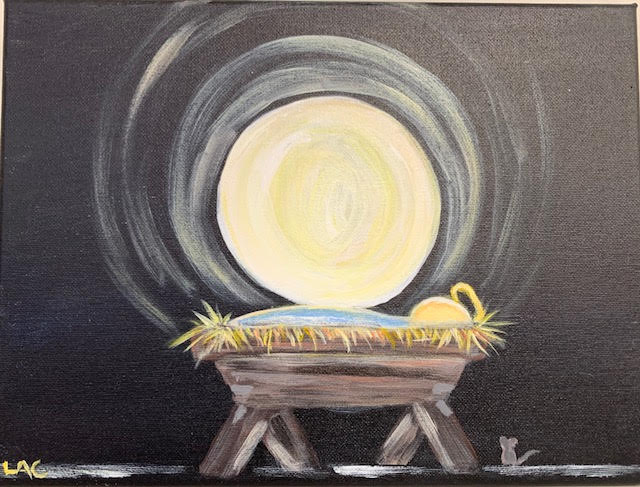
Giving and receiving a gift is often way more complicated than it should be. When giving a gift, many thoughts come to mind: “What if they don’t like it?” “What if they don’t give me a gift?” “What if they already have it”? “What if they don’t want it”? These are all valid thoughts that we may have when we are on the side of giving gifts.
In addition to giving a gift, receiving a gift carries many challenges for the recipient: “I already have this.” “I do not need this.” “How much did this cost?” “Did you even put thought into this gift?” Why does giving and receiving gifts have to be so difficult?
Giving and receiving gifts is such a significant practice throughout generations. We are created as humans in the image of God with the same characteristics as our Heavenly Father. God the Father is the greatest gift giver of all time. The thought of the Father and His Son dwelling with one another in the midst of perfection is unfathomable. In all the glory, perfection, beauty, and awesome qualities of being in the presence of one another, there was still something they were missing. How could something be missing? What could possibly be desired by the triune God Himself? It was me and you.
I love that the Father was not only desiring us, but He acted upon His desire by sending His precious Son, Jesus, to be born of a virgin. What an incredible gift that the Father has given us in Jesus, and I am overwhelmed with thanksgiving that the Father has bestowed upon us such a gift.
A gift is such a beautiful symbol of receiving something that is not earned. Scripture says in Romans 6:23,
“For the wages of sin is death, but the FREE gift of God is eternal life through Christ Jesus our Lord.”
If we received what we earned, then we would receive death. However, the promise is that we are given eternal life through Christ Jesus our Lord. So, what gift did Jesus bring?
Three major focus points of what Jesus has bestowed upon us:
- He gave us the gift of eternal life to all who believe. He gave us a way by bearing the weight of not only our sins but the burdens of life, knowing we could not handle the difficulties of this world on our own. He gave up being in the form of God and became the most vulnerable form of creation, a baby.
- He gave us the gift of redemption. What a powerful concept being redeemed is. Redemption is the act of gaining possession of something in exchange for a payment or clearing a debt. He completely cleared the slate of our filthiness and made us righteous before Him. He turned death to life, despair into hope, mourning into rejoicing, emptiness into fullness, loneliness into an unconditional relationship, and chaos into peace. He changed the outcome.
- He gifted us with a choice. He has allowed us to choose His life, now, with Him, and in a way, we choose what our life looks like in following Him. He has given us the gift to choose who we want to follow, where we want to go, and what we want our results to be. Just as Jesus chose to come into this world, bringing God to Us – Immanuel, but also us to God, in uniting with us in our humanity. He has given all people a choice and opportunity to be with Him forever.
I am grateful I do not have to question what the gift of Jesus cost. I am joyful and overwhelmed to know that God thought about me when He sent Jesus to be born. I am merry to know that God knew exactly what I needed as a human because He humbled Himself in human form, experiencing and overcoming life on earth. What a beautiful gift Jesus is and has given!
Father, thank you for your precious Son. Thank you for the gift of Jesus. Jesus, you are the greatest gift. I am in awe of who you are. Thank you, Jesus, for your obedience and humility in taking the form of a human. Thank you for allowing us to relate to you. I am grateful for the gifts that you never stop giving. I thank you that these gifts are not only for me but for everyone. Help me to share the greatest gift, You, Jesus, with the people in my life? I love you, Jesus. Thank you!!!
Magi – The Gift of the Journey

During my childhood, Nana had a heartwarming tradition. Once the house was decorated for Christmas and the nativity scene was up, she would playfully move the wise men (Magi) around the house until Christmas Day, when they would be at the manger. Although this is a sweet memory to look back on, it makes me wonder, outside of the nostalgia, what is it God wants us to see in the Magi’s journey?
After Jesus was born in Bethlehem in Judea, during the time of King Herod, Magi from the East came to Jerusalem and asked, “Where is the one who has been born king of the Jews? We saw his star when it rose and have come to worship him.” (Matthew 2:1-2)
The Magi’s journey, much like my Nana’s tradition, mirrors the spiritual journey of all believers—the path to Christ. Just as the Magi set out to follow a star on a quest to find the newborn King, our spiritual journey had a beginning. It may have started with curiosity or a desire for purpose; either way, that spark of light caught our attention. The Magi moving through the house reminds us that the search for God begins from a distance, but it is a journey worth undertaking.
The journey of the Magi was not straightforward; it involved challenges and moments of uncertainty. Just like our own spiritual journeys are often marked by twists and turns, it requires patience and faith to persevere, trusting God to guide us along the way, just as the star guided the Magi. Moving the Magi through the house also reminds us of our need to trust in God’s guidance despite obstacles we encounter.
It is important to note that these were not Jewish men; they were scholars and astrologers from the East, known for their wisdom and study of the heavens. They observed a new star rising in the night sky, a celestial sign of unparalleled significance. This star was the harbinger of hope, beckoning them to seek the newborn King. When the Magi finally reached Jesus, they bowed and worshiped Him, offering gifts to the Christ child. This is it. This is what all the travel, perseverance, and dedication had been for, reaching Jesus. In our own spiritual journey, the destination is encountering Christ. It is there where we find true meaning and fulfillment. And when we arrive at our destination, at the feet of Jesus, like the Magi, we offer our lives in worship and surrender to the Savior.
Nana’s tradition of moving the Magi now makes me think of how our path to Christ is transformative. Each step towards Him changes us, making us more like Him in the process. It’s a reminder that we are shaped and molded by our pursuit of Jesus. The Magi’s journey speaks to us of patience, worship, and surrender, not based on our culture or upbringing. No, it is based on our seeking.
Father, as we think of our Christmas traditions and ponder the Magi, remind us of the importance of seeking, being guided, and following the path. Teach us patience, Lord, and help us to trust You when we face obstacles along the way. And as we travel with You, each day growing closer to You, help us to surrender to worship. During this Christmas season, Thank You for the sweet memories and all the ways You speak to your children. In Jesus’ name, amen.
Magi – Wise Worshippers
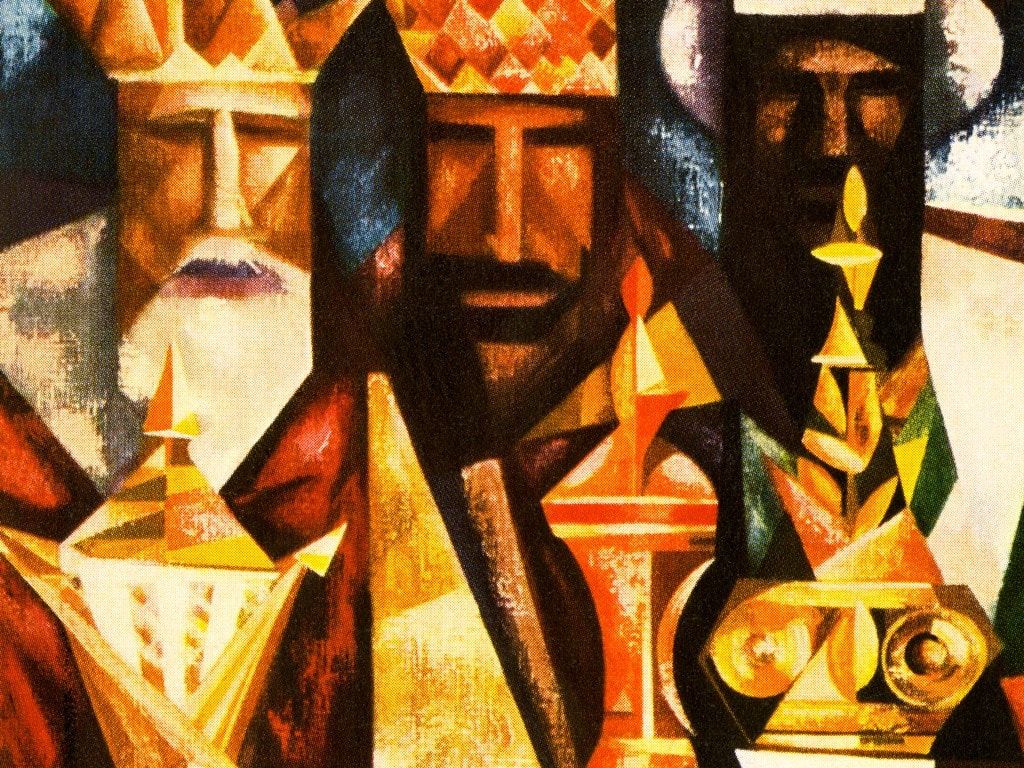
Reflecting on the Christmas story, particularly the account of the wise men, initially seemed relatively straightforward. These intelligent individuals arrived at the manger, guided by an unusual star, presenting three significant gifts—gold, frankincense, and myrrh—to baby Jesus, whom they worshipped then and there, right?
However, digging deeper reveals intriguing possibilities and some outright errors in the timeline, making the story of the wise men even more amazing:
First, contrary to common belief, these figures weren’t kings. Rather, they were close advisors to kings. They were indeed men of intelligence, or “wise,” leading some to believe they were astronomers, learned men of a priestly class, and perhaps even astrologers! Remember, there were no Apple Watches back then—so people relied on the sun, moon, and stars to tell them the times and seasons. Could God have spoken to them in that “language” they knew and understood to guide them to Jesus?
Secondly, and quite remarkably, they were Gentiles! Their culture may not have normalized hearing from God. Nevertheless, they might have been acquainted with the words from the prophet Daniel,
“I continued watching in the night visions, and suddenly, one like a son of man was coming with the clouds of heaven. He approached the Ancient of Days and was escorted before him. He was given dominion and glory and a kingdom, so that those of every people, nation, and language should serve him. His dominion is an everlasting dominion that will not pass away, and his kingdom is one that will not be destroyed.” (Daniel 7:13-14).
Or maybe they knew the prophecy from Numbers,
“I see him, but not now; I perceive him, but not near. A star will come from Jacob, and a scepter will arise from Israel. He will smash the forehead of Moab and strike down all the Shethites.” (Numbers 24:17).
Thirdly, they came from the East. Followers of Eastern teachings believe in divine revelation from the gods, often deriving insights from celestial cues that influenced events on Earth. Many actively sought these signs, eager to witness their fulfillment firsthand. Scholars propose that these wise men likely originated from either Arabia or Persia. Those leaning toward Arabia associate it with the valuable gift of myrrh, which was a prized product from the region (more valuable than gold!). Conversely, proponents of Persia suggest these men belonged to the same order as the “magicians, enchanters, astrologers, and diviners” mentioned in Daniel 5, where the prophet Daniel held authority.
Regardless of their specific origin, Matthew 2:1 tells us they came from the East, marking them as the first documented Gentiles to worship Jesus! Their journey to the newborn King would likely have spanned weeks if not months! Given the distance they had to travel and the fact that the Bible does not say they came to the manger but to “the place where the child was” (Matt. 2:9), they probably arrived in Nazareth when Jesus was approximately one year old.
Lastly, while it was customary to present extravagant gifts to leaders, with the expectation of reciprocation, the gifts of the Magi carried greater spiritual meaning. Gold symbolized royalty, frankincense represented deity, and myrrh, used in anointing oil and embalming, foreshadowed Christ’s sacrificial death. Their gifts revealed a deeper understanding and belief in who Jesus was! These wise worshippers’ gifts provided Mary and Joseph with resources to travel to Egypt, where they remained until Herod’s death. And even though the Magi went home without a reciprocated tangible gift, God granted them the invaluable gifts of protection and safety through a dream, guiding them to avoid Herod and take an alternative route.
Takeaways:
- There may be servants of God in places where we should not expect to find them.
- There is usually more to the story, making its meaning more profound and impactful. God is a God of detail. He does not do anything by chance.
- The Gentile Magi came to worship the newborn King, while the Jewish priests and king did not.
- The gifts presented were acts of worship and important to God. They demonstrated respect, honor, and acknowledgment of Jesus’ true identity, and the Magi worshipped Him accordingly.
Things to ponder:
- What would be an appropriate gift for you to bring to Jesus this season?
- Will you give God permission to work in your life in unusual ways, knowing His ways are best?
- In what ways can you utilize the gifts God has given you as gifts to share with others?
Shepherds – The Gift of Presence
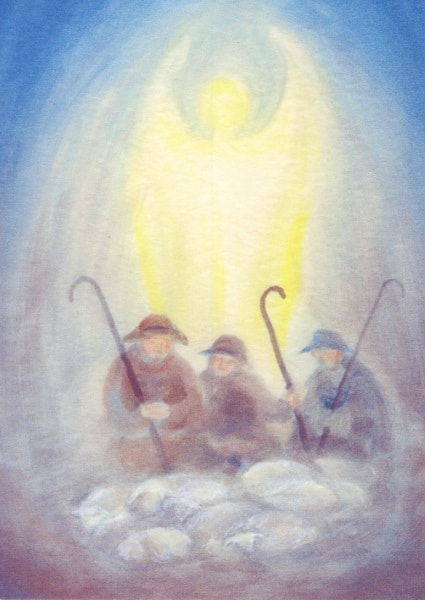
That night there were shepherds staying in the fields nearby, guarding their flocks of sheep. Suddenly, an angel of the Lord appeared among them, and the radiance of the Lord’s glory surrounded them. They were terrified, but the angel reassured them. “Don’t be afraid!” he said. “I bring you good news that will bring great joy to all people. The Savior—yes, the Messiah, the Lord—has been born today in Bethlehem, the city of David! And you will recognize him by this sign: You will find a baby wrapped snugly in strips of cloth, lying in a manger.”
Suddenly, the angel was joined by a vast host of others—the armies of heaven—praising God and saying, “Glory to God, and peace on earth to those with whom God is pleased.”
When the angels had returned to heaven, the shepherds said to each other, “Let’s go to Bethlehem! Let’s see this thing that has happened, which the Lord has told us about.”
They hurried to the village and found Mary and Joseph. And there was the baby, lying in the manger. After seeing him, the shepherds told everyone what had happened and what the angel had said to them about this child. All who heard the shepherds’ story were astonished, but Mary kept all these things in her heart and thought about them often. The shepherds went back to their flocks, glorifying and praising God for all they had heard and seen. It was just as the angel had told them. Luke 2:8-20 NLT
Let’s set the scene here – Mary just gave birth to her first child in a very very rustic, unfamiliar place. She and Joseph are probably dazed, Mary’s in some pain, and Joseph is cleaning stuff up. They aren’t surrounded by family to celebrate with them. They made this trek alone. The reality of all they’ve had to deal with for the past nine months is hitting them hard. Probably some tears, some wonder, some awe, maybe even a few really human moments of “Can you believe this is happening?” Just the two of them.
Then some shepherds show up, with crazy eyes, running from their fields, and they share what the angels told them. Other witnesses to God’s great plan; it’s happening, and it’s bringing joy to all people! The Savior, the Messiah, has been born! Imagine what that meant to Joseph and Mary’s hearts. The encouragement that came from their presence and proclamation of the good news!
How did they bring such joy and astonishment to Joseph Mary and anyone else who would hear?
The shepherds gave three gifts:
- They gave the gift of their presence. If you notice in the above passage, the angels didn’t tell the shepherds to go. They simply decide to go (they are the originator of the saying, “Let’s go!!”). They showed up for Joseph and Mary’s biggest moment of their lives with excitement and celebrated with them!
- They gave the gift of good news by sharing with everyone they saw what they SAW and HEARD. It’s like they couldn’t keep this incredible experience to themselves. They shared the details—what they saw and heard—with anyone who would listen. The hills probably echoed with the tale of the heavenly encounter.
- They gave God the gift of praise. They celebrate with the Creator of the universe and rescuer of humanity that HIS PLAN was happening. They joined in, not just as witnesses but as participants, praising the Creator of the universe.
What gift do you bring?
For each of us this Christmas season, let’s take a cue from the shepherds. Take time to celebrate with God the fulfillment of His plan of rescue! Let’s praise the Creator of all and the Rescuer of humanity! And, inspired by those shepherds, let’s go a step further.
Let’s give the gift of our presence to those around us. Just as the shepherds showed up for Joseph and Mary, let’s show up for others in our lives. Be present in their biggest moments, share in their joys, and lend a supportive shoulder in their challenges. Sometimes, the simple act of being there can be the greatest gift.
In the midst of the festive chaos, let’s not forget the power of encouragement. Like the shepherds who brought excitement to a manger, let’s bring encouragement to those who need it. Your words and actions can be a source of light and hope, just like the dazzling radiance that surrounded those shepherds on that extraordinary night.
And as we celebrate this season, let’s share this good news with others. God loves humans and still rescues us from the messes of our lives! After all, the story of Christmas is not just a tale from the past; it’s an ongoing narrative that we continue to write with our own gifts of love and grace.
Shepherds – The gift of priority
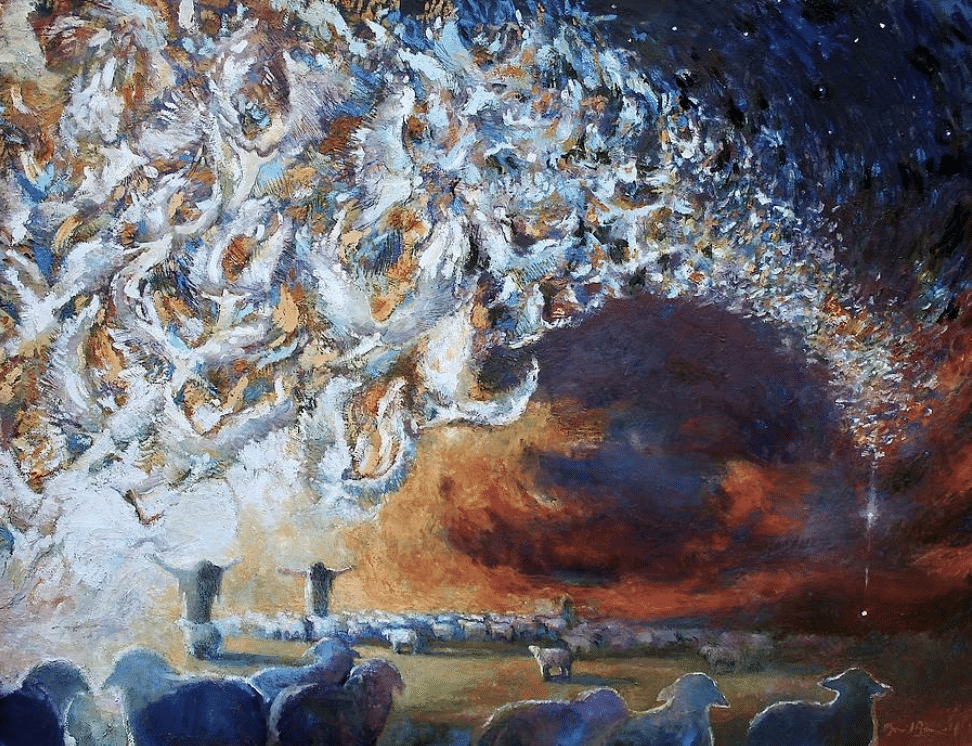
It was nighttime in the hills outside of Bethlehem. The shepherds were hard at work keeping their flocks safe. You could hear the sheep bleating occasionally and the breeze across the fields. As they watched over the flock, talking amongst themselves, there was suddenly a great brightness with a man in the middle of it. I’m sure they reacted like I would, with a startled jump and a scream. As the man spoke, they felt an unexplainable sense of peace and calmness as God’s angel told them not to be afraid. As this heavenly messenger continued to tell the shepherds about the long-awaited birth of the Messiah, a great company of angels appeared, singing praises to God. Then, as suddenly as they appeared, the messengers of God ascended back into heaven.
The shepherds responded immediately. They went to “see this thing that has happened, which the Lord has told us about” (Luke 2:15-16). They not only left the sheep, they also immediately believed what God, through His angels, had told them. Something so grand and momentous that angels were heralding; they just had to see it!
I can see them talking among themselves as they searched for the manger; “Did we really see that?” “Can this truly be the Messiah?” “He is supposed to be born in Bethlehem according to prophecy.” “Why did God choose us to tell? We are not royalty or Temple Priests?”
After the shepherds experienced Jesus in person, they left changed and excited. Scripture tells us that they returned to their field, “glorifying and praising God for all the things they had heard and seen, which were just as they had been told” (Luke 2:20). Their experience that night had a radical effect on them. Can you see them walking back to the pastures, singing, and praising God? Can you hear the excitement in their voices as they tell those they meet on the way? Can you see the amazement on their friends’ and families’ faces as they share the experience with them when they go home?
As God gave us the greatest gift ever given, His Son, the Messiah – our Savior, the shepherds gave back to God with their response. They responded with trust and belief. Not only did the shepherds believe the angel’s message, they also trusted God to watch over the sheep as they left the fields to see the miraculous event. Even if they went to see the manger in shifts, the sheep would only be partially protected. They made Jesus their number-one priority that night.
After they experienced Jesus, they responded to God’s gift with the gifts of their praise and exaltation. Not only did they honor God through their praises, but they also honored God through sharing their experience with others.
As we think about the birth of Jesus so long ago, take a few minutes to picture the scene as the shepherds were surprised by God’s heavenly messengers. Picture the stillness being broken by the chorus of angels. The darkness giving way to light. How would you respond to the message that the long-awaited Messiah had been born?
Now, picture yourself standing before a manger with a baby lying in it. The angels said this was God’s promised Messiah. What are your thoughts as you look upon the hope of mankind lying in a stable in a manger? Like the shepherds, having encountered Immanuel – God with Us, would you tell others your experience? Would you praise God for allowing you to be a part of His plan?
Now, let’s think about today. God gave us the gift of a Savior that first Christmas day. Jesus went on to die a horrible death on a cross and pay for every bad thing that you, or I, will ever do. How do we respond to that? What gifts do we give back in thanksgiving to God? Is God a priority in our lives or a convenience? Are we willing to make time for Jesus? Are we filled to overflowing as the shepherds were? Do we go about praising and thanking God? Do we share our experience of God with others?
What gifts do you give back to God? I challenge you and myself to follow the shepherd’s example. Make Jesus your top priority. Believe the message you have been given and respond with praise and thanksgiving. Like the shepherds, go investigate. Read God’s word. Spend time in His presence. Then, tell others about how you have experienced God in your life.
“All the things in this world are gifts of God, created for us, to be the means by which we can come to know him better, love him more surely, and serve him more faithfully.” Ignatius of Loyola
Joseph – The Stepfather of Jesus
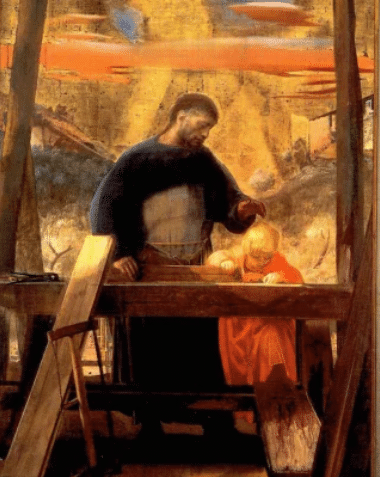
Joseph, the earthly stepfather of Jesus, is a misunderstood and unappreciated hero of the New Testament and the earthly father of God’s heavenly Son. Let that sink in; it could not have been easy.
Jesus was the true offspring of Mary and the Holy Spirit. Male humanity was not involved. That is unprecedented. How do you respond to that as a father? How do you manage that as a family? As we revisit this story, let’s remember that they lived this. They were people with passions just like us (James 5:17).
It had to be a crazy adventure for Joseph, and it all started with a bang. One day, he hears from his betrothed, Mary, that she has become pregnant by a miraculous work of God. His life and future now appear ruined. As he is trying to figure out what to do, an angel shows up to comfort him. He tells him it’s true and what he must do. He obeys.
The next couple of years are a whirlwind of intrigue and near catastrophes. Faced with the societal consequences of a pregnancy outside of marriage, they quietly slip out of Nazareth. Any public knowledge would jeopardize Jesus’ future involvement in the synagogue. They probably stayed with Zacharias and Elizabeth before going on to Bethlehem – only three miles further down the road. Guided by Old Testament prophecies predicting the birth in Bethlehem, the census serves as a perfect cover for their discreet relocation.
After Jesus’ birth and after fulfilling the Temple requirements, Joseph and Mary returned to Nazareth. The Magi, guided by a divine hand, miraculously find them. They honor the child with lavish gifts. After the Magi leave, God intervenes once again, waking Joseph in the night with a dire warning: “Get up and leave immediately, Herod’s men are coming for you and the child.” (Matthew 2:13). The family barely makes it out of town in time. They go to Sepphoris, a bustling nearby Roman city, and then travel to Egypt. They use the gifts from the Magi as money to live on until Herod is dead, and they can return to Nazareth.
The adventure continues. What father comes prepared to raise the sinless Son of God? Even though Jesus was fully human, aspects of His desires and motivations had to be at odds with their lifestyle and expectations. Joseph essentially had joint custody of Jesus with the God of the universe. How does that work? Jesus may not even have looked like His half-brothers and half-sisters. Jesus, as the oldest son, would have been expected to take over the family business. But, He had no desire for that. He spent most of His time in the synagogue reading the scriptures or alone in prayer with His heavenly Father. This had to cause tension within the family.
They knew Jesus’ significance as the Messiah but struggled to understand His path. Tradition anticipated a great leader like King David. No one realized that the Messiah should first come as a Suffering Servant and die for their sins on the Cross. How could they grasp that He was the human-born Son of God? Who thinks of that as a possibility?
There was an instance when Jesus was 12 when His family traveled to Jerusalem. Something they did every year. But this year, Jesus decided to stay and didn’t feel the need to tell anybody. A day later, while on the road, Joseph and Mary realized He was missing. After frantically searching through their extended family, they traveled back to Jerusalem. Three more days, and they finally found Him in the temple, casually conversing with the priests. Astonished, Mary asks the standard parent question, “Son, why have you treated us this way? Your father and I have been beside ourselves looking for you.” I’ve been there as a father, and probably so have you.
Jesus responds flatly, “Why have you been looking for me, wouldn’t you know that I would be in my Father’s house?” (Luke 2:49) Think about that. He’s telling His earthly father that he should’ve known he would be in his heavenly Father’s house. Wow! Joint custody is a difficult thing. Especially when the other father is God. Even Jesus had to be a teenager once.
Jesus goes back with them to Nazareth, and this is the last we hear of Joseph. By the time Jesus started His ministry, if Joseph were still alive, he would be around 50 years old. Most men didn’t live that long.
Jesus, of course, never took over the family business, and His ministry and teachings ultimately got Him killed. The family only fully grasped Jesus’ identity as the Son of God after His resurrection. However, none of this would’ve happened without Joseph and his thankless efforts. He never fully comprehended his prominent place in eternal history.
“And these all were commended for their faith, yet they did not receive what was promised. For God had provided something better for us, so that they would be made perfect together with us.” Hebrews 11:39-40
When you hear his story this Christmas, realize these were real people. Ordinary people, walking out their part within the big picture of God. They didn’t understand it all. We are just like them.
Take time to reflect on these people. Allow this meditation to deepen your appreciation of the profound journey they undertook. Then consider that you, too, have a role in God’s plan. You may not see it or understand it, but God and you are at work on one beautiful story.
Joseph – Quiet Strength & Commitment
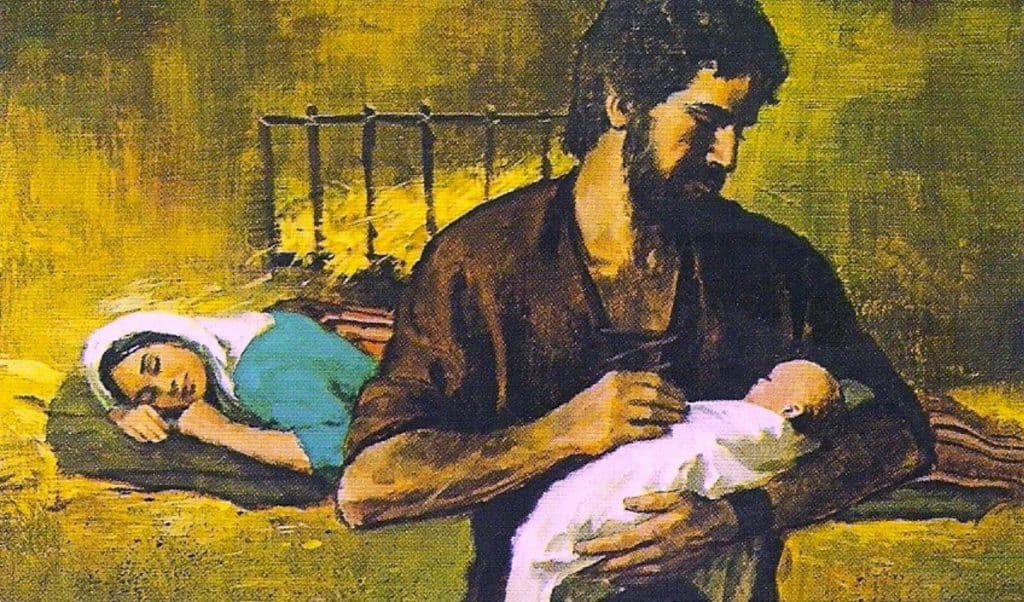
The birth of Jesus Christ came about this way: After his mother Mary had been engaged to Joseph, it was discovered before they came together that she was pregnant from the Holy Spirit. So her husband, Joseph, being a righteous man, and not wanting to disgrace her publicly, decided to divorce her secretly. But after he had considered these things, an angel of the Lord appeared to him in a dream, saying, “Joseph, son of David, don’t be afraid to take Mary as your wife, because what has been conceived in her is from the Holy Spirit. She will give birth to a son, and you are to name him Jesus, because he will save his people from their sins.”
Now all this took place to fulfill what was spoken by the Lord through the prophet: See, the virgin will become pregnant and give birth to a son, and they will name him Immanuel, which is translated “God is with us.” When Joseph woke up, he did as the Lord’s angel had commanded him. He married her 25 but did not have sexual relations with her until she gave birth to a son. And he named him Jesus. Matthew 1:18-19 (CSB)
While reading the Gospel of Matthew, my thoughts wandered to Joseph and the emotional upheaval he must have experienced upon discovering Mary, his betrothed, was pregnant. Contemplating the disappointment and uncertainty that arise when our plans diverge from God’s plan, I marveled at Joseph’s reaction.
In a society where he had the legal right, according to the law of Moses, to have Mary stoned for adultery, Joseph’s response was unexpectedly compassionate. Instead of exposing Mary to public disgrace, he chose a quieter path, walking away with a shattered heart rather than seeking her harm. The compassion in his natural reaction closely resembles that of The Father’s compassion towards us. Surely, this is why he was chosen to be the earthly father of our Lord Jesus.
As I get older, Joseph is easily becoming my favorite “character” in the Christmas story. His quiet obedience speaks volumes and stirs my own faith. While we acknowledge Mary’s obedience and understand Joseph’s role in staying with Mary, raising Jesus, and imparting his trade to him, it’s crucial to pause and reflect on the enormity of what Joseph was asked to do.
An upstanding man in the community, Joseph was asked to risk his reputation to raise a child that was not biologically his; in fact, he was asked to believe that this baby was God’s Son! The pressure of being asked to guide and protect the very Son of our Creator adds extraordinary dimension to Joseph’s role. He wasn’t just called to raise Mary’s child but to safeguard the Savior of the entire world. This included journeys to Bethlehem while Mary was with child and later fleeing to Egypt to shield Jesus from King Herod’s threat (Matthew 2:13-20). Without Joseph’s protective presence shielding them from danger, who’s to say what could have happened to Mary and Jesus?
Joseph’s obedience isn’t a grand spectacle like Jesus’ glory or Mary’s sacrifice. Instead, it’s found in the steady, quiet steps of a simple “yes.” It’s a willingness to step back and humbly submit to another’s call. In Joseph’s case, he became the sturdy foundation of the holy family, ensuring that Mary had everything she needed to fulfill her calling. Let’s not allow Joseph’s obedience to fade into the background. May our own faith and response to God’s call, and the calls on the lives of those around us, be anything but ordinary.
As we reflect on Christ’s birth, we recognize that each person in the story carries a message for the Church today. Looking at Joseph, I find inspiration in his quiet strength and unwavering commitment to God’s plan. May this same spirit reside in us.
Father, thank You that we get to know about Christ’s birth and that You have a message for your Church today wrapped in each one of the people involved in the story. As we look at Joseph, I am inspired by his quiet strength and his unwavering commitment to Your plan. Do that in us, Lord. Help us to walk more like Joseph. May the Holy Spirit fill us so much that integrity, compassion, humility, and willingness to serve You flourish like wildflowers at the river. In Jesus’ name, we pray. Amen.
Mary – Joy in Giving
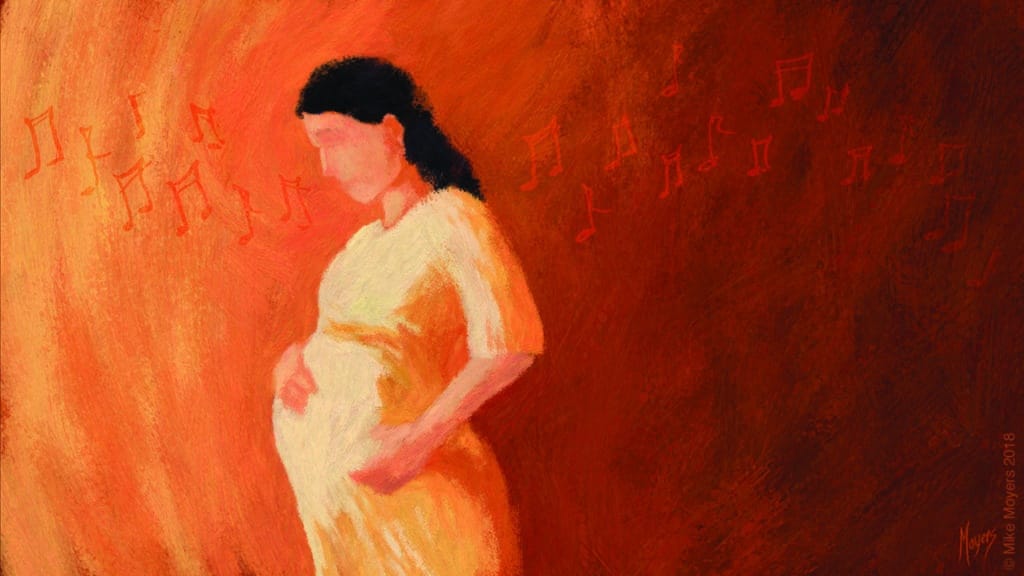
By Ascension Press © Mike Moyers 2019
“I appeal to you therefore, brothers, by the mercies of God, to present your bodies as a living sacrifice, holy and acceptable to God, which is your spiritual worship. Do not be conformed to this world, but be transformed by the renewal of your mind, that by testing you may discern what is the will of God, what is good and acceptable and perfect.” Romans 12:1-2 ESV
Not too long ago, I found myself happily committing to a task for someone I care about. I knew it would take me ages to complete, and though I was paid, it wasn’t really for the money. I was happy because my friend was happy. However, weeks into the project, not even halfway through, I found myself grumbling. Shamefully, more than once. The turning point came when I heard the soft yet strong voice of Holy Spirit, questioning, “Wait a minute now, why did you start this to begin with?”
“To make my friend happy,” I replied.
“Then why are you complaining about the details? You knew the cost, calculated it, and still chose to give the gift of your time.”
I fell silent internally, and my mouth clamped shut. I repented for my attitude and my words spoken and the ones I had selfishly thought but not yet spoken. Holy Spirit was, of course, right. I had lost joy in my giving.
When I held my first child in my arms, he was only a few months old at Christmas time, and I found myself wondering, as I have many times since if Mary ever lost joy in her giving.
Reflecting on moments of giving, I thought about Mary, who carried a life and surrendered herself entirely, her whole person. And her commitment wasn’t just from 9 am to 5 pm. And it wasn’t only for the waking hours. No, her commitment was a 24/7 “yes” for 9 months. That’s 280 days!
I wonder if, during any of her many restless pregnant nights, when she had to get up to pee, again, did she wonder if all of this was worth it. Did she stop mid-task, stretch her strained back, wipe away the abundance of sweat in the most uncomfortable places, and think, “How much longer?” Did she groan with pain in the work of bringing our Lord into the world and think, “Why did I say yes?!”
As lovers of Jesus, we may enthusiastically say “yes” to the Lord, knowing the cost, but harbor regret and a desire to repent (go another direction) when we find ourselves groaning from the actual labor we committed to. Maybe Mary was better than me. I like to think so. And since the Word doesn’t mention it either way, we can reasonably conclude Mary maintained her joy, trusting God would honor her for her gift, even when tired or sore.
For Mary to maintain her joy, she must have keyed into the wisdom of God’s Word: “Do not be conformed to this world, but be transformed by the renewal of your mind, that by testing, you (we) may discern what is the will of God—what is good, acceptable, and perfect.” His good and perfect will doesn’t always come through easy avenues. Rather, it is achieved through rough terrain and requires us to harness both mind and body to focus on His ways and not our own. This calls for the constant renewal of our thoughts and the attitude of our hearts, allowing us to experience His joy when we find ourselves within His good and perfect will.
Mary’s “yes” symbolized a profound gift—she offered her body as a home for our Savior. Every ounce of her time, energy, and being was devoted to bringing Immanuel, God with us, into our lives. What an extraordinary gift!
Celebrating Christmas can, and in our culture often does, turn into a chore. While some commitments may serve as enjoyable distractions, a handful encapsulate the true spirit of Christmas. In the coming month, a multitude of opportunities will arise for us to give gifts and dedicate ourselves to a plethora of worthy causes and joyful occasions. It may be having that lonely neighbor over for a Christmas feast or stopping to take care of a person you see in need. You may be late and rushing off to Christmas Eve service and see a family with a flat or in need of a battery boost.
Brothers and sisters, if you come to your wit’s end or find yourself weary and achy, it’s crucial to remember, even in fatigue, to present your body, renew your mind, and experience the joy and gift of aligning with God’s good and perfect will.
Mary – The Mother of Jesus
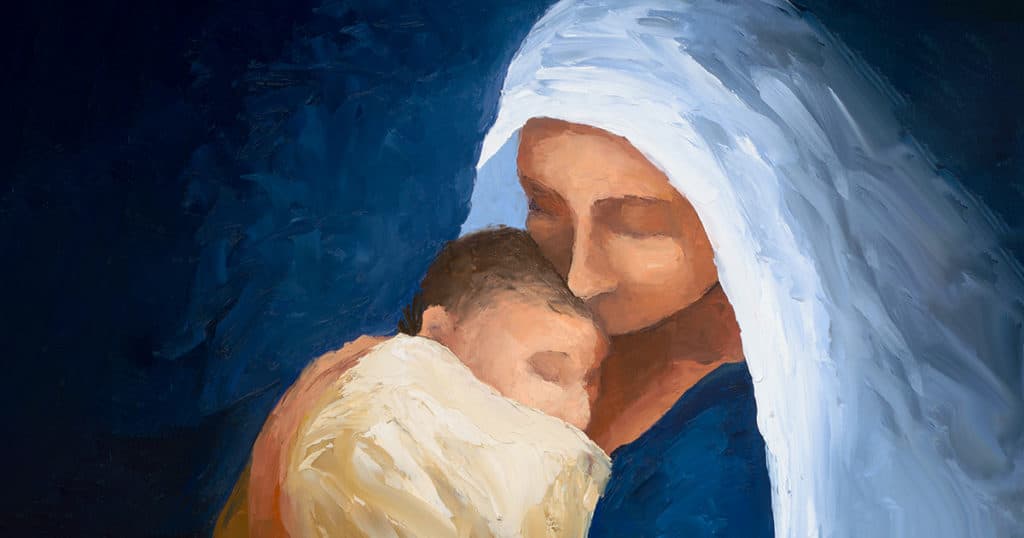
By Ascension Press © Mike Moyers 2022
When we contemplate Jesus, we recognize Him as God’s Son—the most significant person ever born on Earth. Equally, He was Mary’s son. Mary, chosen to carry the Son of God in her womb, must have been extraordinary. God bestowed upon her the most profound gift, knowing her heart to be one of humility, courage, and righteousness. Her fearlessness to face multiple tests is evident.
Consider the story of the woman caught in adultery; a woman in Mary’s situation would have faced stoning. And what was Mary’s situation? She was a pregnant woman who was unmarried. Can you fathom the thoughts that raced through Mary’s mind as she proceeded with God’s plan? What was she thinking when the angel Gabriel proclaimed her blessed and favored by God, destined to conceive the Son of God through divine impregnation?
The Gospel of Luke provides insight into Mary’s thoughts. In Luke Chapter 1, Mary asks, “How can this be?” Her mind was greatly troubled and disturbed, wondering about the nature of Gabriel’s greeting. I’m sure she wondered how she could be picked for this amazing event, but also how? How would she become pregnant without intimacy with a man? Amidst her questions and puzzlement, she said yes, declaring, “I am the Lord’s servant. May it happen to me as you have said.” (Luke 1:38)
I wonder if she had doubts about what had just happened and what would happen. After Gabriel’s departure, Mary visited her cousin Elizabeth, who, in her old age, was also pregnant through an act of God. As Mary approached, Elizabeth’s baby leaped for joy, confirming the reality of the extraordinary event. Mary’s doubt dissipated; it was happening just as Gabriel had said. This was the confirmation. There was no going back. It was real.
Can you imagine what it was like when Mary told Joseph? I believe he was shocked and afraid. Should he still marry her? Matthews’s gospel tells us he was going to divorce her privately. This was so no harm would come to her. Surely, Mary began to doubt Joseph’s trust, devotion, and love for her. But God brought him into alignment through a dream, leading them to marry and eventually travel to Bethlehem, where Mary was ready to give birth. Even under these unbelievable circumstances, Joseph stayed by her side. Joseph’s incredibly generous gift of loyalty and devotion must have helped Mary overcome any fear or doubt that had crept in.
In the humble setting of a stable, Jesus was born. If I were Mary, I would have wondered how the child she bore could really be the Son of God. How could God’s son be born in a stable, not a palace? Even with everything Mary had experienced thus far, could there be reason to doubt once again? But then at their doorstep stood shepherds and later wise men from afar, proclaiming Jesus, her son, to be the Savior Israel had long been awaiting.
Throughout moments of doubt, God remained faithful to Mary, bringing others into her life and gifting her with faith. Mary, a wise woman, must have had the confidence to proceed after Gabriel’s visit, knowing God’s plan extended beyond Jesus’s birth. But God used others to help her faith along the way.
Luke 2:19 tells us Mary treasured and pondered everything in her heart. It makes me wonder if she knew more was to come. When Mary and Joseph had Jesus dedicated at the Temple, in accordance with Jewish Law and practice, they were approached by a man named Simeon. Simeon told Mary of Jesus’s destiny and the sword that would pierce Mary’s soul. Despite not comprehending all her son would face or accomplish, God sent people to Mary to declare His purposes and will for His son, providing her with faith for the future.
Mary was indeed a woman of faith, courage, and honor. She accepted God’s invitation to bear His son. If she had not, who knows what might have happened? But the gift of her life and faith, which impacts every believer, is one we should emulate. Amidst doubt and uncertainty, like Mary, we can choose to trust. So, as we celebrate Christmas this year, it is fitting to remember and honor Mary. Let’s give thanks to God for her life and her story. Her story, not merely a tale, was a real girl’s life, recorded under the direction of the Holy Spirit and shared with us to encourage our faith.
Take a moment to reflect on the people whom God has brought into your life to encourage your faith. Have there been those who faced similar challenges, letting you know that you are not alone? Think about those who remained steadfast and devoted during uncertain times. Were there moments when people unexpectedly appeared, dispelling doubt just when you needed it? Reflect on those who uplift you with encouraging words and speak into the possibilities of your future. Take a pause and express your gratitude. Consider reaching out to them to let them know.
Also, consider how you can be a source of encouragement for others. How can you lead a life that produces faith in those around you? Together, let’s trust God for extraordinary things and miraculous possibilities—both for ourselves and for one another. Just as Mary responded to God’s call with, “I am the Lord’s servant. May it happen to me as you have said,” let’s embrace a spirit of willingness and faith.
Thanksgiving: The Risk and Reward
It’s Thanksgiving season – a time that extends beyond just one day for me. Until the quiet moments of Thanksgiving Night, November constitutes the Thanksgiving season in my heart. While many adore the holiday for its delicious feasts, my affection for Thanksgiving runs deeper than the menu – although I can’t deny the joy that pecan pie brings me.
Thanksgiving, to me, is loaded with treasured memories. Marked by the annual pilgrimage (see what I did there) to my grandmother’s house, it’s filled with the warmth of extended family. I fondly reminisce about days spent with my aunt, uncle, and cousins and the delightful surprises of last-minute in-laws, friends, and cousins of cousins. Thanksgiving is when everyone across the country desires to be with others, wrapped in cozy sweaters.
Visiting my grandmother’s, a tradition in its own right, unfolded with its set of cherished customs. Raking leaves to create the perennial family picture backdrop destined for our upcoming Christmas Card. The dining room table, adorned with grandmother’s silver and fine china, became the stage for the big meal and laughter. Then, there were the rounds of vintage board games from my mother and uncle’s childhood.
As Thanksgiving night descended, we’d converge to witness the illumination of the Rich’s Macy’s Great Tree. And spread across the living room floor, the kids would circle every enticing item in the JC Penney’s catalog, meticulously crafting elaborate wishlists. These uniquely etched memories radiate warmth through my heart, and I hold them dear. When I reflect on these memories, what truly makes them special is the people I share them with.
It’s the image of my siblings and me, tirelessly raking what seemed like a football field of a front yard until a sympathetic neighbor straps a ginormous leaf blower to my brother’s back. It’s my grandmother, following alongside me, patiently instructing me on the proper placement of each spoon, knife, and fork. It’s my uncle imparting the strategic importance of Australia’s global positioning in winning at Risk or my sister managing the Monopoly bank on the ‘honor’ system for a 7-year-old with questionable math skills.
It’s the shared laughter while flipping through the Penny’s catalog on my aunt’s lap, her gently steering my choices toward more cost-effective selections. At the same time, my mother frantically alerts us to pay attention the moment they start to sing “O, Holy Night” to light the tree. Stripping away all the activities, I am most grateful for the memories of these people. They are the heart and soul of my Thanksgiving memories.
As I age (I know some of you may roll your eyes; I’m not that old…), I am increasingly aware of the tremendous blessing and purpose God has given us in people and our community. The first time God ever declared something “not good” in the world He created was when He saw that man was alone (Genesis 2:18). Before sin and iniquity were ever a thing, there was a fundamental deficiency — the absence of community.
Is community always perfect? By no means! Community comes with risks because it exposes us to people. And, well, people are far from perfect. Community, in many ways, demands vulnerability. There is always the possibility of being let down or disappointed. The reality is that community will inevitably bring moments of hurt, just as we may sometimes hurt those in our community. But at the same time, there is always the possibility that the community will heal us, and we, in turn, can be a part of the healing.
In this Thanksgiving season, as we come together in diverse ways and with different communities, let’s reflect on the risks inherent in our gatherings. By showing up, we expose ourselves to potential hurt and heartache, but we also open the door to healing and joy. Life feels more challenging these days, and our culture has evolved in unfamiliar ways. Too often, people prioritize outrage and offense over patience and forgiveness, sacrificing generosity, hospitality, and kindness on the altar of opinions and righteousness.
Yet, when we gather, we must recognize that showing up is an act of generosity, a courageous step into vulnerability. It’s not taken lightly; there’s a genuine risk involved. However, in embracing this risk, we engage in a profound venture — the possibility of gaining one another. This act of showing up is a gift, and for that, I am grateful.
So, this Thanksgiving, my gratitude extends to those who still choose to show up. To those who, despite the potential for harm, lean into community. For every individual who gathers at the table, acknowledging the personal risk involved, yet still making that choice. I am thankful for those who risk showing up for me, recognizing that I have the capacity to misuse and abuse the gift of their presence, and yet they remain. My heart is full of gratitude for the second chances given by those who reject offense and opt for forgiveness. I thank God for those who embody grace and compassion and come together in community, for it is true, “it is not good for man to be alone.”
Missed this past Sunday’s message? Watch Here…
Good News! For God’s Glory!
GOOD NEWS! The Gospel brings salvation. The Gospel is for everyone who believes. The Gospel is lived by faith. The Gospel is the power of God.
Last Sunday, we discussed our faith as Christians, highlighting what distinguishes us from other major world religions—the Gospel of Jesus. In John 14:6, Jesus boldly declares, “I am the way, the truth, and the life. No one comes to the Father except through me.” This statement draws a clear line in the sand, yet it carries an inviting message—the Gospel of Jesus beckons everyone to cross that line.
The Good News of Jesus reveals our true nature: we are people in desperate need of salvation, yet simultaneously deeply loved by a just and merciful God who rescues. And Better News, our rescue isn’t contingent on our efforts but rather flows from the boundless grace and the free gift of God through the completed work of Jesus. Furthermore, the Best News is that, through His generous gift, we now live a life empowered by His Spirit, intimately connected to God.
As Paul writes in Philippians 2:13, “For it is God who is working in you both to will and to work according to His good pleasure.” In this Good, Better, Best News, what shines through is that every aspect of it is centered on God and devoted to His glory. If God does all the work, then He gets all the glory.
The essence of the Gospel, the Good News of Jesus, lies in the transformation from a sinner who once chose a path of death and destruction to a believer and follower of Jesus, who is the Lord and King over death. In His profound love, He traded our death for His life and empowers us, through His Spirit, to live it out with unwavering faith.
To God Be the Glory by Fanny Crosby
To God be the glory, great things He hath done. So loved He the world that He gave us His Son,
Who yielded His life our redemption to win, and opened the life gate that all may go in.
[Chorus: Praise the Lord, praise the Lord! Let the earth hear His voice.
Praise the Lord, praise the Lord! Let the people rejoice.
Oh, come to the Father, through Jesus the Son. And give Him the glory; great things He hath done.]
Oh, perfect redemption, the purchase of blood, to every believer the promise of God.
The vilest offender who truly believes, that moment from Jesus a pardon receives.
[Chorus: Praise the Lord, praise the Lord! Let the earth hear His voice.
Praise the Lord, praise the Lord! Let the people rejoice.
Oh, come to the Father, through Jesus the Son. And give Him the glory; great things He hath done.]
Great things He hath taught us, great things He hath done. And great our rejoicing through Jesus the Son.
But purer, and higher, and greater will be our wonder, our transport when Jesus we see.
[Chorus: Praise the Lord, praise the Lord! Let the earth hear His voice.
Praise the Lord, praise the Lord! Let the people rejoice.
Oh, come to the Father, through Jesus the Son. And give Him the glory; great things He hath done.]
Missed Sunday’s message on the Gospel? Watch here…
All Saints Day
You might start your day with a Reese’s cup at breakfast, have a Snickers at lunch, enjoy some Peanut M&Ms to combat the afternoon slump, and finish with a couple of Sour Patch Kids after dinner. This day, and perhaps this week, you might indulge in more “treats” than usual. Whether it’s due to the parental “candy tax” or the lure of grocery store sales, it’s important to remember the significance of today.
November 1st is All Saints Day, also known as All Hallows’ Day. Traditionally, on this day, believers honor and remember all the saints, both the well-known and unsung heroes, who have lived lives of unwavering faith and embodied God’s love and grace. It’s a day to celebrate the unity among followers of Jesus and to reflect on the lives of those who’ve come before us, leaving a legacy of faith, hope, and love.
As you indulge in a Whopper or two, take a moment to think of those who dedicated their lives to spreading the Gospel to unreached nations and peoples worldwide. People like William Carey, the Father of Modern Missions, who proclaimed the Gospel in India and worked on translating the Bible into Bengali. Or Adoniram and Ann Judson, the first American missionaries to serve overseas in Burma, leading thousands to Christ. And Lottie Moon, who served as a single woman in China and raised awareness about global mission efforts in America.
But don’t forget those whose lives played a pivotal role in your own faith journey, even if they seem less “adventurous”. I think of Ms. Billie, the kind old lady at my childhood church whose faithful attendance and never-ending supply of candy from her purse provided a sense of steadfast kindness that I came to associate with the people of God. I recall Mrs. Turner, my 5th-grade assistant teacher, who showed me the patience and love of Jesus, even during my rebellious moments, and encouraged my faith from a young age. And I happily remember my sweet Grandmother, the matriarch of our family, who instilled faith in her children and left a legacy of a family devoted to Jesus in their homes, churches, and communities.
This week, as you enjoy your candy and take advantage of sales, take a moment to reflect on those who’ve come before you. Just as each candy has its unique style and flavor, so do the beloved saints who have their unique stories and legacies. They remind us of the sweetness of faith, the richness of hope, and the enduring love of God. Amid the candy wrappers, remember the lives and teachings of those who have left earthly life and a legacy that continues to inspire and motivate us to love God more. May we find moments to savor and reflect in gratitude and celebration on this All Saints Day, and may we be encouraged to live in a way that leaves a legacy for others to love Jesus.
The Best Resolution I Accidently Made
“You have been taught the holy Scriptures from childhood, and they have given you the wisdom to receive the salvation that comes by trusting in Christ Jesus.” 2 Timothy 3:15
It was the first Sunday of the year. I had just turned 12 a few weeks earlier. I remember because I wasn’t yet allowed to sit with my big sister in the unofficial “youth section” during big church. It wasn’t a set rule; it was just something you didn’t do. Instead, I sat with Mrs. McNealy, the lady my mom asked to watch me since she was in the choir. Sitting with Mrs. McNealy was a happy consolation prize, as she’d scratch my back and give me candy during service. But this New Year’s Sunday stands out, as it was the day my words got me into His.
On this day, at the start of the message, the pastor descended the six pale blue carpeted stairs, asking people to share their New Year’s resolutions. Now, you have to understand about a thousand people were in that congregation. But did I care? Apparently not. My hand shot up before I had a second to realize just how many eyes were in the room.
Truth be told, I had no clue what a resolution was, much less did I have one. I mean, come on, I was 12. But you know what I wanted? To talk into that microphone. After a few people went, I concluded a resolution was a lofty goal you told people to impress them. So, I kept waving my hand like I was auditioning for a talk show. And then it happened; the pastor started heading my way.
What began as a dream of being a kid rockstar on that mic turned into instant panic. I was supposed to say something smart, right? And I’m at church, so it needs to be Jesus-y, yea? As he approached, I sensed my sister, over in the cool youth group island, shrinking back with embarrassment, while my mom, sitting in the choir loft, had this “what on earth is my child doing” look on her face.
As the pastor handed me the mic, the weight of it sunk into my tiny hands so quickly that I almost dropped it. Just then, Mrs. McNealy swooped in and held it up for me. Maybe it was that touch of confidence, my messed up need to impress, or perhaps the Holy Spirit (I think a combination of all three). But suddenly, I heard myself declare to all of Tabernacle Baptist Church that I would read through the whole Bible in a year.
Suddenly, the room filled with nods of approval and smiles of admiration at this little whipper-snappers’ most holy proclamation. Take that, cool youth kids! Crowd surfing the wave of self-aggrandizement, I caught the look on my sister’s and mom’s faces – absolute confusion and disbelief. They were both keenly aware of the reality I had detached from; I HATED reading with a passion. And here I was, literally in front of God and everyone, declaring I would read the Bible in a year!?!
It didn’t take long for the high of being a super-pious good little Christian girl to come crashing down. It’s one thing to boast about wanting to do “godly” things. It’s another thing for God to show up and hold you accountable. Later that evening, before bed, I had an encounter with the Lord. God showed up with something to say. It wasn’t a literal voice or vision. But with a firm conviction, I knew I wouldn’t get away with using God’s Word as a cheap snack to feed my ego. At that moment, I knew I had to keep my word and begin to read His.
I searched the house and stumbled across a Bible with a “Read the Bible in a Year” plan in the front. Turning to page one, I began to read, “In the beginning, God created the heavens and the earth…” and then I kept reading. Did I understand half of it? Heck no. I was 12. But motivated by the fear of the Lord and personal conviction, I was determined to keep my word concerning His. And you know what, after I read and read some more. And after I asked my mom a few awkward questions, like, “What is circumcision?” a few things started to make sense.
I’ll be honest. I didn’t finish reading the entire thing in a year; it took me a little longer. But by sticking with it, I did finish the following year. And when I did, I flipped back and started again, “In the beginning, God created…” And this time, you know what? I understood more than I did the first time. Some questions from before now had answers. But I also found I had new ones. And things that were once strange didn’t seem as confusing this time, except for circumcision. That’s always been weird.
But I stayed with it, and in doing so, I fell in love. With the story, the characters, but most of all, with the Author. God was showing up in those pages, and Jesus revealed Himself in ways I’d never imagined. And since then, every time I reach the last verse in Revelation, “Come, Lord Jesus. The grace of the Lord Jesus be with God’s people. Amen,” I flip back to page one and start again, “In the beginning…”
On that winter Sunday in ’97, did I have any clue I’d one day be called pastor? Could I have foreseen thousands of pages of reading laid ahead in receiving a master’s from seminary with a concentration in Biblical Studies? Could I’ve imagined my greatest joy would be nights spent reading the Bible with other believers, teaching His Word at conferences, or discussing the Scriptures with teenagers and adults? Heck no. But God did. And it has been the best New Year’s resolution I have ever accidentally made.
Generosity, what’s the hold up?
When we consider God’s incredible generosity, it goes beyond providing us with life and meeting our basic needs. We’re talking about an overflow of life brimming with variety, flavors, choices, and blessings. It’s a feast of goodness meant for us to enjoy and share. Being immersed in this generosity would naturally lead us to spread those blessings and live generously, right? But have you ever spent time with a bunch of little kids? If you have, you’ve witnessed it. No one needed to teach them how to snatch a coveted toy from another kid, exclaiming, “Mine!” It’s like we’re instinctively wired to be selfish.
But why do we hold back when surrounded by a world dripping with God’s generosity? What drives us toward selfishness instead of generosity? The answer: fear. Fear of lack, the unknown, and future demands. Fear of missing out. Fear that our giving might be misused or unappreciated. Yet, fear wasn’t meant to motivate us. We’re meant to be guided by God’s Spirit and His abundant faithfulness. Shifting from fear to faith takes time, beginning with remembering who provides for us.
Recently, at the dealership for an oil change, they pitched trading in my car. I love my car, and I have no plans to sell it. But they talked about “savings” and “security,” trying to convince me to upgrade for future protection. In the midst of their quick talk, I blurted, “Oh, that’s not a problem for me. I’m a follower of Jesus. I don’t live in fear of poverty or lack. God’s got me.” To be honest, the response surprised me. But it especially shocked the salesman, who was utterly taken aback. He didn’t quite know how to respond to the “God’s my provider” comeback. You see, he wasn’t aware that I had been working with God to pay off that car as quickly as possible, and in doing so, I had experienced His unwavering abundance. God’s lavish generosity had created a God-fidence (God-confidence) within me, and the fear of lacks grip had weakened its hold in my life.
The truth is, everything we have, skills, time, words, talents, passions, money it’s on loan from our Creator. While God showers us with resources, those following Jesus give them back daily, letting Him direct their use. By grasping the reality that it all belongs to God, fear loses grip. Recall Jesus’ words: “Seek the kingdom of God… all will be provided… Don’t worry about tomorrow.” (Matthew 6:33-34) Generous living for believers is about faith, not fear. We trust God as Provider. If fear holds us, we can’t receive the goodness He has. So, let’s embrace open hearts and hands, knowing God’s in control. When it’s about living generously, let’s wholeheartedly trust God and let go of fear.
Investing in Faith
Hebrews 11:6 drops a truth bomb on us: “without faith, it is impossible to please God.” Faith is the essential ingredient for a life all about Jesus. But here’s the million-dollar question: Is just having faith enough? Can the faith we’re rolling with today handle the wild ride of tomorrow? Is the same trust that ignited a spiritual spark in the past still burning as brightly today?
I hopped on the Jesus train when I was a kid. Back in those Sunday School days, with felt boards and all, my faith was mostly rainbows and sunny skies. But time’s flown, and life has thrown some curveballs that my kid-level faith just wasn’t prepared for. Those twists and turns turned into a full-on-faith workout, with each challenge providing weight and resistance. Since my first “aha” moment with Jesus (and believe me, there have been quite a few since), I’ve made withdrawals from my faith piggy bank more times than I can remember. When life got real, I had to tap into my faith stash – that’s just how life goes.
But guess what? The faith journey isn’t a one-and-done deal, frozen in time like a picture. It’s a living thing that keeps growing and changing. Its power isn’t just about showing up initially; it’s about the ongoing evolution that keeps our spiritual fire burning.
So how do we grow our faith? Check out Romans 10:17: “faith comes from hearing, and hearing through the word of Christ.” Basically, hanging out with Jesus and hearing from Him is what grows our faith. Thankfully Jesus speaks to us in all sorts of ways. His voice is in the written word of Scripture. He speaks through wisdom and encouragement from others. We’re strengthened by His continued faithfulness and presence in our daily lives. And the “aha” lightbulb moments in our hearts and spirit – yep, that’s Him too.
Jesus is in a never-ending conversation with us. He wants our faith to thrive and grow stronger at the sound of His voice. Our job? Make sure we’re listening and loading up on all the good stuff He is sharing. That way, our faith tanks stay filled, and we’re ready to live a faith-fueled life that pleases God and sets our hearts ablaze for Him.
Missed Pastor David’s message on faith? WATCH HERE
Pickles & Baptism
Baptism holds profound significance in the life of a believer and Christian community. However, as with any act of worship, it can sometimes lose its depth and become a routine and ritualistic practice. In the familiar, we may inadvertently overlook the immense power and transformation that baptism represents.
An interesting analogy comes from Nicander, an ancient Greek poet who used the culinary art of pickling vegetables to illustrate baptism’s importance. He used the Greek word “bapto” to describe dipping the vegetable into boiling water and “baptizo” for leaving it permanently immersed in vinegar. This connection is intriguing, especially considering that every occurrence of “baptism” in the New Testament uses “baptizo.”
Nicander’s use of these words vividly portrays a spiritual truth. Though you may have once been “bapto’d” or dipped into water, the reality of baptism is that when you embraced faith in Christ, you were permanently immersed in Him. Christian baptism is not a one-time event but an ongoing state of being surrounded by Christ like a vegetable forever enveloped in vinegar. And just as a pickled vegetable takes on the essence of the vinegar, our baptism into the death and resurrection of Jesus immerses us in His life, transforming us to be more Christ-like than our former selves. This transformation is not brought about by the physical act of baptism itself but by a life of faith in Jesus, empowered by His Spirit.
In Romans 6, Paul asks, “Or are you unaware that all of us who were baptized into Christ Jesus were baptized into his death?” Paul is not preaching the need for baptism to already dunked people. Instead, he’s encouraging them to remember its reality, even as they may be struggling with sin. He is pointing them to the truth that they are immersed in Christ; in this, they can find the power to overcome and live in faithful obedience to Him. So when you see a jar of pickles, remember baptism is not just a dip but an eternal immersion of one’s life, forever united with Christ.
Worship – It’s Simply What We Do
Last Sunday, Pastor David emphasized the significance of worship as an essential part of our Christian lives – it’s simply what we do. While it holds a central place in our faith, what makes worship truly beautiful is its diverse expressions and forms. Thankfully, our worship isn’t confined by rigid religious rules or restrictions. Instead, through Christ, we’ve been given the gift of approaching God boldly to worship Him in ways that reflect our individuality.
It’s worth noting that there’s nothing wrong with experiencing rich moments of worship and encountering God through more traditional or scripted styles, often referred to as liturgy – these can be incredibly powerful. However, what matters most is worshiping God authentically, just as we are. God desires a personal relationship with each of us, and He not only accepts but delights in the unique and personal ways we express our worship to Him.
Worship cannot be confined to a one-size-fits-all mold; it can take on various styles and formats – traditional and contemporary, elaborate or simple, scripted or spontaneous. Furthermore, it can be influenced by culture, denomination, or personal preferences. What matters to God is the genuine devotion and adoration that flows from our hearts. It’s a beautiful reflection of the love relationship between the Creator and His creation, bringing joy to God and deepening our relationship with Him.
This week, take moments to pause and engage in worship. Turn off the noise during your commute, running errands, cooking dinner, or getting ready for bed, and reflect on God’s goodness and faithfulness. Use worship music to offer your voice as a gift to God through song. You can even take a moment now to declare who God is to you. And for a creative expression of worship, try going through the alphabet, ascribing a name or characteristic to God that starts with each letter (e.g., Abundant, Beautiful, Creative, Dependable, Exalted…).
Missed Pastor David’s message from Sunday on worship? WATCH HERE
Why Pray?
“Rejoice always, pray constantly, give thanks in everything; for this is God’s will for you in Christ Jesus.” 1 Thessalonians 5:16-18
Why do we pray? In simplest terms, it is God’s will for us in Christ. However, several distractions deter our attention and devotion to prayer. One of these distractions is the internal narratives we tell ourselves about prayer – truisms that weaken our conviction and willingness to pray.
What do I mean by truisms? They are statements that hold some truth but only in part. The actual truth often lies in the middle of the tension they present. Take, for example, the statement, “God already knows what I need.” This is indeed true to some extent, as Jesus told us, “…the Father knows what you need before you ask him” (Matt. 6:8). However, He also instructs us, “Ask, and it will be given to you…For everyone who asks receives” (Matt. 7:7-8). Herein lies the tension: while God knows our needs, we’re still instructed to ask and seek His provision.
Another truism that hinders obedience in prayer is the belief that “I am unworthy.” Although there is some truth to this notion, “for all have sinned and fall short of the glory of God” (Ro. 3:23). We must also consider, “it is by grace you have been saved, through faith – and this is not from yourself, it is the gift of God” (Eph. 2:8-9). Because of this gift, we can confidently approach God’s throne, receiving even more mercy and finding grace to help in times of need (Heb. 4:16). In the tension between unworthiness and grace, we find the assurance to approach God boldly in prayer.
One of the most prevalent hindrances to our prayer life is the fear of not knowing how to pray. From the toddler struggling to get out, “God is great. God is good,” to the preacher whose words seem to call down fire, everyone has struggled with this thought. But in times that “we do not know what to pray for as we ought… the Spirit intercedes for the saints according to the will of God” (Ro. 8:26-27). In times of weakness or when we lack words, God’s Spirit bridges the gap, praying on our behalf and giving us the confidence to approach prayer with assurance. Our inadequacies are covered by the Spirit’s powerful intercession.
When we pray, we make waves, creating a ripple effect in the natural and supernatural that leads to changes in ourselves and life’s situations. This is why we pray constantly and confidently, knowing that our prayers are powerful and effective in bringing about God’s purposes in our lives and the world around us.
Missed Pastor David’s message from Sunday on prayer? WATCH HERE
Love of God
Our thoughts and attitudes toward God shape how we approach Him. If we see Him as distant or judgmental, our approach becomes hesitant, half-hearted, or filled with fear and shame. Thoughts and attitudes shape our perception, and even if they don’t align with the truth, perception becomes our reality. That’s why Jesus calls us to reset and approach God with child-like faith, free from worldly wounds and distrust. We must let go of false perceptions and embrace His tender care.
In this reset, we go back to the basics: God is love. As Christians, we learn this from the beginning, hearing it in verses like “For God so loved the world…” or singing, “Jesus loves me; this I know…” By resetting to the reality of God’s unchanging, unconditional love, we can confidently approach Him. We come to Him with openness, vulnerability, and the belief that He desires a personal relationship with us.
Let’s hit that reset button and embrace child-like faith. Reflect on God’s love by reading and listening to the hymn below. It was discovered partially written on the walls of an asylum and beautifully speaks of God’s limitless and never-ending love. His love surpasses changing kingdoms and cultures as He seeks out His children in the highs and lows to welcome them home.
“THE LOVE OF GOD”
by Frederick Martin Lehamn
The love of God is greater far
Than tongue or pen can ever tell
It goes beyond the highest star
And reaches to the lowest hell
The guilty pair, bowed down with care
God gave His Son to win
His erring child He reconciled
And pardoned from his sin
O love of God, how rich and pure
How measureless and strong
It shall forevermore endure
The saints’ and angels’ song
When mortal time shall pass away
And earthly thrones and kingdoms fall
When men who here refuse to pray
On rocks and hills and mountains call;
God’s love, so sure, shall still endure
All measureless and strong;
Redeeming grace to Adam’s race
The saints’ and angels’ song
Could we with ink the ocean fill
And were the skies of parchment made
Were every stalk on earth a quill
And every man a scribe by trade
To write the love of God above
Would drain the ocean dry
Nor could the scroll contain the whole
Though stretched from sky to sky
Who Are You?
“Who are you?” It’s a question we often encounter in various settings, whether at a social gathering or during a new encounter. These moments can be awkward, as we’re expected to share a little about ourselves. Personally, I’m not fond of these situations. The typical responses of sharing your name, relationship status, and job fail to genuinely convey who anyone is.
In a world that encourages superficial labels and surface-level introductions, losing sight of our true identity is easy. We are much more than a mere collection of facts or the roles we play in society. I once heard it said that if something can be taken away from you, then it is not your true identity. When we run our “tell us about yourself” answers through the “can this be taken away from me” filter, it becomes pretty revealing what we find our identity in.
Where we live, our jobs, possessions, interests, and hobbies are excluded from the equation. The popular notion that identity is based on feelings and emotions unravels when we realize how easily they can change. Even something as simple as skipping a meal can make someone feel like a different person. Identities found in human relationships, such as being a parent or spouse, often prove fragile when faced with the passage of time, the departure of children from home, the breakdown of marriages, or when unforeseen tragedies occur.
This is the gift of finding our identity in Christ. Hebrews 13:8 says, “Jesus Christ is the same yesterday, today, and forever.” The eternal consistency of Jesus serves as an unwavering assurance of who we truly are. No matter how noble it may seem, identity in anything else will always be unstable. If it is fluid, it is inherently unstable. And if it is unstable, it will not withstand the assaults of an enemy who seeks to steal, kill, and destroy us. Therefore, we must look to Christ, and Christ alone, to discover our true selves. This week, take some time to reflect upon the unstable descriptors you tend to use to define yourself. Ask God to speak and reveal how He identifies you. Pay attention to any new descriptions that the Holy Spirit may bring to light.
God of Mercy
“Because of the Lords faithful love we do not perish, for his mercies never end. They are new every morning; great is your faithfulness!” Lamentations 3:22-23
As the name suggests, the book of Lamentations in the Old Testament might be a bit of a downer. But even amid all the despair and confusion, a glimmer of truth and hope emerges. Right in the middle of this book, we find a powerful declaration of God’s faithfulness.
Amidst great distress and sorrow, the author boldly proclaims the unwavering faithfulness of God. Despite circumstances that could have consumed His people, is the recognition that it is through the Lord’s loyal love that they are not destroyed. God’s love is an unceasing source of provision, protection, and preservation. Moreover, God’s compassion is new every morning. His mercies are not depleted or exhausted. Instead, each day brings a fresh outpouring. No matter how challenging yesterday may have been, we can wake up to the assurance that God’s faithfulness accompanies us into a new day.
The faithfulness of God is not contingent upon our circumstances or our faithfulness to Him. It is rooted in His unchanging character and steadfast love. His faithfulness endures because of who He is, not what we have or haven’t done. In times of abundance and scarcity, joy and sorrow, victory and defeat, God stands with us, faithful in love and mercy.
The same God who remained faithful to His people in the past is the same God we can trust today. His faithfulness is the anchor for our souls, grounding us in hope and sustaining us through life’s storms. Let us embrace the truth of God’s faithfulness. May we meditate on His Word and recall His past faithfulness. As we do so, let us trust Him, knowing His faithfulness will guide us, protect us, and lead us into a future filled with His goodness and love.
God of Glory
“For the earth will be filled with the knowledge of the Lord’s glory, as the water covers the sea..” Habakkuk 2:14
What exactly is glory? It’s a concept that can be challenging to grasp. Glory is a captivating display that commands attention and admiration from others. When I think of glory, I’m instantly reminded of the joyful scenes of bath time with children. Those carefree moments when they skillfully evade the towel, gleefully darting through the house, dripping wet and unrestrained. In these instances, they authentically express their true selves, showcasing their unique and remarkable glory for all to witness.
Glory is often revealed in fragments, much like stepping into a teenager’s bedroom. The state of the bed, the pictures on the walls, the scattered clothes, decorations, and the lingering scent all reflect the occupant’s essence. Even in their absence, you can gain insight into their identity through the expressed glory of their personal space. Though not exhaustive, these elements provide an accurate representation, enabling you to begin understanding them through their unique glory.
Interestingly, in Hebrew, the word for “glory” (kavod) is linked to “heavy” or “weighty” (kaved). This connection suggests that glory possesses substance and significance beyond mere abstraction. Just as something weighty commands attention and respect, glory carries a similar weight, deserving reverence and honor. It is not fleeting or superficial but infused with depth and substance.
Take this week to reflect on the weighty glory of God. Seek intimate and authentic revelation from Him. Contemplate the substantial aspects of God’s glory as they manifest in your life and the lives of those around you. Express gratitude for His self-revelation through His glory and ask Him to use you as a reflection of His glory to others.
Missed this past Sunday’s message on the Glory of God? WATCH HERE
God of Hope
“May the God of hope fill you with all joy and peace as you trust in him, so that you may overflow with hope by the power of the Holy Spirit.” – Romans 15:13
In various religions and cultures, people worship and rely on multiple gods. Each god is associated with specific needs or desires. For example, they would seek favor from the rain god and the harvest god for fruitful crops or pray to gods of war or sea for success in battle. They even turned to fertility gods or goddesses for the blessing of a child. That’s a lot of hoops to jump through and seems exhausting.
However, in Christianity, we experience a significant shift. Our faith centers around the worship of a single God who encompasses all aspects of life. Throughout Scripture, the Bible reveals that the God of the Old and New Testament, the God of Abraham, Isaac, and Jacob, is the one and only God. This God created heaven and earth, reigns as the King of the Universe, and His name is Yahweh. He is the God of everything.
That’s why the apostle Paul, recognizing this truth, asks the God of hope to also fill his readers with joy and peace. Paul understands he doesn’t have to go to three places to find hope, joy, and peace. He can find it all in the One True God. And here’s the amazing part: God is so generous that Paul can boldly ask for overflow. This overflow means that hope, joy, and peace can abound to be shared with others.
So, when you’re in need today, look to God for everything you require. Remember, you serve the God of everything. Need patience? He’s your God. Need love? He’s your God. Need wisdom and insight? He is your God. Need forgiveness, companionship, energy, grace, mercy, or comfort? He’s your God. You can ask Him for whatever you need and even request the overflow to share His blessings with others.
Missed this past Sundays message? WATCH HERERemember
Remember is used 352 times in the scriptures. But memory is strange. There are moments I’d rather not recall, such as a foolish remark or decision that wounded my pride or, worse, hurt someone else. On the other hand, there are cherished memories I’d give anything to hold onto forever, baking cookies with my Grandmother, grad-school graduation night, or that last truck ride with my dad. Much like a stray cat, memory tends to wander in and out on its own whim.
Recognizing our tendency to forget, God incorporated the act of remembering into a way of life for His people. Keeping the Sabbath holy reminds us of our dependence on God. Coming together to the table of communion invites us to remember Jesus’ broken body and shed blood. Christmas calls us to remember the birth of Jesus, Immanuel – God with us. And on Resurrection Sunday, we rejoice in Christ’s victory over sin and death. Memory is a gift from God, one we must choose to use, lest we forget and become wandering strays seeking refuge in fear and rejection, feasting on the lies of our adversary.
Our faith is strengthened when we choose to remember God’s past faithfulness. By remembering who He is and what He has done, we stand confident in who we are and what we are called to do. Today, take some time and choose to remember. What about God do you need to remember? Who is He? (Father, Creator, Provider, Protector, Powerful, Loving, Merciful, Shelter). What has God done for you, your family, your community, or fellow followers of Jesus? This past week? Past month? Past year? Past decade? Past century?
God’s Masterpieces
“For we are his workmanship, created in Christ Jesus for good works, which God prepared ahead of time for us to do.” Ephesians 2:10
We are God’s workmanship. Not something manufactured off the conveyer belt or assembly line of creation. As a master craftsman works with a piece of wood or clay to create something hand-crafted for a unique purpose, so we are God’s handiwork. Some translations capture the true sentiment of this in proclaiming, “We are God’s masterpiece.”
In Jesus, you are God’s masterpiece, intricately crafted with purpose. Faith in Christ is not just about wiping out a sin debt; it completely transforms your position, identity, and purpose. In Him, you are unconditionally loved, completely forgiven, and fully accepted. Your past mistakes and societal labels no longer define you. The Creator defines you. In Christ, you are chosen, redeemed, and set free to represent God as His beloved child. Your true identity is not rooted in worldly achievements or disappointments but in the unchanging truth of who God declares you to be.
Embracing our identity in Christ empowers us to live purposefully, love boundlessly, and impact this world for Jesus and His Kingdom. Ask Holy Spirit to help you see yourself as God sees you. Ask for a deeper understanding (revelation) of your true identity in Jesus. Let this truth sink deeper, penetrating every aspect of your life, enabling you to walk confidently. Know that you are fearfully and wonderfully made, deeply loved, and called to fulfill a unique purpose in God’s kingdom.
Forgiveness
For if you forgive others their offenses, your heavenly Father will forgive you as well. But if you don’t forgive others, your Father will not forgive your offenses. Matthew 6:14-15
Wow! The words spoken by Jesus in the Sermon on the Mount leave no room for ambiguity. He boldly reveals the undeniable connection between giving forgiveness to others and receiving forgiveness from God. Forgiveness is not a matter of personal preference. It is a command by Jesus to His followers, and it plays a vital role in experiencing the fullness of God’s mercy. Paul echoes this truth in Colossians 3:13, where he urges believers to embody His forgiveness by extending it to others. Embracing this call requires patience, understanding, and a genuine willingness to release the offenses committed against us in response to the gracious forgiveness God has shown us. As recipients of His immeasurable forgiveness, Christians reflect His character, show others His grace, and extend forgiveness to those around us.
However, releasing offense and choosing to forgive is not always easy. Sometimes it may even seem impossible. Here are some helpful practices to remember when the opportunity for offense presents itself:
Take time daily to reflect on the profound forgiveness given to you by Jesus. Remind yourself of the depth of your own forgiveness, allowing it to fuel your ability to extend grace and mercy to others.
Forgiveness is not a feeling. It is a choice. Waiting until you feel like forgiving may hinder the process indefinitely. Remember, delayed obedience is the first step toward disobedience.
Cultivate the practice of pre-forgiveness. As you start your day, even before your feet touch the ground, acknowledge that someone might offend you. Make a conscious decision to forgive them in advance. Make this commitment out loud by saying, “I choose right now to forgive anyone and everyone for any hurt or offense they may cause me today.”
Make it a personal goal to live an unoffendable life. Ultimately, the responsibility for being offended and living in a state of offense rests on us, not the offender. We have control over our attitudes and actions, and choosing not to be offended is a powerful testament to spiritual maturity and faith in Jesus.
Missed Pastor David’s message on Freedom in Forgiveness? Watch Here
Words have power
“No foul language should come from your mouth, but only what is good for building up someone in need, so that it gives grace to those who hear.” Ephesians 4:29
We have heard it said that our words have power, and that is true. In some circles, people talk about the power of our words as self-affirmations or confessions. While that’s also true, there is another way to look at it. Our words have power over others. This verse says our words can give grace for the hearer. Grace is an empowering force. When we say things like I need grace for today, ” we mean that we need divine power for the strength to make it through the day. So, there is a connection between grace and power.
Our words have the power to tear down or build up. So today, let us make a habit of building up rather than tearing down. Let’s decide to use our words to uplift and empower those around us. We can make a positive difference in the lives of the people we encounter every day.
Missed Sunday’s message from the RELATE series? Watch Here
Unconditional Love
It’s common for relationships to start with infatuation rather than love. Infatuation often involves the belief that someone fulfills a need for us, which is not the same as love. So where does love begin? The most well-known verse in the Bible, John 3:16, offers an example of true love. Jesus explains that God loved the world so much that He gave His only Son so that those who believe in Him will have eternal life. It’s important to pay attention to what Jesus is saying about love and relationships, even if we’re familiar with this verse.
God’s love for humanity is sacrificial and unconditional. He loved us first, even before we knew we needed Him. He didn’t require anything from us or make His love conditional on our behavior or response. In giving us His love, He didn’t seek to have His needs met. God’s love was given to us freely, without conditions, merit, or any need being met.
Unconditional love is something we all desire, and when we experience it, we’re drawn to it like a magnet. Without conditions or expectations, this kind of love can be given to others. It’s a love that wins people’s hearts, and when you win someone’s heart, you win the person. When we experience this type of love from God, we’re then able to give it to others without merit or expectation. This is the way of Jesus: to receive God’s love for ourselves and then give it to others, loving them because He first loved us (1 John 4:19). Read more about God’s love and loving others in 1 John 4:7-21
Missed Sunday’s message? Watch Here
Persistence in Prayer
Prayer is a fundamental aspect of the Christian faith, yet it can be challenging for many believers to maintain consistency in their prayer life. Persistence is essential not only in the act of praying itself but also in the specific requests we make to God. Unfortunately, when we don’t see immediate results, we may become discouraged, allowing worry and doubt to take hold.
Thankfully, James 5:16 reminds us that the prayer of a righteous person is powerful and effective. Through persistent prayer, we demonstrate our faith in God’s ability to work in our lives and the lives of those around us. Our persistence in seeking God deepens our relationship with Him, allowing us to grow in faith and align ourselves with His purposes. When we surrender our cares and worries to Him, we experience His peace and comfort.
Jesus himself emphasized the importance of persistence in prayer, as seen in Luke 18:1-8, where he tells the parable of a persistent widow who eventually received justice from an unjust judge. Unlike the unjust judge, our Heavenly Father desires to hear and answer our prayers. Therefore, we must continue to bring our requests to Him with faith and persistence, knowing that He will respond according to His perfect will.
Worry, the struggle is real
365 times, the Bible commands its readers not to worry – that’s one directive for every day of the year. However, despite the frequency, many of us tend to view it as merely a suggestion, rather than a clear-cut command.
Fear and anxiety are inevitable parts of life that we must all contend with. Yet, as followers of Jesus, we are provided with guidance on how to handle them: “Do not worry about anything, but in everything, through prayer and petition with thanksgiving, present your requests to God. And the peace of God, which surpasses all understanding, will guard your hearts and minds in Christ Jesus.” (Philippians 4:7-8)
God understands the struggles and challenges we face in this world, and He acknowledges the numerous situations that can instill fear in us. However, with each repetition of the command not to fear, He presents Himself as the reason we can obey it. He reminds us of His identity and how we can turn to Him in faith and trust through prayer.
Missed Pastor David’s message on “Living Free from Worry”? Watch here…
What’s Good?
Song Blog: Father of Lights
I owe you an apology.
Whenever I share a Bible verse to connect to a song, I always want to make sure I’m accurately communicating the original intent of the scripture. I never want to take Scripture out of context so it can fit into my agenda. In this day and age, there is no excuse for quoting scripture without giving context. It’s so easy to do a quick search for a 5 minute Bible Project video that reliably communicates all the context we need to faithfully interpret God’s Word.
But sometimes I can get lazy. It’s easy to just find the scripture behind the song and throw it up on the screen, read it, and assume the context. This is what I did when we first sang the song “Father of Lights” by Chris Tomlin. I shared the scripture that inspired the song: James 1:17.
Every good and perfect gift is from above, coming down from the Father of the heavenly lights, who does not change like shifting shadows.
–James 1:17
I took this verse to mean we should acknowledge God in simple pleasures and give thanks for our individual blessings. I encouraged you to use this as an opportunity to be thankful for your home, your pets, your cars, good food, etc.
In no way is it wrong to be thankful for these things! However, this is not what James had in mind when he said “good gifts.” Let’s back up and get some context.
Count it all joy, my brothers, when you meet trials of various kinds, for you know that the testing of your faith produces steadfastness. And let steadfastness have its full effect, that you may be perfect and complete, lacking in nothing. -James 1:2-4
James believes that the trials and hardships of life are to be seen as gifts that can produce endurance and teach us to lean in closer to God. But to get that perspective, we need the gift of God’s wisdom.
If any of you lacks wisdom, let him ask God, who gives generously to all without reproach, and it will be given him. But let him ask in faith, with no doubting, for the one who doubts is like a wave of the sea that is driven and tossed by the wind. For that person must not suppose that he will receive anything from the Lord; he is a double-minded man, unstable in all his ways.
-James 1:5-8
God offers this wisdom freely to those who don’t doubt God’s heart for them. In the midst of hardship, we must make a choice between letting our anxiety and stress define us, or trusting that God will sustain and mature us through our difficult circumstances. True wisdom is choosing to believe that God is good in spite of my circumstances.
Believers in humble circumstances ought to take pride in their high position. But the rich should take pride in their humiliation—since they will pass away like a wild flower. For the sun rises with scorching heat and withers the plant; its blossom falls and its beauty is destroyed.
In the same way, the rich will fade away even while they go about their business. Blessed is the one who perseveres under trial because, having stood the test, that person will receive the crown of life that the Lord has promised to those who love him. -James 1:9-12
Is there a better or more perfect gift that the Father of Lights could give than the maturity and reliance on God that comes by persevering through hardships? It’s the wisdom to choose to believe that God is good, in spite of what I’m going through.
In light of all this, let’s look at the lyrics to Chris Tomlin’s song.
Every good thing in my life
Comes down from the Father of lights
We now know that “good” can mean anything that draws us closer to God. Can good refer to anything else?
I have good news for you! He has told us what else is good through the prophet Micah:
He has told you, O man, what is good;
and what does the Lord require of you
but to do justice, and to love kindness,
and to walk humbly with your God?
-Micah 6:8
Do justice, love kindness, and walk humbly with God. Any opportunity we have to do one of those three things should be viewed as one of God’s good and perfect gifts.
We can do justice by joining God in his mission to put right the things in the world that have gone horribly wrong as a result of our sin and selfishness (i.e. poverty, prejudice, oppression, violence). We can love kindness by reflecting the compassion of God onto a broken and hurting world. Finally, we can walk humbly with our God by remaining close to Him, and by having a teachable heart as he works to mature us through the Word of God and through our brothers and sisters in Christ.
All the best things in this world
Money just can’t buy
So this song is not about being thankful for your home, your new car, or any other material blessings. It’s about being grateful for the circumstances of your life that have caused you to mature in your walk with God.
In NO way am I saying that you shouldn’t be thankful for those little things, or that material blessings can’t come from God. After all, Jesus tells us to pray for daily bread.. The practice of thankfulness for shelter and food is a great discipline to develop. But there is one sobering truth that we should keep in mind.
If the world didn’t give it, the world can’t take it away.
If this is true, then the inverse is also true: “If the world DID give it, the world CAN take it away.” We should be wary of allowing our financial stability, workplace success, or social status to be the thing that we put our trust in. As James warned us, these safety nets can fade away as we go about our business.
Moreover, if we gained any of these possessions, positions, or stability in a way that is not God’s Kingdom way (see Jesus’ Sermon on the Mount for reference) we should expect that the world is completely within its right to take those away from us. But there is hope!
James will go on to say:
Religion that is pure and undefiled before God the Father is this: to visit orphans and widows in their affliction, and to keep oneself unstained from the world. –James 1:27
John Eldredge says that the “world” refers to systems that humans put into place so that they don’t have to rely on God. These systems are damaging to a creation that is meant to remain connected to and reliant upon God. We can keep ourselves unstained from the world by not participating in those systems and by living out the principles of the Kingdom of God (again, see the Sermon on the Mount for reference).
The orphans and widows James mentions were among the most vulnerable people of the first century. We should identify the most vulnerable people groups in our communities. Then we can use the material things we have to care for them, all while showing them that in God’s Kingdom, the vulnerable are protected, the orphans have a home, and the poor have their needs met. This is one of the greatest ways we can preach the Gospel!
New Testament scholar N.T. Wright has this to say:
“When God wants to change the world, he doesn’t send in the tanks; he sends in the meek, the pure in heart, those who weep for the world’s sorrows and ache for its wrongs. And by the time the power-brokers notice what’s going on, Jesus’s followers have set up schools and hospitals; they have fed the hungry and cared for the orphans and the widows. That is what the early church was known for, and that is why they turned the world upside down.”
-N.T. Wright
By taking these truths to heart (and proving so with our actions), we can be relaxed and generous with our earthly possessions and status. We can know (thanks to the prophet Micah) that the true good gift from our Father of Lights is the wisdom to walk humbly with our God, to reflect the loving kindness of God to the broken world, and to join Him in righting wrongs thus making this world look more like His coming Kingdom.

Hesed: God’s Loyal Love
The Lord passed in front of him and proclaimed: The Lord—the Lord is a compassionate and gracious God, slow to anger and abounding in faithful love and truth,
Ex. 34:6
Is God different in the OT vs. NT
When God chose this moment in the Biblical narrative to describe Himself to humanity through this interaction with Moses, He could have used many different descriptive words. He could have said, “I am the Lord God, harsh and demanding.” He could have been like the wizard in the “Wizard of Oz” by declaring Himself as “I am the great and powerful God!” He could have used many different descriptions, but God chose to reveal Himself as He did in Ex 34:6. Why?
When we talk about God, some people talk about the Old Testament God and the New Testament God as being different. The God of the Hebrew Bible or the Old Testament can seem to be harsh and wrathful. There were times when the people of the Old Testament strayed from God, and consequences came. That is true. But here, when God declares who He is, he uses some amazing words. He says, “the Lord is a compassionate and gracious God” So let us think about that thought for a minute. How about this phrase, God “abounds in faithful love.” Now, as we dive into this phrase, we will see an amazing truth about God that will help us as we navigate our relationship with Him.
What is Hesed?
The word that is translated to “faithful love” is the Hebrew word “Hesed.” This is a word that can easily lose its full meaning through translation. This word is translated in other places as “kindness,” “faithfulness,” “mercy,” “goodness,” “loyalty,” and “steadfast love.” All these are great translations, and they are not wrong. The full meaning of this word has to do with a love that is not dependent on the object of the love, but it is more descriptive of the one doing the loving. This word carries the idea of a loyal love that is always available whether the recipient is worthy or receptive to the one giving the love. This word also carries the idea that the one who is loving is bound by their own nature to love.
God’s Loyal love for the Israelites
The story of the children of Israel is a prime example of the loyal or faithful love of God. As the Bible story unfolds, the children of Israel are constantly in a state of straying away from God and returning to God. Hmm, sound personally familiar? The amazing thing is that God is always there to receive them back when they return to Him. This happens over and over in the Old Testament. You see, God’s loyal love gave them the ability to return. God’s faithful and loyal love allows us to return to Him too. If God’s love for us was not loyal, we could never find our way back to Him. God never gives up on us because He cannot give up on us. It is not in the nature of who He is. His “Hesed” or loyal love always provides a road for any prodigal to come home, any person who gets caught up in this crazy world, any person who just forgot to acknowledge God this week, or any person that has just lost their way. The road back to God is paved by His loyal love. God’s loyal love is the reason Jesus came.
Jesus is our Hesed
But God proves his own love for us in that while we were still sinners, Christ died for us.
Romans 5:8
Jesus is the word “Hesed” in the flesh. He is the one who loved us first because it’s God’s nature to have steadfast love. While we were away from God doing our own thing and living our own way, Jesus died for us. You see, God loves you and pursues you whether you return His love or not.
Are you struggling? God is not waiting for you to become perfect His attitude toward you is loyal love. Do you need to return to God? Turn back to God, and you can rest assured that God’s loyal love is waiting for you.

Overwhelmed!
We had just finished the demo part the remodeling of a building our church had rented for office and meeting space. The demo is always the best part of any remodel process. Tearing up old ugly carpet, removing walls, and tearing out old baseboards. That only took a couple of days. But then the building back process begins. Over the years of our church, we have done our share of tear out and remodeling. I know the process all too well. On that morning to begin the process of 2800 square feet of flooring I became aware of how long this process this would take. First the painting then the flooring, then the finishing trim, then the purchasing of furniture. All of it came to me in a moment. I was overwhelmed! I have done this before and the process of doing the work and all my other responsibilities was weighing heavy on me. Beginning the process was not what I wanted to do. Some of the project we would hire out but some we would do ourselves. That morning on the drive in I wanted to just turn around and go back to bed. I am usually an upbeat and positive guy. I am a man of faith after all. That morning I felt like neither one of those. Discouragement reigned! I walked in the door, saw the two other guys that were helping and thought “pull it together David, you are the leader”. That at least got me to the first room we were to begin flooring. I got down on all fours and grabbed the first plank of flooring and laid it down. Then I laid the next, then the next, then the next. I didn’t look up until that room was done. Several times I chipped a plank or put it down wrong. I would just pick it up grab another plank and put that one down. My thoughts were never allowed to say, “this is going to take forever”. I refused discouragement. With every plank I gained momentum and with every plank I got closer to the end. But I concentrated on that one plank to put down. As I write this article I am sitting in my nice new office with beautiful floors, painted walls and great furniture. The finished project is amazing and better than I had hoped. But it took longer than expected and more work than I anticipated but it is done!
How many times have we gotten ourselves in a mess or life throws us a curve ball? We find ourselves thousands in debt, in addiction, marriage trouble, overweight, or any other of life’s troubles. The thought of digging ourselves out seems overwhelming. The thought of starting seems to be insignificant compared to what we are up against. What we want to do and what we need to do seems like miles apart. When we look at the entirety of a problem or situation is when we begin to feel overwhelmed. The solution is always in the doing of the mundane work. The non-glamourous normal work is how the problem is solved. The great news is that God is all about the process. He says He will never leave you or abandon you. Invite God in the process. He is always there. Ask for His help and strength during the process. Tell Him when you are tired. Tell Him when you feel it is taking too long. He can handle it. But also, celebrate the wins. I am sitting at my desk right now in an office floored with individual planks. Each plank matters. Every plank represents a step to the goal. Every win matters no matter if anyone sees it or not. They all matter! So, celebrate every step along the way. Even if you celebrate it quietly between you and God!
Be encouraged! Don’t be overwhelmed with the thing ahead of you. Let God give you His daily bread. Enough for today. Let tomorrow be tomorrow. Look down at the floor plank in front of you and do that one thing. The things you do right now matter, and they are accomplishing the goal!

The Perfect Christmas Myth
The holiday season is upon us again. What does that thought stir in you? For many of us, it is the pressure for the perfect Christmas. What we would not do for the perfect Christmas season. The beautiful decorations greet you as you drive up to your home. As you walk into your home, the scent of pine sweeps you into Christmas euphoria. The only thing that interrupts the pine smell is the whiff of a ham baking in the oven. You are greeted with Christmas cheer by your children dressed in full Christmas attire! With the sounds of holiday music playing, you recline in your comfy chair with your hot cider and dream of a white Christmas.
As you snap out of your dream state, you realize that your holiday season will not be the “Joanna Gaines” Christmas that you dreamed of. Why do we put that pressure on ourselves to have the “Perfect Christmas”? Why do our expectations of the holidays fall short of our experiences? Could it be that other things drive our expectations?
What are we searching for that drives us to do all these things? To be sure, some people love the whole experience of the holidays, but other times it is caused by something else. It could very well be that we are trying to capture something that we cannot attain by the craze of decorations. Here are a couple of thoughts that may help you.
Are we trying to relive our childhood memories? Are we trying to recapture moments from the past? One of the things I have learned along the way is that you can never recapture a past moment. We tend to think that we will have the same results if we just do the same thing. That may be true for some things, but it is hard to replicate feelings when trying to attach emotions with experiences. Vacations are notorious for that. How often have I tried to relive past experiences, and I left disappointed because I had those false expectations. The holidays can be the same. The truth is that God has new experiences for us. He has new things He wants us to experience. God always wants us to experience new things. Our life was never meant just to relive past experiences. New things are His speciality. So maybe this year you ask, “Lord, what do you want me to experience this Holiday season?” He may want you to stay thankful. He may say you need to enjoy the moments. God has something He wants to do inside you this Christmas, and it is most likely different from last year.
Another reason we can get into the trap of the “perfect Christmas” myth is that we feel the pressure to impress others, or we fear that we will be judged by how well we “do” Christmas. This isn’t a healthy way to enter the season. I encourage you to enter this season with the question, “What would give me peace?” You cannot live your life according to the expectations of others. It’s easy to fall into the trap of living to impress. This “keeping up with the Joneses” will drive you to exhaustion. My suggestion is just to be you. There are much more important things than your peace being stolen by the expectations of others. Paul writes this in 2 Corinthians 10:12 “ But they measuring themselves by themselves, and comparing themselves among themselves, are not wise.” The scriptures warn us against comparing ourselves with others. We need to be careful not to fall into this trap. A flower does not care about the flower next to it. It just blooms.
Let’s dispel the “Perfect Christmas” myth. Just enjoy the journey. Remember the meaning behind it all. Jesus came to Earth. He came to show us His way of love. Let this season be centered around Jesus. Let us ever be reminded of God’s love for us, and let that fuel our love for others this Holiday season. Enjoy this season, be content, be thankful, and be reflective as we approach 2022.
“Thanks be unto God for his unspeakable Gift.” – 2 Corinthians 9:15

Hesed-God’s Loyal Love
The Lord passed in front of him and proclaimed: The Lord—the Lord is a compassionate and gracious God, slow to anger and abounding in faithful love and truth,
Ex. 34:6
When God chose this moment in the Biblical narrative to describe Himself to humanity through this interaction with Moses, He could have used a lot of different descriptive words. He could have said, “I am the Lord God harsh and demanding.” He could have been like the wizard in the “Wizard of Oz” movie, by declaring Himself as “I am the great and powerful God!” He could have used many different descriptions, but God chose to reveal Himself like He did in Ex 34:6. Why?
When we talk about God, some people talk about the Old Testament God and the New Testament God. The God of the Hebrew Bible or the Old Testament can seem to be a God of harshness and judgement. There are sometimes where after the people stray from God and the consequences come. That is true. But here when God declares who He is he uses some amazing words. He says, “the Lord is a compassionate and gracious God” So let’s process that for a minute. How about this phrase, God “abounds in faithful love.” Now as we dive into this phrase, we will see an amazing truth about God that will help us as we navigate our relationship with Him.
The word that is translated to “faithful love” is the Hebrew word “Hesed”. This is a word that can easily lose the full meaning through translation. This word is translated other places “kindness,” “faithfulness,” “mercy,” “goodness,” “loyalty,” and “steadfast love.” All these are great translations, and they are not wrong. The full meaning of this word has to do with a love that is not dependent on the object of the love, but it is more descriptive of the one who is doing the loving. This word carries the idea of a loyal love that is always available whether the recipient is worthy or receptive to the one giving the love. This word also carries the idea that the one who is loving is bound by their own nature to love. The story of the children of Israel is a prime example of the loyal or faithful love of God. As the Bible story unfolds, the children of Israel are constantly in a state of straying away from God and returning to God. Hmm, sound personally familiar? The amazing thing is that God is always there to receive them back when they return to Him. This happens over and over in the Old Testament. You see, God’s loyal love gave them the ability to return. God’s faithful and loyal love allows us to return to Him too. If God’s love for us was not loyal we could never find our way back to Him. God never gives up on us because He cannot give up on us. It is not in the nature of who He is. His “Hesed” or loyal love always provides a road for any prodigal to come home, any person who gets caught up in this crazy world, any person who just forgot to acknowledge God this week or any person that has just lost their way. The road back to God is paved by His loyal love. God’s loyal love is the reason Jesus came.
But God proves his own love for us in that while we were still sinners, Christ died for us.
Romans 5:8
Jesus is the word “Hesed” in the flesh. He is the one who loved us first, because it’s God’s nature to have steadfast love. While we were away from God doing our own thing and living our own way, Jesus died for us. You see, God loves you and pursues you whether you return His love or not.
Are you struggling? God’s is not waiting for you to become perfect His attitude toward you is loyal love. Do you need to return to God? Turn back to God and you can rest assured that Gods loyal love is waiting for you.
That’s good news!
Talking about the devil, 1 Peter 5:9 says, “Resist him, steadfast in the faith, knowing that the same sufferings are experienced by your brotherhood in the world.” Then it says God will, “… after you have suffered a while, perfect, establish, strengthen, and settle you.” 1 Peter 5:10b (NKJV)
While God didn’t bring the suffering (5:9), He can use it to “perfect, establish, strengthen, and settle you.” We can also know that suffering only lasts “a while.” That’s good news!
Is “This Lamb” Yours? by Joel Addison
The “Passover Lamb” they offered
Yet not to be defiled,
They wouldn’t enter the Praetorium
Plotting evil all the while,
Religious leaders full of the law
Couldn’t see the innocence that Pilate saw
Yet, fearing a riot and losing his position
Quickly made pilate change his decision
Beaten, scourged, and humiliated
This “King of the Jews” they berated
Jesus was offered gall to drink
In order to numb His senses
Instead the cup of God’s wrath He drank
Bearing all our offenses!
He hung on the cross
By the nails of our sin
And willingly died
That we might live again.
Dead in a tomb with no hope it seemed
The disciples resolved to relinquish their dream.
But Jesus arose and came to those
Confused and frightened ones
Confirming His Ressurection
Giving the Great Commission

Planting Seeds to Grow!
Here in Georgia, the pine tree is king. Take a hike in almost any park and you find yourself surrounded by pine trees. More specifically you will be surrounded by the Loblolly pine. These pine trees found in Georgia grow to about 80 feet tall. While that is a tall tree, the California Redwood dwarfs the Loblolly pine. One Redwood in particular measured in at 380 feet. Now that is a huge tree. The most amazing part is the size of the seed that it grows from. The seed of Reedwood is about the size of a tomato seed. That’s incredible. The potential for that giant tree is in that tiny seed. That little seed has the roadmap for making that tree. Pretty impressive.
Just like that tree, God’s special DNA is in you. The hard truth is that what you do with that potential is up to you. Just like a seed that is not planted will never become a Redwood, unless we do something with what God has given us we will not become what He intended. This is a tough pill to swallow sometimes. However, the good news is that just because you don’t see it doesn’t mean that the potential is not there. Listen to what the apostle Paul says about this subject.
Do not neglect your gift, which was given you through prophecy when the body of elders laid their hands on you. Be diligent in these matters; give yourself wholly to them, so that everyone may see your progress.
1 Timothy 4:14&15
Paul tells us Timothy received some kind of gifting. He also tells him not to neglect it. He then goes further and says to be diligent and give yourself wholly to it. If you do, Timothy, everyone will see your progress. It will be evident that you have that gifting. Along with this comes the idea that if you are not giving yourself to it, no one will ever know it is there. Ouch! So just because the potential is there doesn’t mean it will automatically be experienced.
So this year what are the things that you need to be diligent about? What things do you need to give yourself wholly to? What things do you need not to neglect? Maybe you want to be a better parent this year. Give yourself to it. Make it a priority. Find a podcast or watch a video or even read a book on parenting. Ask yourself what you can do to be a better parent. Maybe there is someone you admire the way they parent, reach out to them and have conversations with them. Let it be something you think about. When there is an area I want to grow in, I feed myself information about that. Periodically I will listen to something or read something on being a better husband. I do this so I can become better. Not perfect, but better. Most of the New Years’ resolutions fail because we stop giving ourselves to them. The scriptural principle is that whatever you sow to you will reap.
It comes down to the currency of our day. It is not money. The real currency of the day is time. So what are we “spending” our time on? Ok, time for true confessions, I love anything StarWars related. I watch anything Star Wars related. So guess what? If you have any Star Wars questions, I can answer them. If you want opinions about anything Star Wars related, I have way too many of them. You could say that I, embarrassingly, have given my time to it. Because I have given myself to it I know way too much about it. What you give yourself to WILL grow whether good or bad.
We can’t change what has happened already, so we are putting the past in our rearview mirror. The past is the past. We are going to do some proper seed planting. We are going to be careful about what we plant. We are going to give ourselves to the thing that we want to grow in. This year we are going to see the potential of the seed in us grow. This year we are going to be purposeful and see some changes. Let us commit to growing so that everyone around us will see the change that is happening. We may not all become perfect but we will grow when we give ourselves to growing the seed of greatness given by God to everyone. Now is your moment and it is time to GROW!
The Lost Art of Meditation
“In silence and in meditation on the eternal truths, I hear the voice of God which excites our hearts to greater love.”
C. S. Lewis
1 Blessed is the one who does not walk in step with the wicked or stand in the way that sinners take or sit in the company of mockers, 2 but whose delight is in the law of the LORD, and who meditates on his law day and night. 3 That person is like a tree planted by streams of water, which yields its fruit in season and whose leaf does not wither— whatever they do prospers.
Psalms 1:1-3
True confessions. Silence is naturally hard for me. I am not usually a quiet person. I love to have music playing while I work. I love to be entertained. The truth is I am probably like most people in the modern age. So when we talk about meditation, I used to get nervous. I think it was because I had a misunderstanding of what Biblical meditation is. But as I gain understanding it has opened up a new world when I choose to engage in Biblical meditation. In this article, I want to help break misconceptions and inspire you to incorporate this practice in your life. If I can learn it anyone can.
Meditation once was thought to be an important discipline for Christians. Contemplative thought was celebrated and encouraged. Christians were people who thought deeply about how life and the scriptures related. However deep thinking has gone to more modern thinking, which is given to us in short doses. Social media has not helped us in our ability to think deeply. Information now comes so fast that our minds can only handle the headline thoughts. Think about the last time you actually read an entire article from a headline you read. Notice that you may just be skimming this magazine article. If so, I caught you! Don’t be embarrassed, our culture is teaching us to think shallow. It is teaching us to think an inch deep and a mile long. We rarely go deep into a subject.
Another enemy of meditation is distraction. As I write this I am constantly reminded of the temptation to be distracted. My phone is the worst. When my text alert goes off I have to muster up all the self-discipline I have to remind myself that I am not bound by any law regarding the timely reading of someone’s text. Even when I am preparing for my Sunday morning sermons I am constantly reeling myself in. How is it when I was researching early Jewish customs on my computer, I ended up watching a video on the new vaccines for Covid? Many of us tell ourselves, “I’ll just be a second”. Then after I have wasted time on that, it will take about 20 minutes to fully reorient myself to what I was doing. It is truly amazing that with all the information out there deep learning and meditation are being left in the dust. I desperately want off that train.
Scripture is clear. We need meditation. Even the secular world sees the value of meditation. God created us for contemplative thinking. There are so many scriptures on this that I would take up all the space here to quote them. Just do a google search and you will find it to be true. God made us to meditate on Him and who He is. As believers, we don’t just center ourselves or think about our inward selves. Our meditation is on our Creator and more specifically His word. Notice the scripture above. Our meditation is on the word of God. You will find that when the Bible talks about meditation it is talking about meditating on God through His word. Much of the time our shallow thinking has taken over and robbed us of deeper thoughts on God. We must stop, take a pause and think about the truths of God. A ministry that I love introduced me to the idea of the 1-minute pause. I have learned to do that periodically. Just take 1 minute to stop and refocus my attention back on my God. I may think about Jesus’ great love for me. I may stop and just thank Him for giving His life for me. I may think about the things that I am facing and remember how big our God is. I may say out of my mouth. “I can do all things through Christ who strengthens me” Or “God I thank you that you will never leave me or forsake me” “Thank you that you will not leave me alone” but I won’t stop there. I will begin to meditate on what that truth means for me. I have to resist the temptation to think, “Oh, I know this already.” You see that is the trap. I will think about it for a solid minute. You may say, “that couldn’t help” But many times it is just what I need in the middle of the day to reset my mind back on the Lord.
There are many things you can do that will help you on your meditation journey. Just a few bellow
- Find a quiet place. I know, I know, “you don’t know my house.” Which is true. But find something. I used to go out on my lunch break and find a park and that was it for me. Just somewhere the world can’t get to you.
- Take a walk in nature. There are some great parks with trails.
- In the car. Turn off that radio. Yes, even the Christian stuff. Take a moment just you and God. Podcasts and worship music are great but sometimes it can make us lazy. Sometimes we need our own thoughts, not just thoughts created by someone else.
- Memorize some Scriptures that you would like to think about. Write them down and put them where you go regularly. The bathroom vanity is my favorite. Brush your teeth and brush your heart at the same time.
- Stop reading your Bible on your phone. It can be wave after wave of alert interruptions. Also, the google and youtube temptations are way too much for most of us
- Start journaling. Journaling is a great way to meditate and think deeply. Make your journaling part of your prayer. Writing out prayers is a wonderful discipline. Who knows you might go back later and see how God has answered them.
- The biggest thing is to begin with something. Even if it is small. Believe me, you will grow in it.
If we have ever needed the practice of meditation, it is now. There is so much instability in our world. In a world that pushes the immediate stimulation of our minds, let’s push back against that. It will take some effort to push back but I promise you the rewards are life-changing. Remember that God is an ever-present help in time of need. Let us make a decision to be people that invite Him in. Let’s become people that meditate on our amazing God! Let us commit to reclaim the lost art of meditation.

How God Changed This Grinch Heart!
“Well, in Whoville they say that the Grinch’s small heart grew three sizes that day. And then the true meaning of Christmas came though, and the Grinch found the strength of ten Grinches plus two.”
How the Grinch Stole Christmas! by Dr. Seuss
So it’s here again. Christmas time is here. So let’s crank up that Bing Crosby or the Michael Bublé version of “It’s beginning to look a lot like Christmas”. Like it or not, it’s here. Even with all the online shopping , the stores will still be bustling with people searching for that one gift that their loved one can’t live without.
This time of year is so different from all the others. There is just something about Christmas. All the stores and city streets are decorated with Christmas cheer. You see it everywhere you go. Driving in the neighborhoods you see it as well. The neighborhoods turn into a competition for the unspoken champion of the light displays. From the simple blow up Santa and reindeer to the full fledged computer generated, syncopated light and music extravaganza. The cars driving down the road with the Christmas trees securely tied to the roof. The conversation in the car goes something like this, “Oh I’m sure this huge tree is not too big for our living room.” The families get home and try not to fight over how to properly decorate the newly purchased tree. Ah…. Christmas.
But wait, what about Jesus? Did we forget about Jesus? My conclusion in the past was to get angry about the “commercialization” of Christmas. Santa, the reindeer, the lights, decorations, the trees, and the gifts, what does all this have to do with the birth of the Savior of the world? I used to get so mad about it, but much like the Grinch I have had a change of heart. Now I look at it quite differently. Do I wish there would be a greater demonstration of the birth of Jesus? Of course I do. That would be nice for sure, but maybe I could look at it all in a different way. My realization came while shopping in a store one Christmas. I was looking for a gift for my wife when I realized I was hearing “Silent Night” playing on the speakers throughout the store. I stopped and listened to the words and was reminded in the middle of that store decorated with Santa and the elves, Christmas trees and twinkling lights, the reason why everything was decorated was to celebrate the birth of Jesus. Maybe no one in that store had that realization, but I did. In that moment I made up my mind to look at all the decorations differently. I could get mad or I could use all of the fanfare of the Christmas season to remind me of why Christmas is important to me.
And there were shepherds residing in the fields nearby, keeping watch over their flocks by night. Just then an angel of the Lord stood before them, and the glory of the Lord shone around them, and they were terrified. But the angel said to them, “Do not be afraid! For behold, I bring you good news of great joy that will be for all the people: Today in the city of David a Savior has been born to you. He is Christ the Lord! And this will be a sign to you: You will find a baby wrapped in swaddling cloths and lying in a manger.
Luke 2:8-12
For God so loved the world that he gave his one and only Son, that whoever believes in him shall not perish but have eternal life.
John 3:16
Now I enjoy the season in a new and profound way. Whenever I see all the twinkling lights I think about Jesus being the light of the world and how He shines His light into my own darkness. When I see the Christmas tree, I think of the life of God that I have in me because of what happened in that little town of Bethlehem. When I receive that gift from a loved one I think of the ultimate gift from the One who loves me the most. When I hear “Have a Holly Jolly Christmas” I think of the joy that is in my heart because of God’s great love for me. I know this could sound a bit sappy, but couldn’t this year use a little bit of sappiness? It is all in the way we look at it. We have to be careful that we don’t just develop that critical heart about everything. We can use what we see around us to make us mad or we can use it to bring joy to our hearts. I choose joy. What about you? The challenge as we approach this Christmas season is to choose to let the decorations remind you of the real “reason for the season.” I choose to think about it like this. All these people decorated their houses, stores, and city streets, so I could be reminded of the most important event in human history. God loved me so much that He sent Jesus to provide salvation to me for all of my wrong I have done. I didn’t deserve it but God did it anyway. That is what Christmas means to me and through that lens I choose to see everything else. Let this Christmas season be different. Let’s be reminded in all that we see that God still loves us. I challenge you the next time you hear a faith filled Christmas song this year, stop and take note. Maybe God is trying to get your attention to help you remember. Maybe like God did for my Grinch heart that day, your heart will grow three sizes too.
Ahh.. Christmas, It is truly the “Most Wonderful Time of the Year”.
Crushing Spiders
We moved into our current house about four years ago. It is a ranch style house with a full-length basement. When we moved in, the basement was not finished. For us it was like a blank canvas. We knew we were going to finish at least a portion of it and began dreaming about what it could be. One item on our list for the basement was a bedroom for our 18-year-old daughter. We made it happen. She got her basement bedroom. She was thrilled. Did I mention that we live in a heavily wooded area? We are nature lovers so we love the occasional deer that passes by, the squirrels, birds and all the other creatures that we can watch from our screened in porch. What we do not like about it is the insect critters. We especially the 8-legged ones. We hired the bug guy to keep them out. Why? Because we do not cohabitate with spiders. If they enter my domain, they are subject to my wrath. My daughter in the basement sees more than we do upstairs. Rachel is fearless and has become quite handy with a shoe to pass judgement on any creepy critter that enters her domain. As I said before we do not cohabitate with spiders.
Stay alert! Watch out for your great enemy, the devil. He prowls around like a roaring lion, looking for someone to devour. Stand firm against him and be strong in your faith.
1 Peter 5:8-9
According to the scriptures we do not live in this world unopposed. We have an enemy that is bent on our demise. People get the brunt of his attacks. We can simply look around and see the destruction that he causes. We need to remember this truth. Good God, bad devil. If we are not careful, we can get this mixed up and accuse God of things that are clearly the work of our enemy. According to Jesus “the devil comes only to steal, kill and destroy but I (Jesus) have come to bring life to the full.”(John 10:10) We have a clear enemy and he has a clear purpose.
We also need to understand that our enemy has ways he operates. Most all his attacks come by one way. That way is deception. Deception is the devil’s calling card. It is what he does best. Listen to how Jesus describes the devil. “For you are the children of your father the devil, and you love to do the evil things he does. He was a murderer from the beginning. He has always hated the truth because there is no truth in him. When he lies, it is consistent with his character; for he is a liar and the father of lies” (John 8:44) He lies to you and me. The devil’s number one tool in his arsenal is trying to get you to believe something that is not true. He does this in many ways.
First the devil will lie to you about who God is. Have you ever had these thoughts? “God has abandoned you” “You are so bad that God doesn’t love you anymore.” “Because of what you have done, God has turned his back on you.” “You will have to do a lot to make God like you again.” Do any of these thoughts sound familiar? These are very normal lies that the enemy tries to put on us. These are all thoughts that most of us have had. The devil wants to lie to us about who God is. The truth is that God will always love us. We can always come back to him, no matter what. God is for you and the devil does not want you to believe that. Secondly the devil wants to lie to you about who you are. Have these thoughts ever crossed your mind? “You are worthless.” “You will never….” “No one really likes you” “You will never be happy” What about this one? “You don’t have what it takes” Thoughts like these can literally take your breath away. These thoughts come in like a gut punch. If we are not careful, they can take us out.
So, what does all this have to do with spiders? Like spiders we should not cohabitate with these lies. How do you cohabitate with a lie? You agree with it. How you deal with these lies will determine if the enemy will accomplish his destruction in your life. How many bouts of depression began by the devil serving up a lie and we believed it? How many relationships were ruined because the devil told a lie like… “they don’t really care about you. We need to crush those lies that try to bring destruction to us. How do we crush those spiders? We take out the big shoe of the truth and crush that lie! We remind ourselves what God says about us. We remind ourselves that we are indeed loved by God. We remind ourselves that if God is for us, who can be against us. A practice of mine is to find out what the Bible says about what I am thinking and begin to think on the truth rather than the lie. Google can be your best friend on this. Just do a search on “What does the Bible say about….” When you do, write it down and put it where you can see it. When we started our church, the devil was always in my head that we would not have enough money. That was the lie the devil was using to attack me. So I went to the Bible and started finding scriptures that spoke about God’s provision. This was the scripture I clung to, And God will generously provide all you need. Then you will always have everything you need, and plenty left over to share with others. (2 Corinth 9:8) I crushed that lie with what God said. I began to say “Hope Church will have plenty and we will have extra to bless others! That has been our story so far. The devil tried to get me to believe a lie. But God’s word crushed that spider. We need to have that kind of tenacity. We don’t just agree with every thought that crawls in in our mind. We need to judge every thought by what God says about it.
One final thought. Sometimes we hit that spider and it does not die. It is still moving. We have all done this. We get a tissue and put our thumb on it and we crush it again until it crunches. I know gross, right? But it drives the point home. Sometimes that lie just keeps coming. We need to continue to put pressure on that lie until it crunches. We do not cohabitate with spiders and we do not cohabitate with lies from the devil. So next time you find that critter in your home or car and you crush that critter remember that God’s truth will crush every lie of the enemy. It is time to crush all the lies of our enemy! We can do it through the truth of God’s word. Crush the lie until it does not move anymore. Crush the lie until it crunches!

Does God Need Cheerleaders?/ Brian Jardine
As a believer in church today, you see a pretty standard structure to the Sunday morning service. We greet each other, grab some coffee, find our familiar seating area, praise and worship, do a bunch of transitions and announcements, and eventually, the sermon. This is the current and modern format for the service. And, we seem to like it. But, why do we do it? Specifically, why do we praise God?
When I first started going to church, praise was a strange thing to me. The first few months after I gave my life to Christ, I struggled with the concept. “Why would God need us to cheer for Him? Does that inspire God? Who are we doing this for?” were my initial thoughts as I began to navigate around this idea. I totally understood the purpose of worship songs, humbling yourself to an all-powerful, all-knowing God. But, the praise songs left me a bit confused, at least at first.
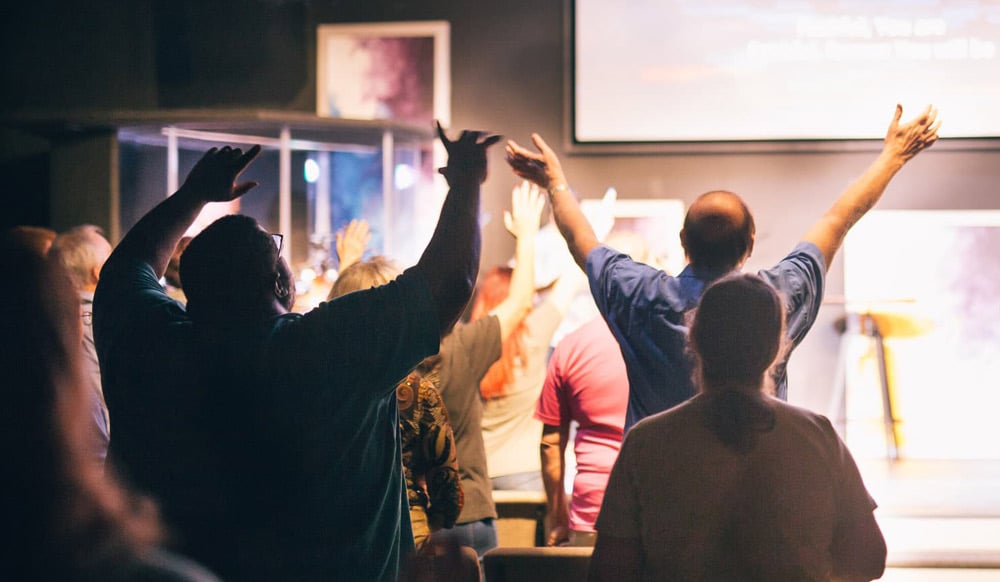
I thought, “does God need a cheerleader? Do we praise Him to build Him up?” Clearly, the omnipotent God we serve and love doesn’t need our praise. Does He? Well, let’s see what the Bible says about this.
“Give praise to the Lord, proclaim his name; make known among the nations what he has done, and proclaim that his name is exalted.” – Isaiah 12:4 (NIV)
“I cried out to him with my mouth; his praise was on my tongue.” Psalm 66:17
“My mouth is filled with your praise, declaring your splendor all day long.” Psalm 71:8 (NIV)
“Let the message of Christ dwell among you richly as you teach and admonish one another with all wisdom through psalms, hymns, and songs from the Spirit, singing to God with gratitude in your hearts.” Colossians 3:16
These scriptures above reveal what I believe is the main purpose for praise. Notice the active words in these scriptures. You cannot proclaim, declare, or sing silently. This is opposite to quiet worship. This is an active and often loud way to communicate with our mouths. Think about it. Since when did anyone start their sentence with “I do declare” and not be standing on some sort of platform or stage talking to the masses? No, praise is heard. It’s a declaration of the goodness of God.
God doesn’t need a cheerleader, at least for His own benefit. While He does enthrone our praises, we don’t praise Him for His benefit. We praise Him for ours. And, apparently, we praise Him for the benefit of others as well. We put on “…a garment of praise instead of a spirit of despair.” Isaiah 61:3
Praise is a powerful tool we can use as believers to encourage each other. We praise God together so that we can build each other up in the faith. Praise is a way to overcome fear and despair. It’s more than a singalong. It’s something you shouldn’t miss on a Sunday morning.
“Great is the Lord and most worthy of praise;
his greatness no one can fathom.” Psalm 145:3 (NIV)
Most importantly, we praise God because He deserves it. He is worthy of it. Think about what He’s done for you. Doesn’t that make you want to shout it from the rooftops? Ok, perhaps that’s a bit drastic, or even dangerous. But, praise is a bit dangerous, isn’t it? And, in this world, danger is all around us. I think praise is a bit more essential to us now than it’s ever been. So, let’s get to it!
Confessions…Popcorn, 2nd Corinthians, and other things/ Jessica Fields
I have some confessions to make…
Confession #1: I don’t like popcorn. It took me a while to come to this realization, as for most of my life, when it was offered as snack, I’d grab a handful and mindlessly stuff my face. But over time, I’ve trained myself, “Jessica, don’t eat that. Remember, you don’t actually LIKE popcorn.”
But if I were completely honest, the primary reason I don’t like popcorn is that I HATE the way it smells. Even when it’s cooked perfectly, I’m not a fan. But when overcooked, even so slightly, it is the worst smell imaginable. Above all smells, and I do mean all, I hate the smell of burnt popcorn.

I propose that burnt popcorn is the worst smell ever to exist in all of existence. The thought of it now makes me cringe and kinda angry. The way it permeates the atmosphere and assaults my nose, frustrates me to my core. But the most aggravating part is that since I don’t eat popcorn, suffering the smell is never a fault of my own. *cough* family, roommates, coworkers *cough*
Confession #2: Since I haven’t been getting out as much as I used to (global pandemic), I may have grown a bit lax in my daily showering and dressing habits. But so what if I stay in my pjs a day or five longer than normal? I’m not going out. I’m not seeing people. I can smell a little, right?
This brings me to Confession #3: For a large portion of my life I haven’t had a proper view of 2 Corinthians. I’ve kind of filed it away as a lesser epistle. But in my subpar defense, the title literally says it’s second, you know silver, first loser, the sequel, so not as good as the first. But it has been the primary tool the Lord is using to get my attention, lead me to repentance, and challenging me as a follower of Jesus during this season.
In 2 Corinthians, Paul addresses fellow Jesus followers who are facing a difficult season and issues, which rocked their daily lives.…I’m sure you can’t relate but stick with me. His letter evaluates and challenges their response. Toward the end of the second chapter, he reminds,
“…[God] uses us to spread the knowledge of Christ everywhere, like a sweet perfume. Our lives are a Christ-like fragrance rising up to God…” 2 Corinthians 2:14-15 NLT
With these confessions, and Paul’s words in mind, I find myself asking, “What aroma am I putting out into the world, even as I shelter in place? What smell is permeating the atmosphere as it rises up to God?” I’ve declared myself a believer, a follower of Jesus. So according to God’s word, I’m to be a ‘sweet perfume’. My life is “a Christ-like fragrance rising up to God.” It is what God “uses to spread the knowledge of Christ everywhere…” Wait, everywhere?
I recently took a leave of absence from social media. I didn’t have an online social presence as current events began to impact our daily lives. By the time I ventured back, social distancing was in full swing. I wasn’t slowly ushered into the hot-mess of opinions, amateur science experts, conspiracy theorist, end-times arguments, left and right political backbiting, and all the like that I found with the swipe of my finger. The onslaught was jarring and the smell…well, I know I said burnt popcorn was the worst, but maybe I was wrong.
Like I said, the Lord has been using 2 Corinthians to shake me up, reminding me of His heart and who I am. Paul continues in chapter five,
“For God was in Christ, reconciling the world to himself… he gave US this wonderful message of reconciliation…WE are Christ’s ambassadors; God is making his appeal through US. WE speak for Christ when WE plead, ‘Come back to God!’” 2 Corinthians 5:19-20 NLT (emphasis added)
Fellow believers, WE speak for Christ. WE are Christ’s ambassadors. It is through US, you and me, that God is pleading to a world that doesn’t know Him to come back to Him. How easy it has been to forget this. Our presence in this world may look different right now, but let’s not fool ourselves, we are still very much present. Nowhere is this truer than online. For many of us, social distancing has increased our presence in the eyes and ears of others – our aroma is permeating the atmosphere like never before.
Right now, above all, I must remember THE mission. THE top story, that which takes precedence over everything else, even a global pandemic, IS the Gospel. It is the Good News of Jesus Christ. Everything I do right now is God making His appeal THROUGH ME. Every comment, every post, every like, every rant, every thing is speaking for Christ. So what am I putting out there? Is it truly a wonderful message of reconciliation? Is it a sweet perfume? A Christ-like fragrance?
Look, I don’t want to place myself in a seat of judgement. I don’t want to climb on a soapbox and point fingers. And I definitely don’t want to contribute to the “you should – you should not” debates. But I do want to remind myself and my fellow brothers and sisters, WE ARE THE FRAGRANCE OF CHRIST. If WE don’t like the smell of our world today, what aroma are WE putting out there? In an effort to have a mindless snack… are we burning the popcorn? Are we permeating the atmosphere for everyone else to suffer our smell? And in doing so, are we becoming greater ambassadors of our own opinions than of our Christ.
Is our message pleading, “Come back to God!” or “Come agree with me!”?
I choose to believe that during this time, we’re all trying to find honest truth and do what is right. I choose to believe this is true of our government leaders, both blue and red. I choose to believe it is true of businesses, billionaires, health organizations, and even media outlets. And I choose to believe that even if I am wrong in this belief, my God has taken into account the fallen state of humanity and will not forsake me.
And because of my conscious choice to believe and trust God, I repent. I repent of contributing to a miserable and assaulting aroma in the world. Genuinely. Wholeheartedly. I repent of the pithy comments, sarcastic memes, soap-box rants, and mic-drop share re-posts intended to feed my prideful ego with a thumbs-up like. I repent. And out of my love for Christ and His Gospel, I hereby confess my commitment, or re-commitment to the wonderful message of reconciliation and to do everything in my power to be a sweet perfume, a Christ-like fragrance, an ambassador that allows God to make His appeal through me. Yes, this is my act of repentance and confession of commitment to stop burning the popcorn.
The Trouble with Trouble/ Pastor David
The Trouble with Trouble.
“In this world you will have trouble….”
Jesus
“So, I am being let go because of downsizing?” Those were my internal thoughts as I tried to process what I had just heard. Fear began to grip me as I started to realize the implications of what I was hearing. My wife is 8 months pregnant with our first born. We had just started getting somewhere financially and now this. I immediately began to think of the injustice of it all. After all, there was this guy that was close to the boss that didn’t like me, and I know he spread lies about me. I am stuck with the reality of losing my job. Now I must go home and tell my wife that I lost my job. I am in trouble.
People have said “What doesn’t kill you makes you stronger.” Songs have been written about it as well. Also, people have said that “tough times make you stronger.” Both statements are incorrect. You do not have to be around long to have seen people that have gone through trouble and it does not make them stronger. The trouble they faced crushed them. Whether they fell prey to the trap of drugs or drinking or any other unhealthy coping methods, the trouble did not make them stronger it took them out. So, it is not the trouble that makes you stronger it’s the way you handle trouble that can make you stronger. How we handle the trouble we face is the most important thing to determine how we will come out the other side. There are many ways to handle trouble.
There are some very destructive ways to deal with trouble. The first is that we put our head in the ground and pretend nothing is wrong. Many times, these troubles are situations of addiction or bad behavior that are causing relational trouble, health trouble or financial trouble. If we pretend that it’s not there, we do not have to deal with it. The result is that the problem continues to grow, and the consequences of those problems grow with it. I have seen too many people wait too long to identify or admit problems in their life only for the consequence to be overwhelming. Another thing people do is similar but different. Some people just ignore it. They know there is a problem but choose to ignore it. It’s like a drain problem in your sink. Some people think if you just ignore it Maybe the sink will just clear on its own. Many people take the approach that “It’s not that bad.” or if I ignore it will go away. Doing nothing seems like the easiest approach but it can have terrible consequences. We take the “Maybe an opportunity will just present itself.” approach. This rarely happens and the results can be devastating. The last thing people do is to blame someone else. This is what I faced in my situation with my job. I had every reason to blame someone and I felt that I was justified in blaming. Plus, my boss knew my wife was pregnant surely if he had a heart, he wouldn’t have let me go. This can sometimes be the most destructive and long term detrimental to us. When we allow bitterness and unforgiveness it does many things to our health not to mention our future. Dealing with trouble this way certainly does not make you stronger.
The main problems with these ways of dealing with trouble is the inaction it causes. Inaction during trouble usually causes more trouble. When I was fired from my job my mortgage company did not care that I had been wronged or mistreated. My wife felt bad for me but she wanted to know where my next paycheck was coming from. You see, I couldn’t wait for my feelings to catch up or my “want to” to be strong enough. I needed action right then. I couldn’t wait. I couldn’t just complain and post something terrible on social media. My situation demanded that I act.
So what are the actions that we need to take. The answers are as many as the troubles we face. But there are some common things we should do. First thing we need to do is to invite our loving God into the situation. Jesus said we would have trouble in this world, so this trouble did not take Him by surprise. Invite His wisdom, forgiveness, comfort and yes, His help in this situation. This is the first step because this will help you gain proper perspective about the troubling situation. Next is to seek council. Maybe it is dealing with your child or marriage. Find someone older in experience that you respect. Remember older does not always mean wiser. We all know that to be true, don’t we? Find people that have been where you are and are on the other side of the trouble you are in now. Gain wisdom and utilize the wisdom you gain from those conversations. We have couples in our church that have been happily married for 50+ years. 50+ married and happy? Listen to people like that.
Lastly, stay humble and patient. We hate both of those words. They are, however, critical. Humility, God may want to teach us a thing or two. Maybe there is a blind spot in our character that He wants to heal and make right. Maybe He wants to take us to a new direction in our lives. He loves us enough to correct us, as parents we know this to be true. God corrects us because He loves us. Maybe God wants to teach us some things. What was my lesson from my ordeal? Patience and stay teachable.
I will finish my story up quickly. I was out of work for a month. I was applying but no one was hiring. I did some odd jobs here and there but nothing permanent. Finally, I got a job. It was a 1hr and 30 min commute. I had to travel down 400 to 285 and across to Highway 78. If you know Atlanta, you just gasped. This was a terrible commute. Humility caused me to take that job. I got the job, worked two days and my wife gave birth to our first-born daughter. I did what I had to for my family. Humble enough to know that God had a plan and I could trust Him. The next part of the story is my favorite. After a year and a half, my old boss called me and let me know he had fired the wrong person. He offered me more money to come back to work for him. It was also 15 minutes from my house. I accepted. It turned out better than it was before. What did God teach me? Don’t hold on to bitterness and that God is perfect in His plan. This scripture became more than just a cool saying. It became real.
And we know that God causes everything to work together for the good of those who love God and are called according to his purpose for them.
Romans 8:28 NLT
My trouble made me stronger. Why? Because trouble makes you stronger? No, because of the way I handled the trouble that was in front of me. The trouble with trouble is that it is not a guarantee of becoming stronger. It is an opportunity to become stronger. Invite God into your trouble, face it head on and watch what happens. By the way, now the rest of that scripture I quoted at the beginning.
“I have told you these things, so that in me you may have peace. In this world you will have trouble. But take heart! I have overcome the world.”
John 16:33
(Jesus Speaking)